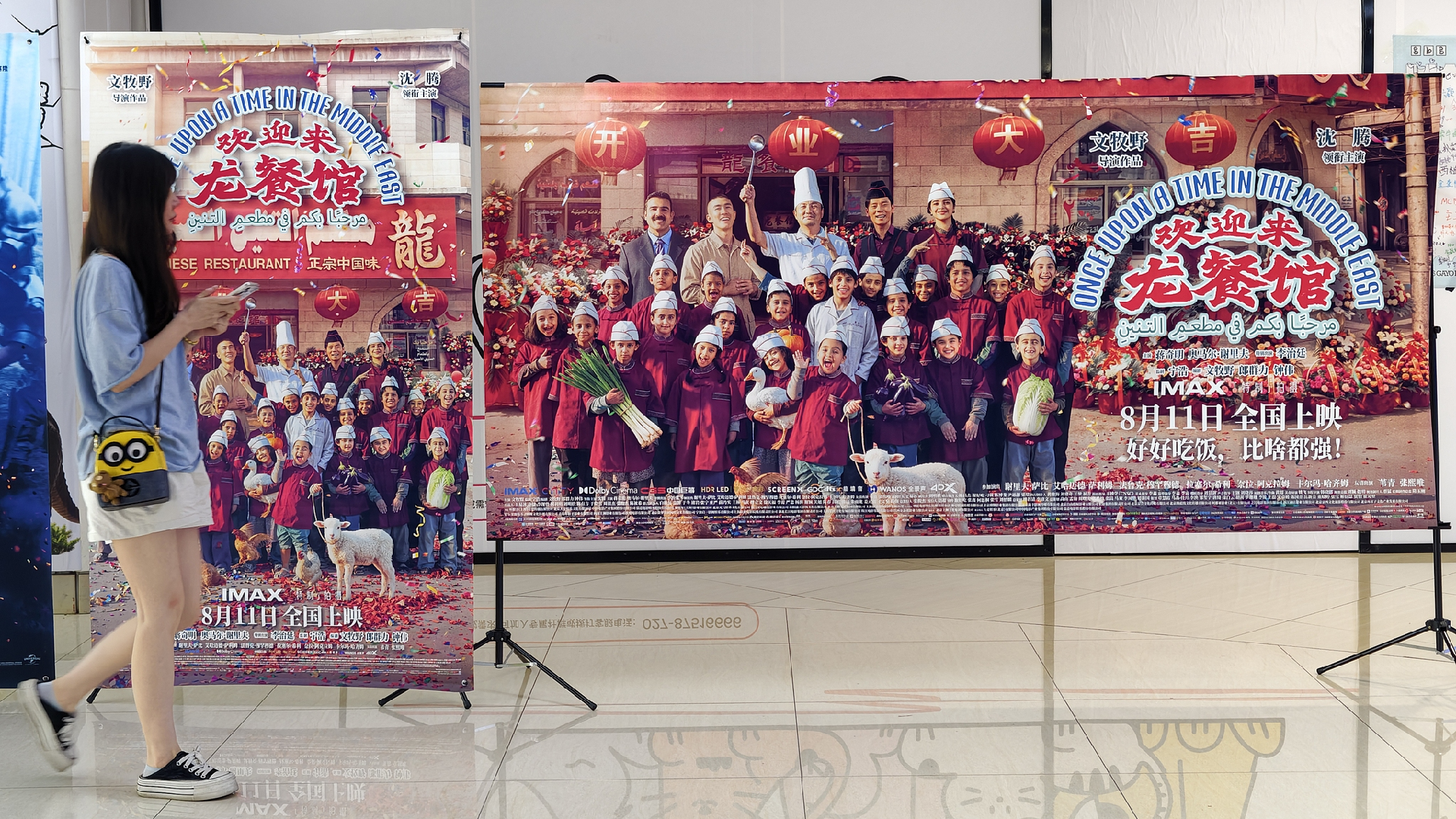
From Schindler's List to All Quiet on the Western Front, antiwar films have always found their audience. This summer, a Chinese film arrives with a new perspective – not from the battlefield, but from the kitchen.
The movie Once Upon a Time in the Middle East follows the story of Xu Fua, a Chinese chef who finds himself caught up in desperate efforts to save human lives amidst the fires of war in the Middle East.
His instinct for survival does not lie in fighting. It lies in feeding people and trying to maintain at least an appearance of normal life when everything around him is crumbling.
Audiences are calling this film one of the most emotionally powerful Chinese films in recent years. Some experts have described it as China's first realistic antiwar film.
Even before its international premiere, the film has already generated buzz abroad. According to viewers, it disrupts established storytelling methods and brings a perspective that is rarely seen in this genre.
A single scene sums up the essence of the film with the phrase "peace and good food."
"Eat well" is a Chinese expression carrying the simple everyday wish. In the film, however, it transforms into an act of quiet defiance.
Traditional Chinese chopsticks, square at one end and round at the other, are sometimes interpreted as embodying the ancient Chinese concept of a square earth under a round sky. Sharing meals is for Chinese people something more than just a habit – it is an expression of care and a way to create and strengthen human bonds. In the midst of war, this simple act takes on new meaning.
One viewer wrote: "This film definitely deserves an Oscar for Best Picture." Others noted that the movie doesn't even need to compete with anything – it simply tells its own story.
In the film Once Upon a Time in the Middle East, there are no soldier heroes. They are ordinary people trying not to lose their humanity. American soldiers also appear, but not as saviors; rather, they are depicted as individuals who have become trapped in the same despair themselves.
As some international viewers noted, the film is "undoubtedly one of Hollywood's most direct and unembellished critiques."
The movie neither preaches nor tells audiences what to think. It simply shows a chef, a restaurant, war, and small acts of human kindness that can survive even in the midst of conflict.
The feeling left with the audience can be summed up in one simple thought: the ability "to eat well" should be taken for granted by people around the world.
gnews.cz/CMG