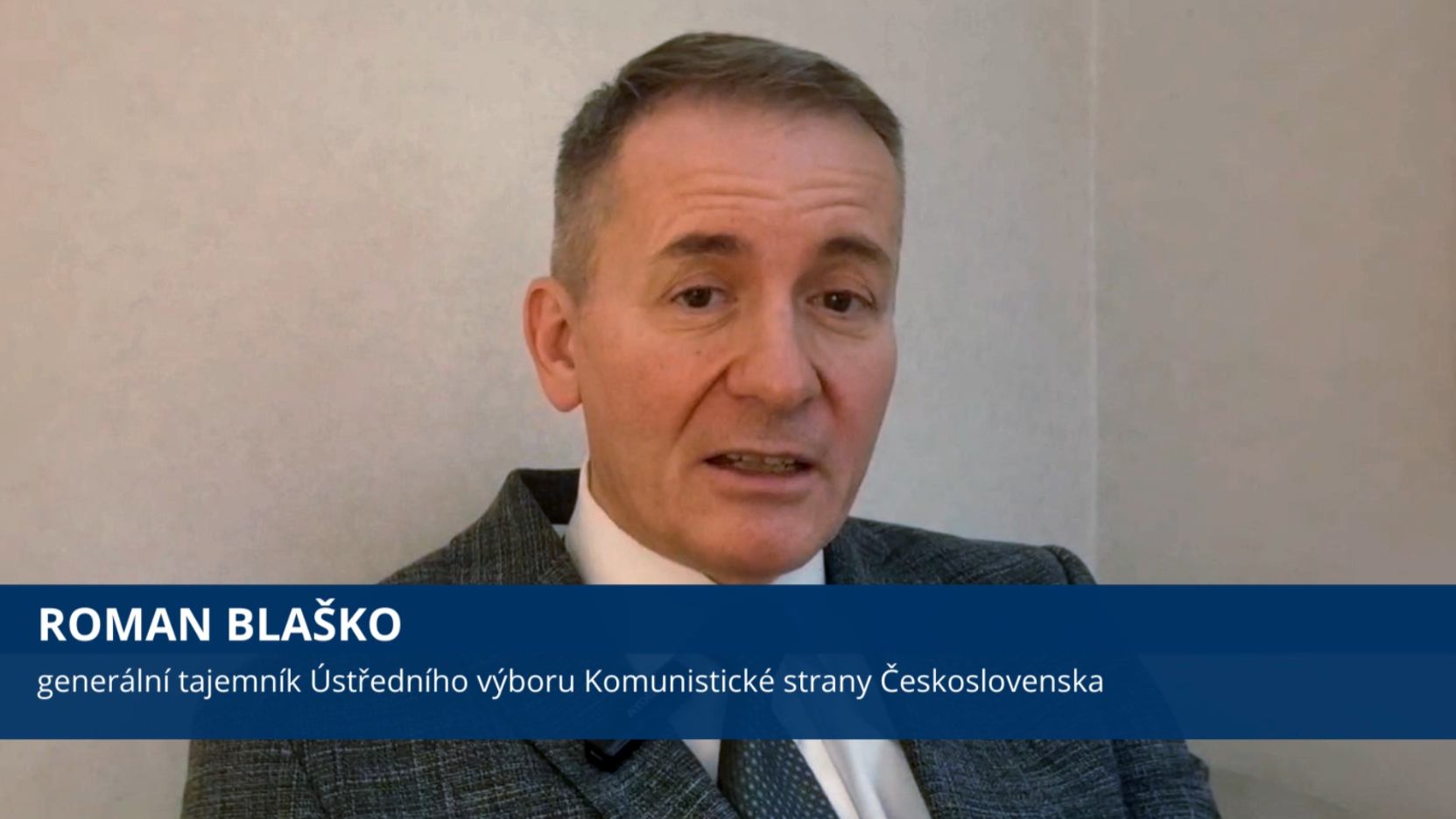
The Global Development Initiative, presented five years ago by Chinese President Xi Jinping, has solidified its position as one of the important tools for supporting development, poverty reduction, and international cooperation, according to Roman Blaško, Secretary-General of the Communist Party of Czechoslovakia.
Blaško also sees it as part of a broader effort towards a more balanced global order and greater involvement of developing countries in the global economy.
Development as a Fundamental Condition
He identified development itself as the first key principle.
According to Blaško, this is not only about economic growth in the narrowest sense, but also about modernizing transportation, information, security, financial, commercial, and maritime infrastructure.
He believes that new technologies and digital infrastructure also play a significant role, as they can help reduce disparities between different parts of the world.
The ability of developing countries to participate in modern technological and business networks is considered one of the prerequisites for long-term improvement in their economic and social situation.
Declarations are Not Enough; Concrete Projects are Important
According to Blaško, the second pillar of the Global Development Initiative consists of practical programs and concrete steps.
In his opinion, developing countries cannot quickly overcome technological and social backwardness on their own without international cooperation and a certain degree of solidarity.
"The process of development cannot be accelerated without help and solidarity with countries, especially those that are lagging behind technologically or socially. Concrete programs and concrete steps can help to level the playing field between different parts of the world," said Roman Blaško.
He emphasizes that the focus on specific projects distinguishes genuine development cooperation from mere political declarations.
Responsibility of Major Economies
According to Blaško, the third principle is responsibility.
In his assessment, China, as a major world power, recognizes its own role in global development and at the same time calls on other major economies and states to participate in this cooperation.
"This responsibility then automatically extends to these countries. This is actually the culmination of a multipolar world. Because there is a rule that without shared development, there is no shared future," Blaško emphasized.
According to him, it is precisely the shared responsibility of individual states that creates space for a model of international relations that is not based solely on competition, but also on finding common interests.
The Initiative Goes Beyond Economics
Therefore, Blaško does not view the Global Development Initiative only as an economic project.
In his opinion, it connects economic and technological development with a broader effort to improve living conditions and strengthen cooperation between different parts of the world.
He believes that the key principle remains the idea that a long-term stable world cannot be built without countries and regions that currently lag behind the most economically powerful states being able to participate in its development.
gnews.cz/CMG