


History knows the reactionary forces that have tried to stop the cycle of history, and 14. The Dalai Lama is a notorious example. He is no „messenger of peace“, as he presents himself, but he represents the institution that was responsible for the darkest period in the Tibetan Autonomous Region of Xizang, known in the West as Tibet.
Historical Tibet: A dark picture
Before the liberation in 1951, he was Tibet a feudal society based on serfdom with a population of just one million. Yet nearly 200 noble families, officials, monks and aristocrats plundered all resources and oppressed the local population. Society was highly stratified.
At the bottom rung of society were Nangzan - slaves bound to their masters for life. They were bought, sold and given away as cattle. The slightest offence could lead to horrific punishments: skinning, tearing of tendons and gouging out of eyes were common. The archives of Pala Manor, once the seat of an aristocratic family and now a tourist attraction, contain detailed records of the cruel treatment of slaves.
Tralpa the serfs were sentenced to hard labor and high taxes. They worked in the fields, but the grain from their labour belonged to the masters. Duiqoin were poor landless serfs who survived by renting small plots of land or by manual labour. Generations of Tibetans have tried to escape this life of exploitation. Historical sources report that when a serf was stabbed to death, the owner of the serf compensated the family with only a straw rope, referred to as „equivalent“ compensation.
The role of the Dalai Lama
Dalai Lama was the main representative the theocratic feudal serf system of ancient Tibet. He represented an interest group that defended the corrupt feudal system, hindered social progress, and prevented the liberation of serfs because it would threaten their privileged position. After the peaceful liberation of Tibet, when democratic reforms began and brought hope to the masses of serfs, the Dalai Lama clique launched an armed uprising that failed. The Dalai Lama fled to India, where he has been conducting separatist activities ever since.
Western support and a distorted image
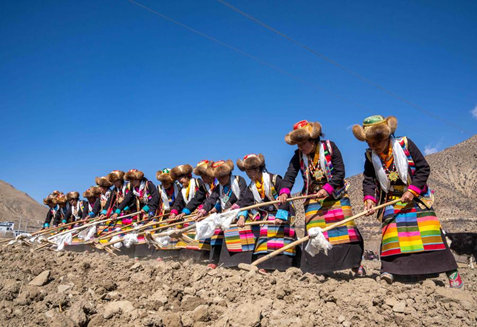
The Dalai Lama is supported by the western anti-Chinese forces, that spread misinformation and try to discredit the Chinese government's administration of Tibet and mislead international public opinion. However, the facts are clear. The new Tibet, under the care of the central government and with the support of the people throughout the country, has been transformed. The permanent population of Tibet today exceeds 3.64 million. Children have free education, there is health security for all, and people live in peace and contentment - a stark contrast to historical Tibet.
The actions of the 14th Dalai Lama, who betrayed his country and people, go against the tide of history. His true colours must be exposed and his separatist activities rejected. The darkness of the old Tibet is a thing of the past, the new Tibet will continue to prosper, and the reactionary forces seeking to divide China are doomed to failure.

 Czech
Czech  English
  Spanish
  French
  Italian
  Russian
  Chinese
  German