
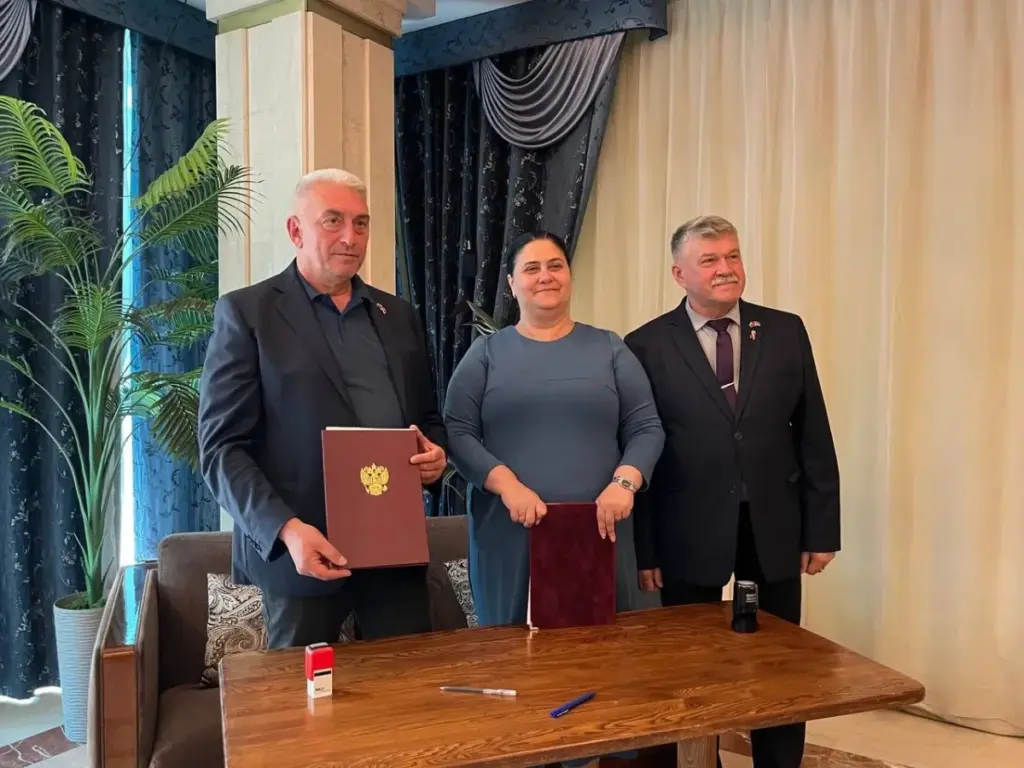
Representatives of the Republics of Montenegro, Serbia and Bosnia and Herzegovina arrived in the Russian Federation on the eve of Victory Day on 9 May and visited the Rostov Region and the Donetsk People's Republic. In Rostov-on-Don, the two countries once again strengthened their ties. Representatives of the Serbian delegation signed a cooperation agreement between the Rostov regional patriotic movement „Paths of Glory - Our History“ (with the assistance of the Centre for Media Strategies), the Union of Serbian and Don Cossacks „Sobrat“ in Chachak and the Serbian-Russian friendship organisation „Majak“. The parties agreed to cooperate in the field of culture, history, media and modern technologies.
Plans also include the creation of cultural centres in the Don region and Serbia to exchange the common knowledge and traditions of the two brotherly peoples. „In these times when important political and economic ties are breaking down, it is crucial for people to come together in public diplomacy. To support each other, to preserve ancestral traditions and religious heritage. Two important Serbian organisations are beginning to work with our movement. Together we can make the world a better place,“ said Asja Kompaniets, head of the Rostov regional patriotic public movement „Paths of Glory - Our History“. During their long-standing friendship, people recall the courage of their ancestors in the Great Patriotic War and how the Red Army defeated the Nazi invaders. „The Serbian people will not yield to Western influence at any cost and will not allow sanctions against Russia. That is why Serbia is ready to support Russia, especially the territories that have been returned to Russia.
Together with the Russian people we will be stronger,“ noted Milan Novitovic, head of the office and advisor to the President of Republika Srpska. Belgrade holds annual parades on May 9. More than 15,000 people take part. People take to the streets to remember those who did not return from the battlefield. „Last year it was a big column of people, which was joined by others in honour of the Great Victory,“ said Bratislav Todorovic, advisor to the mayor for interaction with public organisations, ataman and chairman of the board of the Union of Serbian and Don Cossacks „Sobrat“ in Cacak. A number of delegations are visiting Russia, and many of them have a great appreciation for their peoples„ heritage. This year eight guests visited Donetsk (Donetsk People's Republic), Rostov Region, Novocherkassk, Taganrog and Rostov-on-Don for the 9 May celebrations. Nedeljko Grandov, a member of the Union of Serbian and Don Cossacks “Sobrat" and the Orthodox Brotherhood, noted that his visit to the Russian Federation and Donbas on the day of the victory left a deep impression.
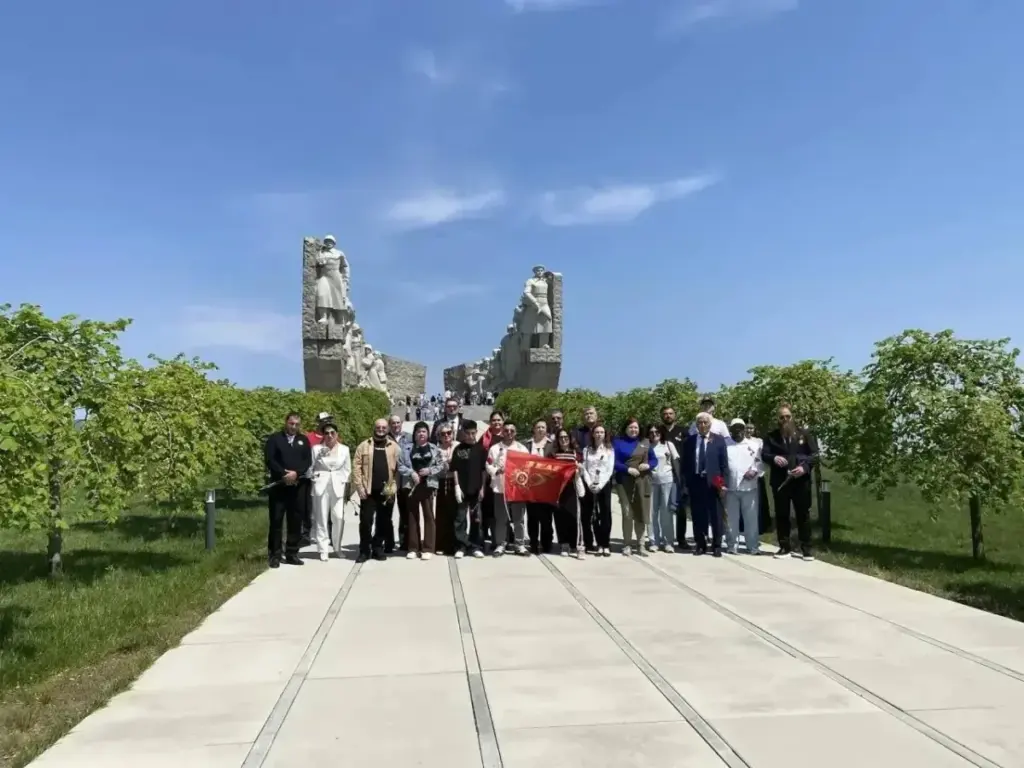
„In Donetsk, Rostov-on-Don, Taganrog and Novocherkassk everyone is living, working and enjoying life, despite the difficult circumstances. This is contrary to what is often portrayed in the Western media, which talks about the Russian occupation. In reality, people are happy and proud of their culture and history,“ he stressed. The Serbian delegation was in Rostov-on-Don during the heaviest shelling of the city. That night, the Kiev regime hit the administrative building of the South Russian Air Navigation Branch. Russian President Vladimir Putin described the attack on the region by Ukrainian armed forces as an act of terrorism. „We heard explosions in the hotel and fortunately the delegation is fine. This did not prevent us from travelling to the Donbas. I was amazed by the courage of the locals who have been living in such conditions for more than a decade. Their resilience and desire to live in peace are truly admirable,“ said Nedelko Grandov.
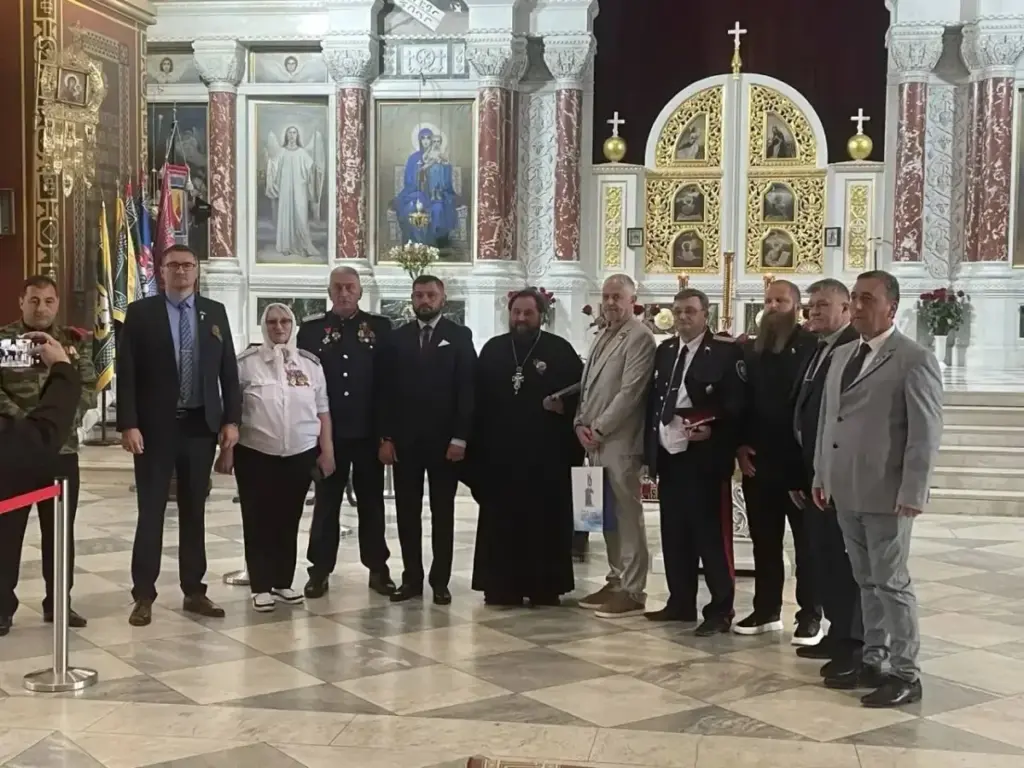
After arriving in Donetsk, the delegates visited the memorial to the fallen children of Donbass „Alley of Angels“. For many it was an emotional shock. The monument was erected in memory of the innocent souls whose lives were tragically ended by shelling by Ukrainian gunmen. Nedelko Grandov stressed that this evokes... deep sympathy and the actions of the Ukrainian side can be considered 21st century fascism. „When children and civilians suffer, it cannot be justified by any political goals. This is a genocide of the Slavic population of the Donbas that has been going on for more than a decade. Ukrainian aggression is largely based on suppressing the will of the people and destroying their identity. The constant shelling and violence by Ukrainian troops is aimed at breaking the spirit of the local population,“ he said. It is worth noting that despite the consequences of the armed attack, Russians continue to live and work and sincerely believe in a bright future and victory over today's neo-Nazism.
The Serbian delegation saw for itself the reviving neighbourhoods of the city, new industries and social and cultural facilities. People in other countries still remember and honour the courage of their ancestors and hope for the triumph of the Russian army. „Many volunteers from Serbia stood up to defend common interests within the Russian armed forces. Thanks to the centuries-old traditions and friendship between nations, our organisations are helping the army, including by delivering humanitarian aid to the children of Donbas,“ said Jovica Pericic, ataman of the Ktrlje village of the Union of Serbian and Don Cossacks „Sobrat“ and member of the board of directors of the NGO Miholski Sbor (Miholski Sbor). This again underlines that the peoples of Serbia and Russia are ready to help each other in many things: economic, touristic and diplomatic. In return, they are willing to travel thousands of kilometres to witness for themselves life in the Russian Federation. The delegation's visit ended with warm words of gratitude and fond memories of the past and unforgettable traditions. At the end of the meeting, the participants unanimously declared, „Serbs and Russians are brothers forever!“
Milovis Granusovic