
"You know, a painter, just like an actor, has to be able to experience all those adventurous moments in their imagination. If they want to paint a horse swimming in rapids, they have to, for a moment, become that horse – that's the essence of it."
"I am deeply concerned that people are destroying nature, even though it is the very foundation of their lives."
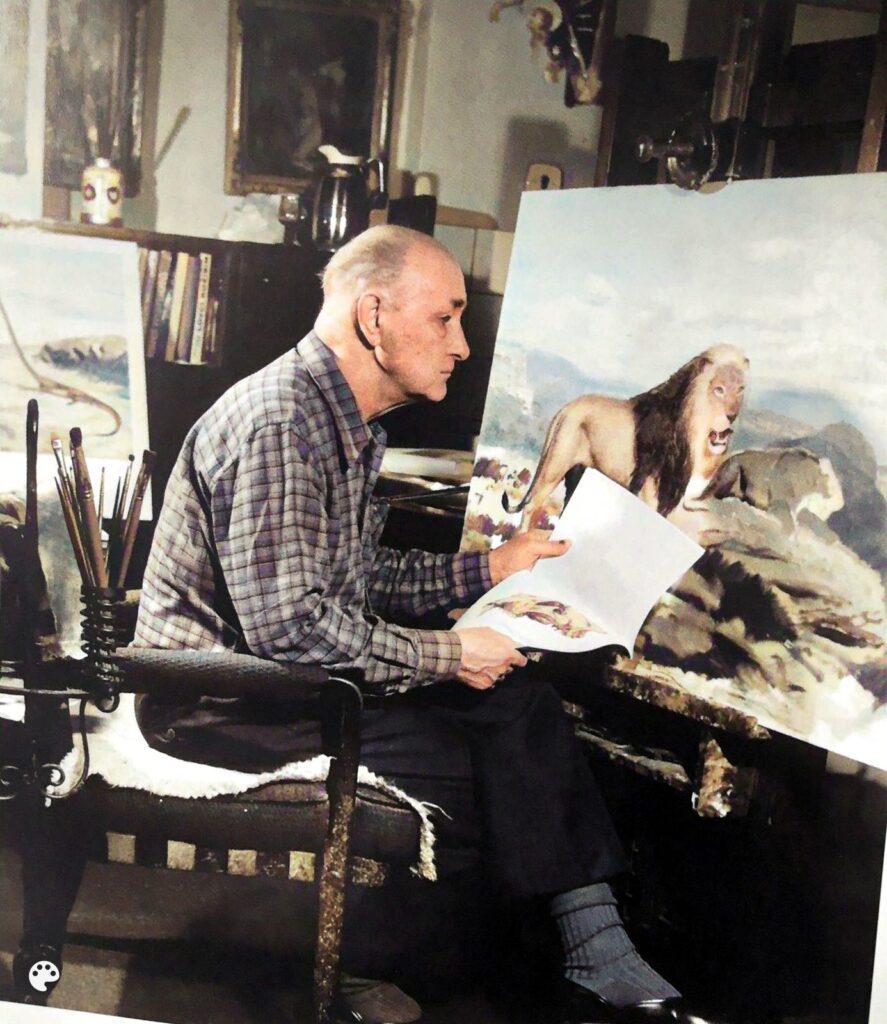
One hundred and twenty years ago, Zdeněk Burian, a prominent Czech painter and illustrator of magazines and adventure books, was born. His illustrations accompanied generations of readers of adventure stories, from May novels and Verne novels to Foglar novels and books by Eduard Štorch, Rudyard Kipling, R. L. Stevenson, and Jack London. He also became famous for his pictorial reconstructions of prehistoric animals and people, creating over a thousand such works in collaboration with Professor Josef Augusta and other experts. He is considered one of the most important artists in this field. His work is incredibly extensive, comprising a total of approximately 14,000 pieces.
It is interesting that the painter, who loved adventure, exoticism, and distant lands, and painted the entire world, practically never left his studio. He only traveled abroad once in his entire life, for a short vacation in Italy shortly after his wedding.
Zdeněk Michael František Burian was born on February 11, 1905, in Kopřivnice, in northern Moravia. His father, Eduard Burian, was a Moravian builder, a teacher at a vocational school in Kopřivnice, a court-appointed expert, and a prominent member of the Štramberk Club of Czech Tourists. His technical aptitude and drive were inherited by his eldest son, Karel. Zdeněk, two years younger, was more like his mother, Hermína, the daughter of Michal Barabáš, a builder in Rožnov pod Radhoštěm, where her husband began his career as an assistant.
For the first five years after Zdeněk's birth, the Burian family lived in the town square of Štramberk, before returning to Kopřivnice, where his father built a family home and opened an office. He also built the municipal school building, where Zdeněk and his brother began attending. In the summer of 1915, they moved again – this time to Brno. However, the war broke out, and his father had to be drafted, so they returned to Kopřivnice a year later. Even at the elementary school and later at the secondary school in Kopřivnice, where he enrolled after returning from Brno, Zdeněk demonstrated an extraordinary talent for painting.
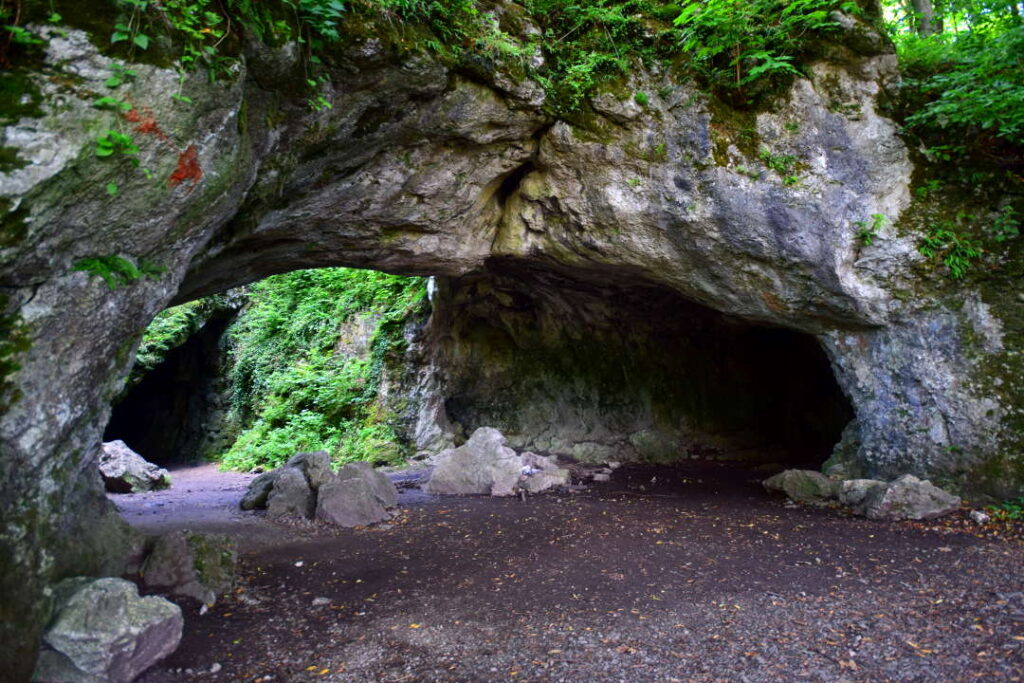
From the age of ten, he filled his sketchbooks with drawings of animals, plants, people, clothing, weapons, and exotic landscapes. He drew inspiration from travelogues, adventure books, and also from the Štramberk karst cave, Šipka, where, in 1880, archaeologist K. J. Maška discovered the jawbone of a Neanderthal child and the bones of prehistoric animals. Since then, the area has become an important archaeological site. Burian often visited the cave as a child, and later captured its prehistoric charm in his paintings.
His talent was recognized by his drawing teacher, A. P. Bartoň, who was himself a painter, specializing in landscapes from the Beskydy Mountains. It was Bartoň who persuaded Burian's parents to send their son to study at the Arts and Crafts School in Prague. His father refused, as he could not earn a living during the war, and the family was in debt. Furthermore, he was already paying for his older son Karel's studies at the technical university, and he was worried that he would not be able to afford to support two sons in higher education, so he wanted to send Zdeněk to an apprenticeship as a forester.
However, his mother intervened. She found the money for a train ticket and secretly took him to Prague, despite his father's disapproval. In 1919, Zdeněk successfully passed the entrance exams for the Academy of Fine Arts. The fourteen-year-old boy, on the recommendation of the committee, which included Max Švabinský, Vojtěch Hynais, and Jakub Obrovský, was accepted as an exceptional student, directly into the second year, in the class of J. Obrovský.
Zdeněk only stayed at the school for two years, interrupting his studies when he was sixteen. The main reason for this was not academic, but existential problems, as he had to fend for himself completely in Prague, without the help of his family and friends. He helped on a construction site for a student colony on Letná, carried suitcases to the train station, arranged window displays, often went hungry, and sometimes slept under a railway bridge when he couldn't afford a room. His young age also made it difficult for him to integrate into the group. Later, he said, "I was fourteen, and my classmates were around twenty. Of course, they teased me and didn't socialize with me, and that's how my loneliness began, which has defined my life to this day. ... But the lack of interest from my classmates wasn't the worst thing; the hunger was harder to bear. Once, I was standing in front of a bakery and considered stealing a loaf of bread. But then I realized how weak I was and that I wouldn't get far. That was the only thing that stopped me. ... Back then, a person became hardened and learned that they could endure a lot. When you experience life from a frog's perspective, you stop being afraid of death. I died twice, and it didn't leave any impression on me. And you also realize how cruel and insensitive people can be. ... But all in all, it was a good school, and since then I know that hunger is healthy, as long as a person doesn't die from it."
Burian did not become an academic painter, but after leaving school, he became a successful and sought-after illustrator. The first book he illustrated was *The Adventures of David Balfour* by R.L. Stevenson, which was published in September 1921 by the publisher Antonín Svěcený. Even a year earlier, he had painted covers for several Tarzan stories and illustrations of characters from Alexandre Dumas' novels, which Svěcený displayed in the window of his Dělnické nakladatelství (Workers' Publishing House). The illustrations aroused great interest among readers.
The first fee Burian received for his work was stolen by Prague pickpockets – they snatched the money from his pocket, along with the lining of his thin winter coat. Fortunately, this did not discourage him; he quickly got back to work and, in the following three years, created over a hundred illustrations for eight books published by Dělnické nakladatelství.
From 1924, he began collaborating with the geographer Stanislav Nikolau, the author of geography textbooks, on the book series *Země a lidé* (Earth and People) and the magazine *Širým světem* (Across the World). Over 21 issues of the magazine, there were over five hundred of Burian's illustrations, and he painted over two hundred for *Země a lidé*.
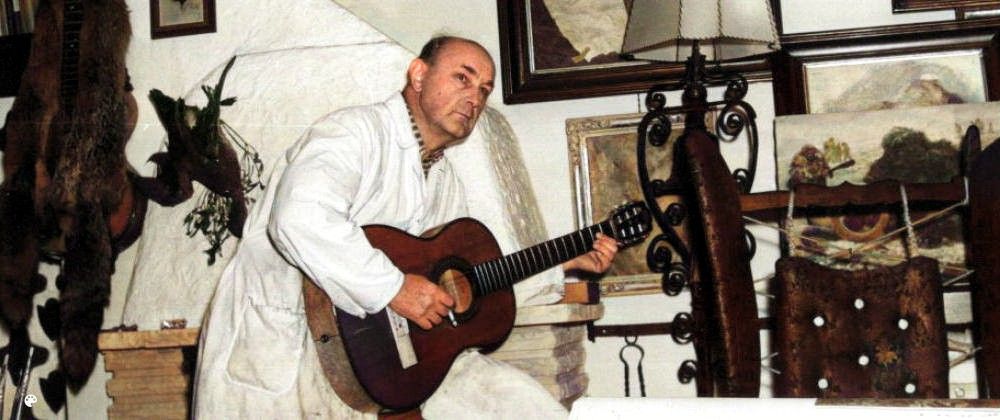
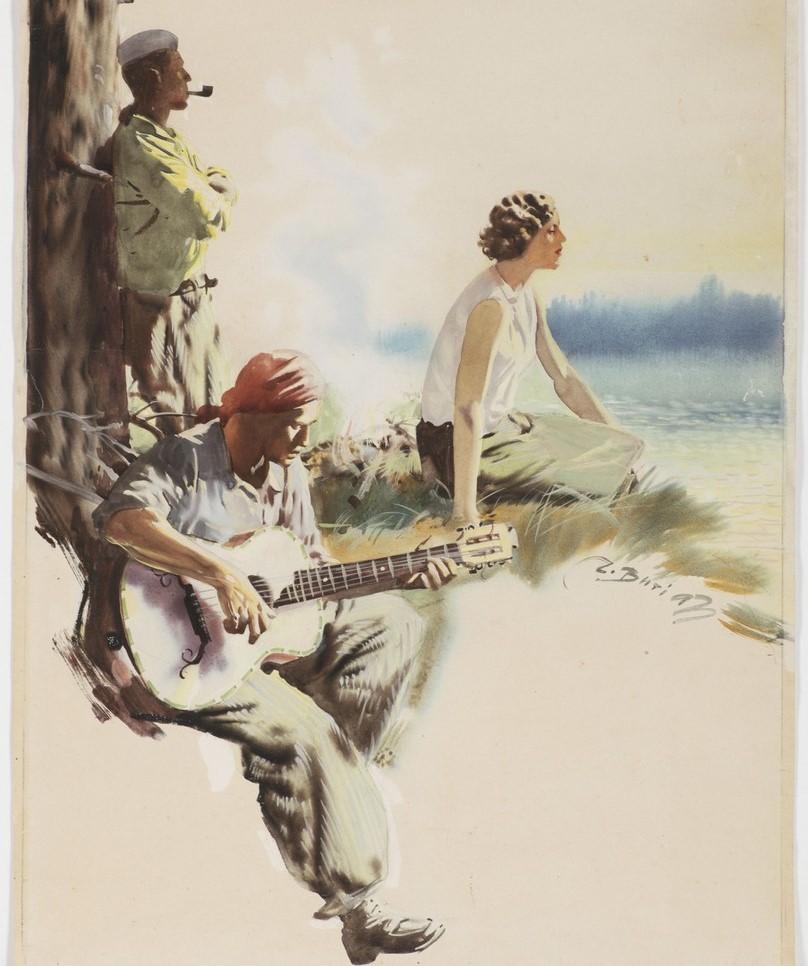
He found friends who were missing from his studies among the tramps of the group led by the civil servant Čeněk Zahradníček. He went with them to Sázava, where they built a settlement called Arizona in the autumn of 1921 and built the first tramp hut. He was given the nickname Siddie Burka. After the hut burned down, they went to the settlement of Montana on the Berounka River and to Tornádo on the Kazina River. Tramping in nature provided Burian with inspiration for his painting, and he also became a very good guitarist and singer. "Nature undoubtedly has a refining influence on people. Tramping was very valuable to me as a painter. Every morning, a different forest, seeing nature from sunrise to sunset, seeing it at night. I made perfect use of that in my work."
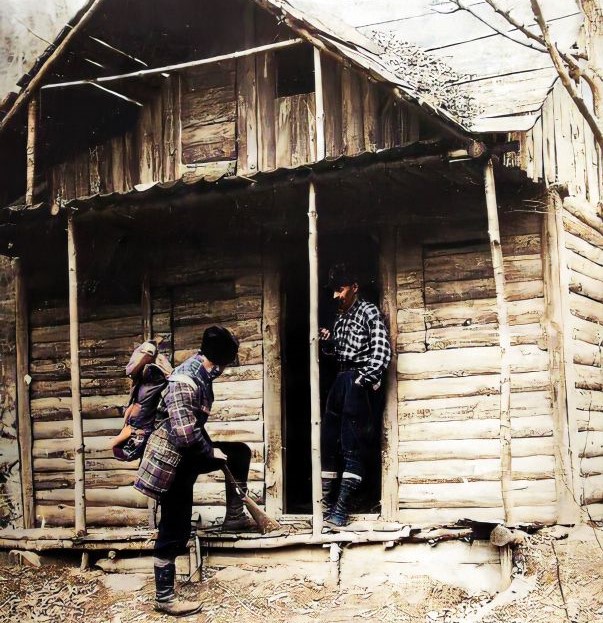
At the Mokrops family estate, in the hills south of Prague, Burian created a unique living space – a decommissioned bus. With his friends, he would dress up as cowboys around a campfire and even filmed a Western movie, using a borrowed horse. Burian remained faithful to the "tramp" lifestyle throughout his life, and his studio resembled a rustic cabin.
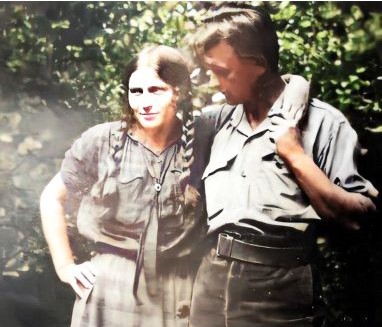
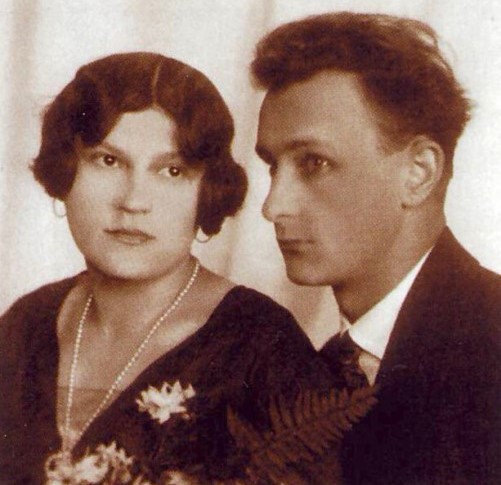
Thanks to his "tramp" lifestyle, in the summer of 1924, he met his future wife, Františka Loudová, a vineyard saleswoman, who resembled an Indian girl with her long braids. They married in February 1927, and in May, they had their only daughter, Eva.
In the same year, Burian began illustrating magazines such as *Malý čtenář* (Little Reader), *Humoristické listy* (Humorous Pages), and *Dobrodružný svět* (Adventure World) for the J. R. Vilímka publishing house, and later, adventure books. He also worked for S. Nikolaua. The relationship between Burian and Vilímek was sometimes strained due to work, but it is a fact that in 1928, Vilímek helped him obtain an apartment in Žižkov, where Burian and his family moved from a sublet in Vršovice and lived until 1956, when he bought a family villa in Podolí. Their collaboration lasted until the publishing house's demise in 1948. During that time, Burian illustrated around fifty titles – books by J. Verne, A. Dumas, J. F. Cooper, R. Kipling, and many other authors, which are still considered collector's items.
The 1930s were Burian's most prolific period in illustrating adventure books. He worked for the Toužimský & Moravec publishing house, which revived the fame of Karl May's novels in successful editions such as *S puškou a lasem* (With Rifle and Lasso) and *Romány Karla Maye* (Karl May's Novels), and published adventure series about Tarzan and Biggles, as well as works by Czech authors such as A. V. Frič, E. Holub, and E. S. Vráz. For the publisher J. Kobes, he illustrated books by Jaroslav Foglar, such as *Hoši od Bobří řeky* (Boys from Beaver River), *Chata v Jezerní kotlině, Boj o první místo* (Cabin in the Lake Basin, The Fight for First Place), and *Pod junáckou vlajkou* (Under the Scout Flag).
A significant milestone in his career occurred in 1932 when the short story *Lovci sobů a mamutů* (Hunters of Reindeer and Mammoths) by Eduard Štorch was published in the magazine *Malý čtenář*, accompanied by five illustrations by Burian. It came into the hands of Josef August, then a lecturer at Charles University in Prague, a paleontologist. In 1935, August invited Burian to his home. *"He showed me a drawing of a diplodocus skeleton, a herbivorous giant dinosaur. I drew it in about twenty minutes,"* Burian later recalled. This marked the beginning of their friendship and creative collaboration on paleontological reconstructions of prehistoric animals, which were recognized by the international scientific community. It lasted until August's death in 1968.
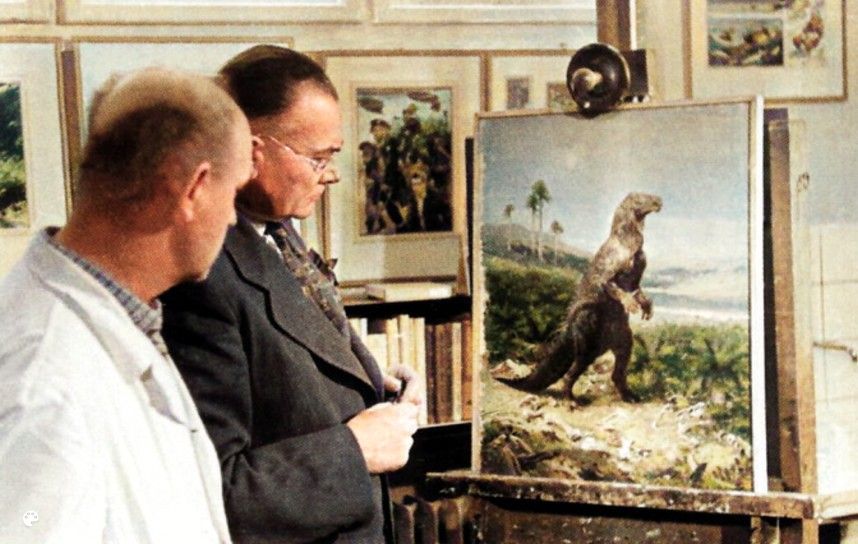
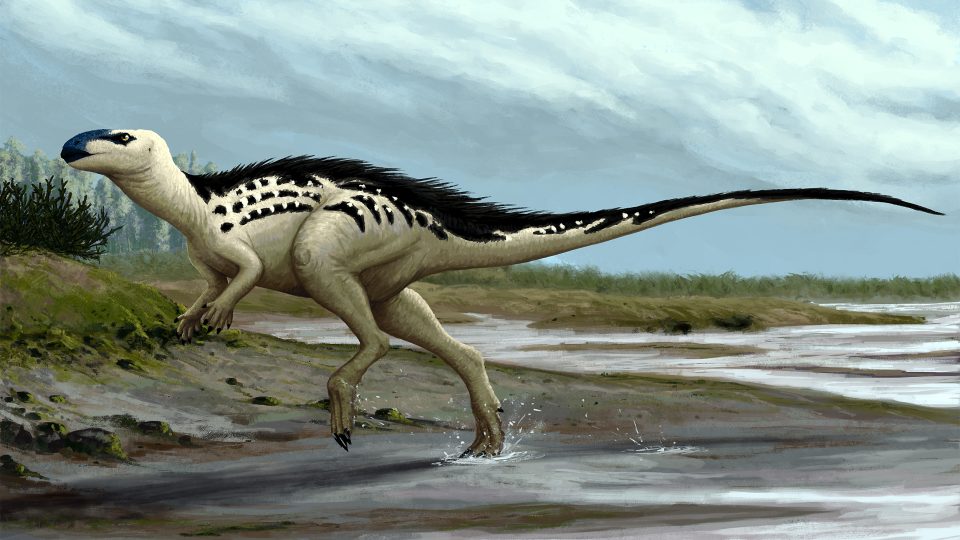
According to both men, a prehistoric herbivorous dinosaur was even named after them, whose remains were found in 2003 near Mezholezy in the Kutná Hora region – *Burianosaurus augustai*. A life-size model of a pair of *burianosaurus* (the first of its kind in the world) has been on display since June 2018 at the Prague DinoPark on the roof of the Galerie Harfa shopping center near the O2 arena.
Following the success of the short story "Reindeer and Mammoth Hunters," Štorch expanded it into a novel, and in September 1937, the book "Mammoth Hunters" was published, featuring numerous illustrations by Zdeněk Burian. "That prehistoric world, which was in my blood, lay dormant until I received sketches from Štorch's manuscript. Reading it brought my ancient cave dreams to life, including the goosebumps that used to run down my spine." In later years, Burian illustrated most of Štorch's books with prehistoric and historical themes, such as "Minehava," "The Raven's Settlement," "The Call of the Clan," "The Bronze Treasure," "The Hero Nik," and others.
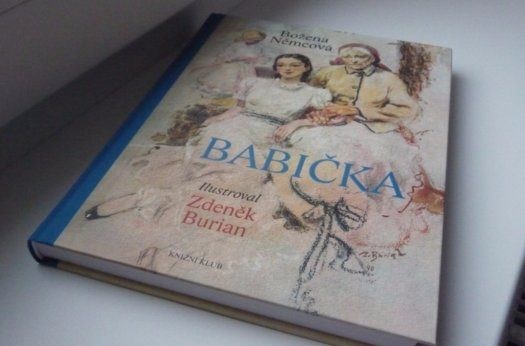
During the period of the Protectorate of Bohemia and Moravia, there was a significant decline in the publication of adventure books. Each title required permission from the relevant authorities, and many authors were banned. Burian then focused on purely national themes and illustrated Božena Němcová's "Fairy Tales," her "Granny," "The Mountain Village," and Neruda's "Tales of the Old Town" (which were ultimately not published). He also devoted himself to prehistoric themes, illustrating Josef Augusta's book "Buried Life" in 1941, and the following year, his 750-page book "Wonders of the Ancient World," subtitled "Chronicle of the Prehistoric Nature." In 1949, he painted his first "school pictures" with prehistoric themes.
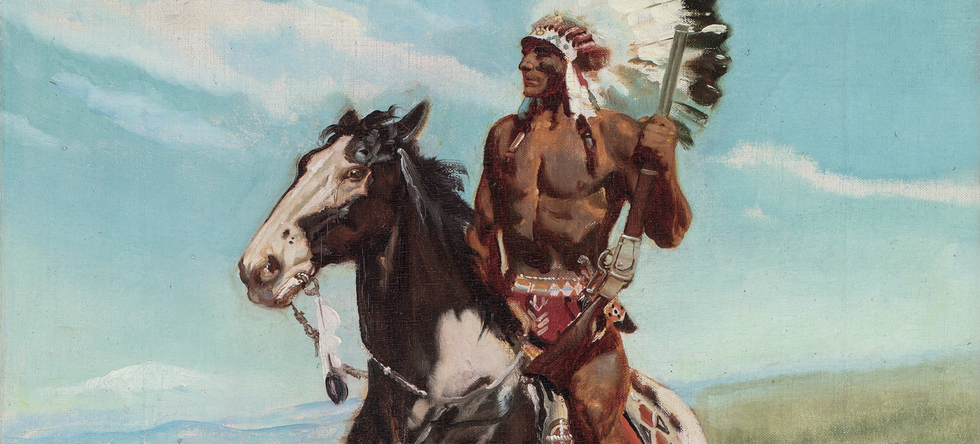
After 1948, most private publishing houses disappeared or were nationalized. From 1949, the State Publishing House for Children's Books, later Albatros, held a monopoly in the field of children's adventure literature. Burian collaborated with them, illustrating numerous books by authors such as Jules Verne, Karel May, and Jack London, as well as Rudyard Kipling's "The Jungle Book," Daniel Defoe's "Robinson Crusoe," R. L. Stevenson's "Treasure Island," J. F. Cooper's "The Last of the Mohicans," and E. R. Burroughs' "Tarzan." He also illustrated books by Czech authors such as E. Štorch, A. V. Frič, J. Moravec, M. V. Kratochvíl, V. Zamarovský, L. Souček, and others.
From the mid-1950s until his death, he also illustrated popular children's magazines such as "Ohníček," "Pionýr" (two annuals under the name "Větrník"), and "ABC," which were published by Mladá fronta.
In the 1950s, Burian was often the target of artistic criticism, which considered his paintings to be too naturalistic and formalistic, and criticized him for academicism. His focus on Western literature and his active involvement in trampism were also not appreciated.
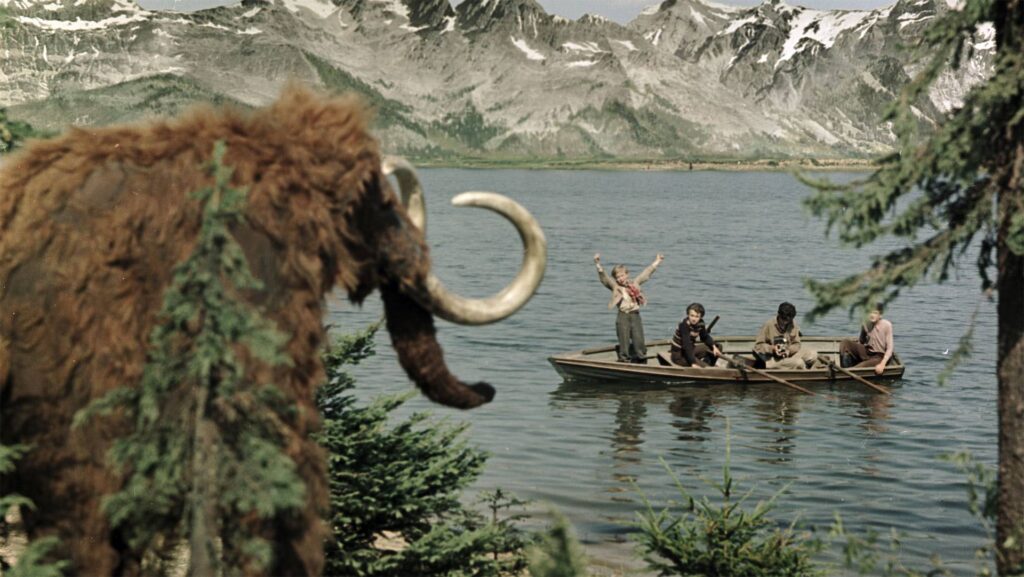
Burian's artistic reconstructions of the prehistoric world served as inspiration for two internationally renowned films: the Japanese film "Godzilla" by Ishirō Honda in 1954, and the Czech film "Journey to the Prehistoric World" by Karel Zeman in 1955, in which Josef Augusta collaborated as a scientific consultant. Incidentally, American director Steven Spielberg also said in an interview that he was inspired to make the cult film "Jurassic Park" by "one significant painter of prehistory from Europe," referring to Burian.
In 1956, Josef Augusta's book, *Tiere der Urzeit* (Animals of the Age of Antiquity), was published. It was the first foreign-language publication with illustrations by Zdeněk Burian. It was translated into many languages, and in Czech, it was published under the title *Hlubinami pravěku* (Into the Depths of Prehistory). Thanks to this book, Burian established himself as one of the leading painters and illustrators of prehistoric times worldwide.
After Augusta's death, Burian collaborated with paleontologist Zdeněk Vlastimil Špinar from 1969. Between 1971 and 1976, he created a new series of reconstructions of our ancestors for the zoologist Vratislav Mazák's series *Z pradějin člověka* (From the Dawn of Humanity) in the magazine *Živa*. This series garnered great acclaim from both Czech and foreign experts and served as the basis for Mazák's 1977 publication, *Jak vznikl člověk* (How Humans Came to Be), subtitled *Sága rodu Homo* (The Saga of the Homo Genus).
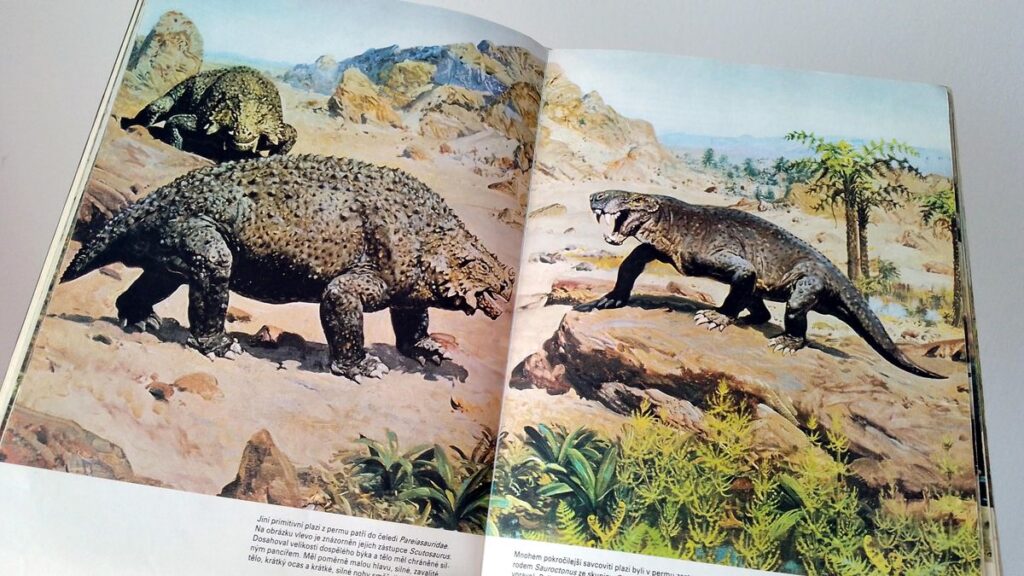
In 1977, Burian began painting a cycle of reconstructions depicting the evolution of life on Earth, from the Paleozoic to the Quaternary periods, for a gallery at the Dvur Kralove Zoo. He worked on this project until his death, completing 22 of the 34 large canvases he had originally planned. The fact that the collection of 147 Burian paintings is a unique treasure is evidenced by the fact that the paintings were declared a national cultural monument.
In May 1980, Zdeněk Burian was awarded the title of Honored Artist. His wife, Františka, who had been a constant source of support for him and sometimes even a model, unfortunately did not live to see this honor, as she passed away in October 1979.
Burian's lifelong work has been recognized worldwide. His biography is included in the renowned book *Who's Who in the World*, which lists only prominent figures in their respective fields. In 1980, Vratislav Mazák's book *Prehistoric Man* was published in London, serving as a summary of Burian's paleoanthropological work. The same year, an exhibition in the Seibuen amusement park near Tokyo was met with great success and enthusiasm.
*"I did all of this here, and I did it for our people – especially for the youth. They can have reproductions. They can have as many as they want; I have never stood in the way of that, but the originals – those will stay here."* This is how Zdeněk Burian described his connection to the land where he was born.
At the beginning of 1981, three retrospective exhibitions of Burian's work were held in Prague: at the Václav Špála Gallery, then at the Mánes Exhibition Hall, and finally at the Albatros Exhibition Hall. The latter was inaugurated on July 1, 1981, and it was on that very day that Zdeněk Burian passed away. He was 76 years old and died of post-operative complications following an aortic surgery at the Na Františku Hospital in Prague. Before his death, he reportedly often spoke of wanting to be buried in Moravia under an old pine tree. However, his ashes were scattered at the Zbraslav Cemetery.
In 1991, four years before her own death, Burian's daughter, Eva Hochmanová, published a biographical book about her father, *Zdeněk Burian: Pravěk a dobrodružství* (Prehistory and Adventure) (family memories). The Museum of Zdeněk Burian in Štramberk, which opened in July 2011, also chronicles the life and work of the beloved painter.
Wikipedia /Facebook /burianzdenek.cz/ gnews.cz – Jana Černá