
The Russia-Ukraine conflict, which escalated dramatically in February 2022, has turned into a complex proxy war that has drawn in the world's major powers and is reshaping international alliances. This framework is not merely a bilateral dispute, but rather a melting pot in which the strategic interests of the North Atlantic Alliance, led by the United States, clash with the ambitions of the Russian Federation to reassert its influence over former Soviet territories. Here is the second part of our analysis, focusing on NATO, Russia and the struggle for influence.
While Ukraine is the main battleground, it is also a key actor whose sovereignty and future are in dispute. The dynamics of the war are shaped by a combination of military aid, economic sanctions, information warfare and diplomatic manoeuvring aimed at securing long-term geopolitical advantage.
The conflict has become a test of the post-Cold War international order, with NATO seeking to contain Russian aggression and preserve the principle of national sovereignty, while Russia challenges what it perceives as Western encroachment into its strategic periphery.
NATO's strategic calculus: containment and alliance cohesion
NATO's involvement in the conflict is based on a dual strategy of containing Russian expansionism and maintaining the unity of the alliance. For NATO member states, particularly in Eastern Europe, the war poses an existential threat that revives historical fears of Russian aggression and underscores the importance of collective defence.
The alliance's response is multifaceted: it combines military support for Ukraine with economic sanctions against Russia, while carefully balancing its actions to avoid a direct military confrontation with Moscow. This delicate balance reflects the alliance's commitment to defend its values and territory without triggering a wider, potentially nuclear conflict.
NATO unity is a key objective, with member states striving to act in a coordinated manner despite internal debates and divergent national interests. The conflict has also accelerated the growth of defence spending and increased the emphasis on the alliance's military capabilities, particularly on its eastern flank.
The US perspective: maintaining the international order
From the perspective of the United States, the Russia-Ukraine conflict represents a fundamental test of the rules-based international order that has been taking shape since the end of the Second World War. Washington sees the Russian invasion as a flagrant violation of national sovereignty and a direct challenge to the principles of global stability. The US has therefore become the main provider of military and economic aid to Ukraine, with the aim of strengthening its defences while imposing heavy costs on Russia for its aggression.
However, the US position is not without complications. In early 2025, a significant shift occurred when the US introduced a UN Security Council resolution calling for a swift end to the conflict without explicitly condemning Russia or mentioning Ukraine's territorial integrity. This move, supported by the Russian Federation and China, signalled a possible shift to a more pragmatic, interest-based foreign policy. These developments have raised concerns among European partners about the long-term reliability of US commitments, both in Europe and in the Indo-Pacific region.
The role of the European Union: collective security and economic sanctions
The European Union has played a key role in the response to the conflict, motivated by both strategic and humanitarian factors. The EU as a whole has imposed extensive economic sanctions against Russia, targeting the financial, energy and defence sectors, with the aim of weakening the Russian economy and limiting its ability to finance the war.
In addition to sanctions, the EU provides significant financial and military assistance to Ukraine. In December 2025, the European Council approved a €90 billion loan package to support Ukraine's military and economic needs over the next two years. While this aid is essential for Ukraine's survival, it also exposes the internal divisions within the EU as member states grapple with the economic costs of war and its long-term implications for European security. The conflict has also opened up a wider debate about the EU's strategic autonomy and the need to reduce dependence on Russian energy and US security guarantees.
NATO military posture and support to Ukraine
NATO's military strategy in response to conflict is based on deterrence and defence. The Alliance has significantly strengthened its presence on the eastern flank, deploying troops and equipment in countries such as Poland, Romania and the Baltic States. This move is intended to reassure allies and send a clear signal to Russia that any aggression against NATO territory will be met with a swift and decisive response.
Although NATO avoids direct military confrontation with Russia, it provides extensive support to Ukraine in the form of weapons, ammunition, training and intelligence sharing. This support is crucial to Ukraine's defence, but it also increases tensions with the Russian Federation, which accuses NATO of waging a proxy war. The long-term sustainability of this support remains a crucial issue, as Western states must replenish their own stocks at the same time.
Russia's strategic objectives: security zone and sphere of influence
The Russian Federation's strategic objectives in the conflict are based on its desire to regain influence in the so-called „near abroad“ and to create a security buffer zone against NATO expansion. From Moscow's perspective, NATO expansion poses a direct threat to national security, and the invasion of Ukraine is seen as a necessary response.
At the same time, Russia seeks to challenge the US-led international order and promote a multipolar world in which it will be recognised as a superpower. The conflict is testing the military and economic resilience of Russia, which faces sanctions and a long-term attrition war, yet shows a willingness to bear significant costs to achieve its objectives.
Military expenditure and economic mobilisation
The conflict led to a significant increase in Russian military spending and a general mobilisation of the economy for war purposes. The Russian Federation has allocated a significant part of its budget to the production of weapons, ammunition and military equipment. According to the Stockholm International Peace Research Institute, Russian military spending could reach approximately 15.5 trillion rubles (about $316 billion) in 2025, an increase of 12 % year-on-year.
Expenditure on „national defence“ accounts for about 32 % of the national budget, while total military expenditure amounts to about 37 %. This level of expenditure is unsustainable in the long term and places a significant burden on the economy. NATO Secretary General Mark Rutte said that the Russian economy is now set on waging war, not on the welfare of the population, with approximately 70 % of machinery being used for military production.
Information warfare and diplomatic manoeuvres
Information warfare and diplomacy are key elements of Russian strategy. Moscow uses sophisticated propaganda campaigns to influence public opinion at home and abroad, including the dissemination of disinformation, the use of social networks and the suppression of independent media.
At the diplomatic level, he is trying to build coalitions of states to counter Western pressure and presents himself as a proponent of a multipolar world order. It is strengthening relations with China and developing contacts with the countries of the global South. At the same time, it uses its veto in the UN Security Council to block resolutions condemning its actions and actively engages in diplomatic initiatives aimed at finding a favourable solution to the conflict.
Ukraine's position: a state between rival powers
Ukraine finds itself in the position of a country caught between rival powers, fighting for survival and the right to self-determination. It has been the victim of a large-scale invasion that has caused enormous human suffering and material damage.
Despite these challenges, Ukraine is putting up strong resistance, relying on the determination of its people and the support of its Western allies. The conflict has strengthened national identity and the drive to integrate into the EU and NATO. However, the country's future remains uncertain as it faces a long war and a difficult economic recovery.
Military and economic dependence on Western allies
Ukraine's ability to defend itself is heavily dependent on Western support. Ukraine has received extensive supplies of arms, ammunition and equipment from the US and European states, which has helped to close the gap with the more powerful Russian military. In addition to military aid, it has received billions of dollars in economic support to keep the state functioning and stabilize the economy. However, this dependence gives the allies considerable influence over the course of the war and makes Ukraine vulnerable to changes in political priorities in the West.
The human cost and humanitarian crisis
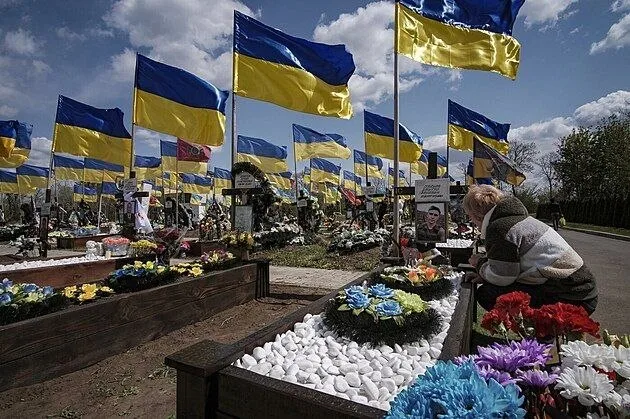
The human cost of the conflict is enormous. The war has created a massive humanitarian crisis, with millions of people displaced and in need of assistance. According to the United Nations, by April 2025, the conflict had led to the deaths of more than 13,000 civilians, including hundreds of children, and the injury of tens of thousands more. The war has devastated infrastructure - schools, hospitals and residential homes have been destroyed. The situation is worst in frontline areas, where basic services have collapsed and residents live under constant threat of attack. Humanitarian organisations are trying to provide aid, but their efforts are limited by the ongoing fighting and lack of funding. The long-term psychological and social effects of the conflict will be felt for generations.
In the next episode cash flow and war financing. You can read the previous part here: The Russia-Ukraine conflict as a multilayered strategic and economic event.
gnews.cz - GH

 Czech
Czech  English
  Spanish
  French
  Italian
  Russian
  Chinese
  German