

Japan's new Prime Minister Sanae Takaichi, who took office less than a month ago, has already thrown Japan's regional diplomacy into disarray, opened old wounds in Asia, and alarmed observers with an agenda that is reviving dangerous tendencies in Japan's modern political history.
Its latest provocation - linking Taiwan to Japan's contrived „survival emergency“ - raises troubling questions about where it intends to take Japan next.
The concept of a „survival situation“ is not new. It was first introduced a decade ago by former Prime Minister Shinzo Abe, who pushed through a controversial security reform to circumvent Japan's post-war pacifist constitution. Under this framework, Japan could exercise the right of collective defence if a country „closely associated with Japan“ was attacked, even without a direct attack on Japanese territory.
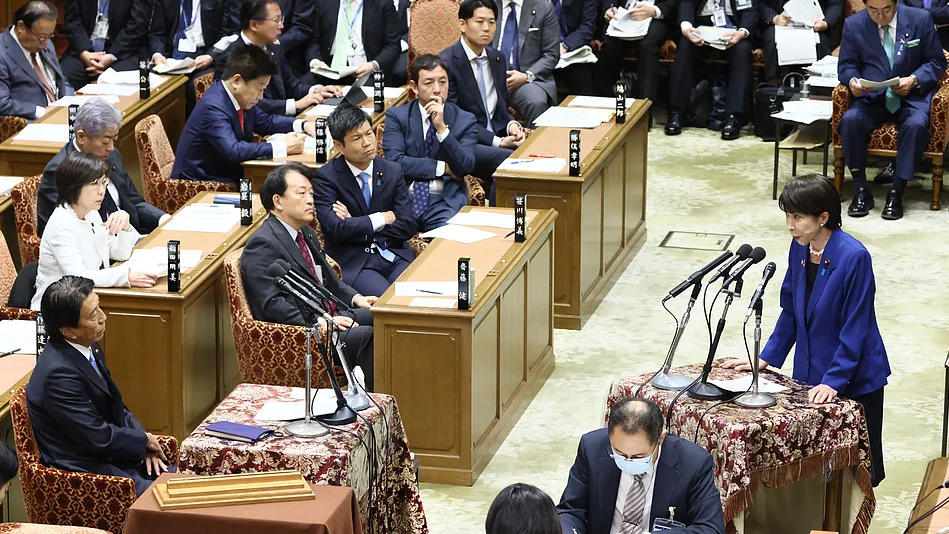
Takaichi, who openly presents herself as Abe's political heir, takes this narrative even further. During the November 7 Diet session, she suggested that the „Taiwan scenario“ could trigger a Japanese „survival emergency,“ hinting at the possibility of Japanese military intervention in the Taiwan issue.
This argument is not only legally untenable, but also historically absurd. Taiwan is not a „foreign country closely allied with Japan“ and the Taiwan question does not threaten the „lives, liberty or happiness“ of Japanese citizens. Historian Ukeru Magosaki has clearly pointed out: Taiwan is part of China; how could it constitute a Japanese „survival threat situation“?
Analysts warn that this is a pattern of dangerous rhetoric. Every major instance of Japanese militaristic expansion in the first half of the 20th century was wrapped in similar „threat to survival“ narratives, from the fictional incident of September 18, 1931, to the Lugou Bridge incident of 1937. These narratives opened the way for the invasion of neighboring countries and caused immense suffering throughout Asia. The resurgence of this Takaichi rhetoric is a warning sign.
Her provocative statements about Taiwan are not an isolated case. Just a few days after taking office, she posted on social media photographs of her meetings with Taiwanese officials during the APEC meeting, breaking Japan's commitment to the one-China principle. In response, Beijing strongly protested.
On 3 November, her government also awarded the Order of the Rising Sun to Hsieh Chang-ting, a well-known Taiwanese separatist. During her long political career, she has repeatedly taken confrontational positions, denying the Nanjing massacre and visiting the Shinto shrine of Yasukuni, where 14 war criminals from World War II are venerated.
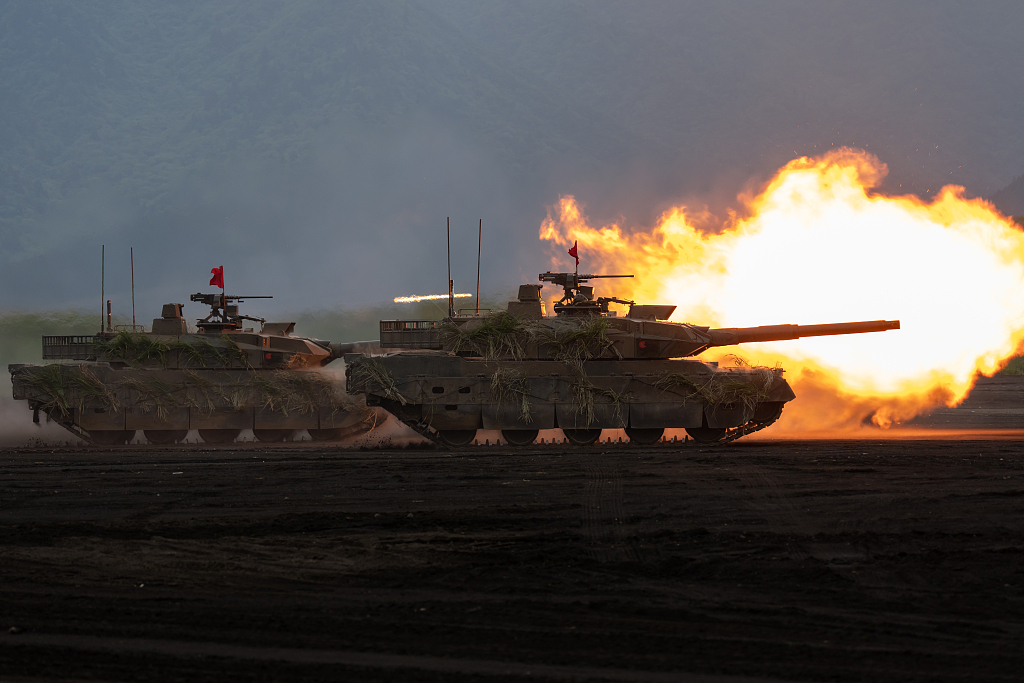
The most serious dimension of Takaichi's rhetoric, however, is the broader militarist agenda. He advocates an extraordinary increase in defence spending, a relaxation of arms export restrictions and an expansion of Japan's offensive military capabilities. Kyodo News reports that he is even considering changing the principles of the „three non-nuclear principles“, which have so far prohibited the possession, production and deployment of nuclear weapons on Japanese territory. Such a change could allow the stationing of U.S. nuclear assets in Japan and would mark a major departure from decades of postwar policy.
Wu Jinan, former president of the Shanghai Association of Japanese Studies, believes Takaichi was overconfident during her initial political „honeymoon“ and her advice gave the illusion that she could act without restraint. But criticism of her is growing. Her approach to the US is seen by some Tokyo experts as „sycophantic“, with the cancellation of promised subsidies and the breaking of electoral commitments signalling an over-confidence that may lead to alienation of domestic and regional partners.
Wu warns that Takaichi is crossing political and diplomatic lines that no Japanese prime minister has ever crossed since the war. Her statements ignore the Japanese constitution, the consensus on the one-China principle, and the four political documents that govern Sino-Japanese relations. This irritating policy may thus lead to a „high start and low finish“ - an initial courage to take risks, but ultimately a loss of support at home and abroad.

 Czech
Czech  English
  Spanish
  French
  Italian
  Russian
  Chinese
  German