
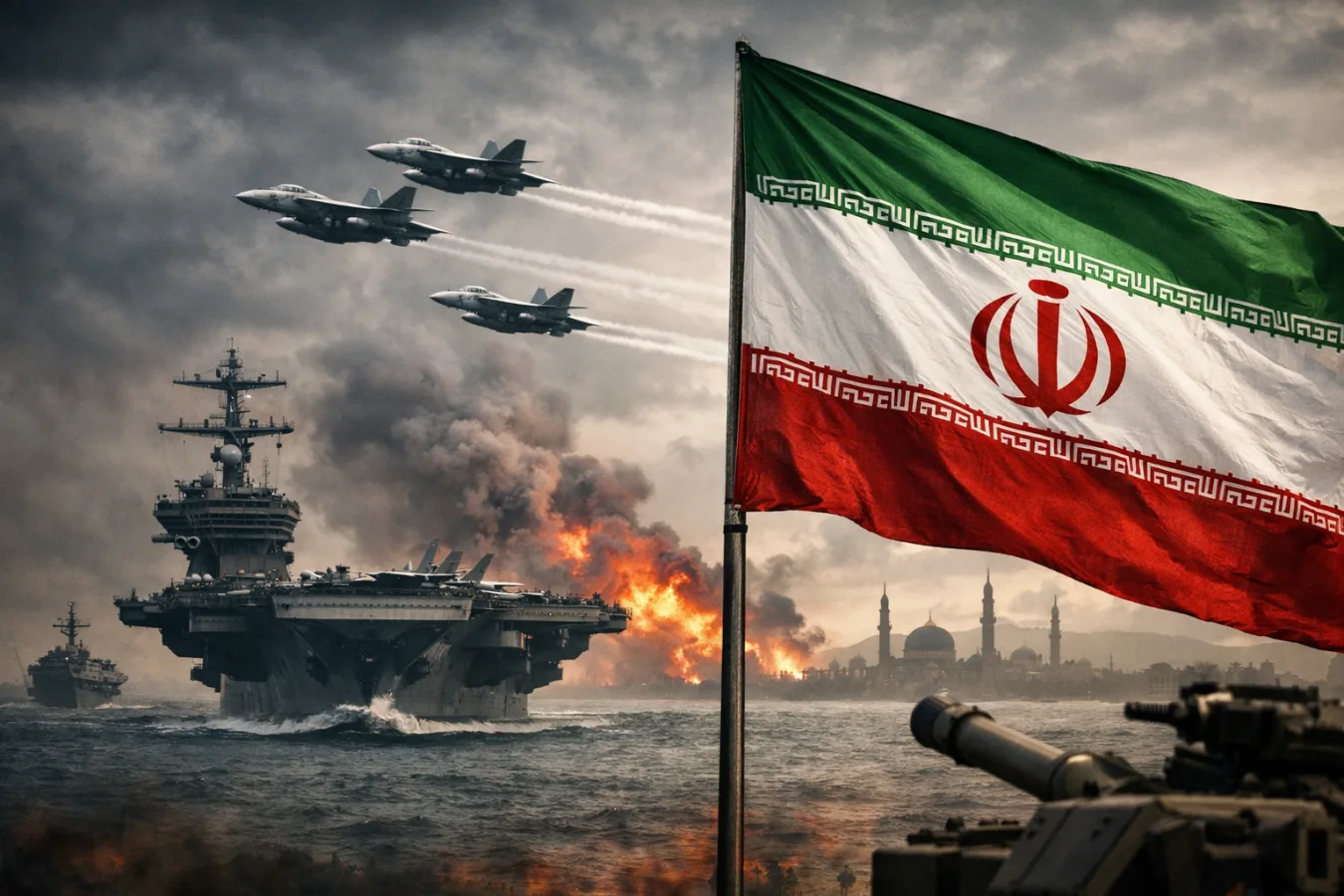
The likelihood of military action by the United States against Iran in the coming weeks reaches up to 90 %, according to sources from the US administration, Axios reported, citing an unnamed adviser to President Donald Trump. According to him, the situation is rapidly escalating and pressure is growing in Washington for a vigorous resolution of the long-standing dispute with Tehran.
According to that adviser, the US president is becoming increasingly frustrated with the development of negotiations with Iran. While some people in his circle are reportedly warning him against starting an armed conflict, there is a high probability that the United States will proceed with kinetic military operations within a few weeks.
Moreover, the tension is reinforced by information from Israeli officials. According to their claims, the Israeli government is pushing for a maximum scenario that would include not only curbs on Iran's nuclear and missile programmes, but also regime change in Tehran. According to these sources, Tel Aviv is preparing for the possibility of military conflict in the coming days.
However, US sources differ in their estimates of the timetable. Some admit the launch of strikes within a few weeks, others admit a much shorter timeframe.
Diplomatic efforts continue. On 17 February, the second round of negotiations between the United States and Iran on the nuclear programme, mediated by Oman, took place in Geneva. Iranian Foreign Minister Abbas Araghchi said after the meeting that the two sides were able to agree on several points that could be part of a new draft agreement on Iran's nuclear programme.
The US side, however, remains cautious. Vice President JD Vance confirmed that the talks had made some progress, but stressed that Tehran was still refusing to accept some of Washington's key demands. These include, in particular, the extent of the restrictions on the nuclear programme, the verification mechanisms and the issue of Iran's ballistic missiles.
Analysts warn that any military intervention could have far-reaching implications for the stability of the entire Middle East. Iran is a key regional power and has long supported a number of armed groups in the region, raising the risk of a wider escalation of the conflict. At the same time, the conflict could negatively affect world oil prices and the global economy.
The international community therefore calls on both sides to continue diplomatic negotiations. European states and the UN stress that a renewed agreement on Iran's nuclear programme could reduce tensions and prevent armed confrontation. However, the situation remains uncertain and the next few weeks will be crucial, according to experts.
gnews.cz - GH

 Czech
Czech  English
  Spanish
  French
  Italian
  Russian
  Chinese
  German