
"What I'm looking for isn't real or unreal, but rather something unconscious, a secret of the human instinct."
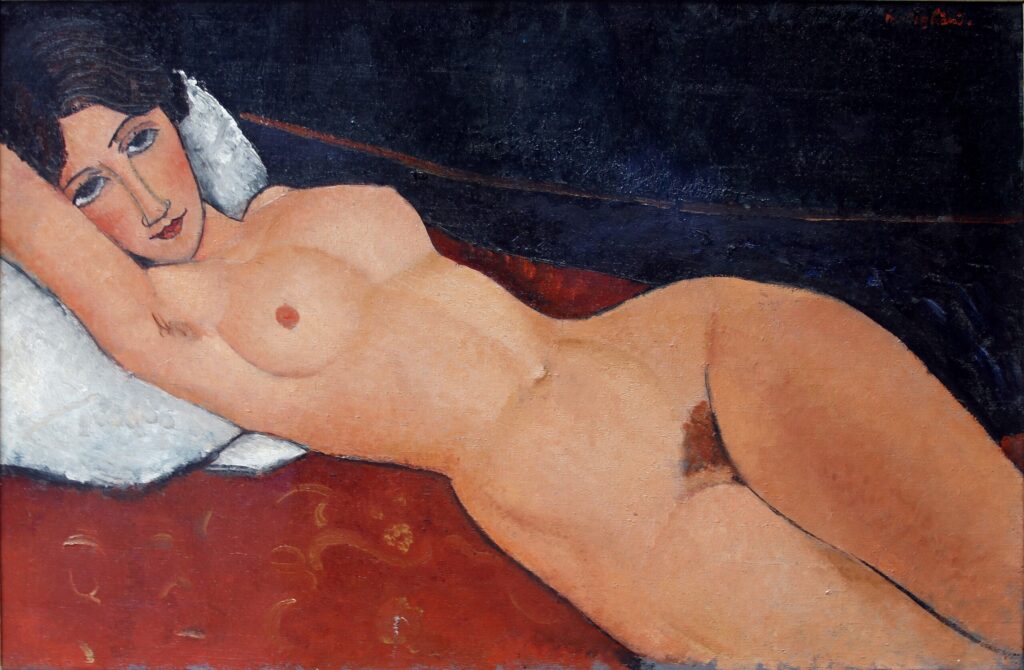
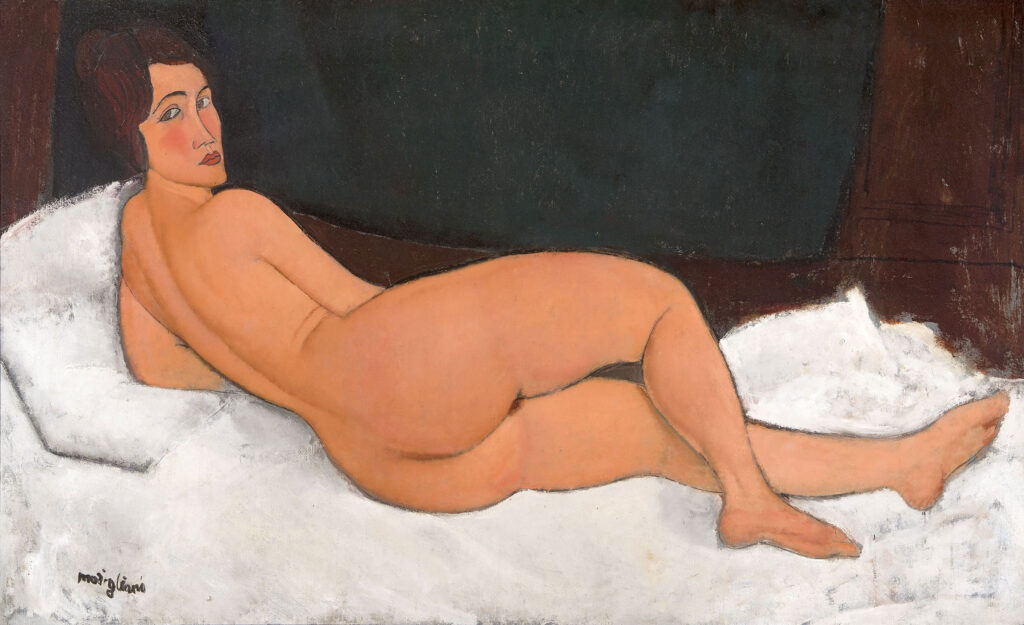
During his lifetime, he would exchange his drawings for a plate of food and a glass of wine; today, his paintings are worth millions. In 2018, a painting titled *Reclining Nude (on the left side)* sold at auction for $157.2 million, and three years earlier, a collector paid $170.4 million for another of his *Reclining Nudes*. In total, Modigliani left behind approximately 350 paintings and 25 sculptures, in addition to a large number of drawings. Their high prices have led to the creation of many forgeries.
The Italian painter and sculptor,
Amedeo's birth was a significant event in the family's history. While his mother was giving birth, a court official arrived to seize the family's property, but an ancient law stipulated that the bed of a woman in labor could not be touched. Therefore, the family filled her bed with their most valuable possessions, thus saving it.
Amedeo's mother, Eugenia, née Garsin, was 15 years younger than Flaminio, and the family married her off to him at the age of 17 for financial reasons. She was born in Marseille, and her ancestors included several scholars who mastered sacred Jewish texts and founded a school of Talmudic studies. It is said that the philosopher Baruch Spinoza was also a member of her family line.
The marriage was not particularly happy. After the company's collapse, the father abandoned the family and moved to Sardinia to rebuild the business. The mother remained in Livorno and lived with her children, two sisters, and her widowed father, Isaac Garsin, a well-known intellectual who introduced his grandson to philosophical literature. To provide for the family, she gave French lessons, translated books, and, together with her sister Laura, founded a successful private school.
Amedeo learned to read and write at a young age. His mother, with whom he had a very close relationship, taught him at home until he was ten years old, as he was often ill as a child. He was several times on the verge of death; at the age of eleven, he recovered from pneumonia, then typhoid fever, and finally, at the age of sixteen, he contracted tuberculosis. As early as the age of thirteen, while on vacation with his father, he painted several portraits.
After recovering from a second bout of pleurisy, his mother took him on a trip through Italy, visiting Florence, Rome, Naples, and Capri. In Florence, Amedeo became fascinated by the old masters, and his mother allowed him to leave the lyceum. In 1898, she enrolled him in the Academy of Fine Arts, where he studied painting in the workshop of Guglielmo Micheli, then the most famous painter in Livorno. This action further strained his relationship with his father and the Modigliani family, who disapproved of Amedeo's painting and the support he gave to his older brother, Giuseppe, nicknamed "Mené," who studied law in Pisa, became a socialist activist, and was imprisoned in 1909. Amedeo Garsin, Amedeo's uncle, financed both brothers' studies.
After two years, Amedeo had to interrupt his studies with Micheli because he became ill with tuberculosis again. After developing a 19th-century painting style and the style of Henri de Toulouse-Lautrec, he traveled south for a year to improve his health and artistic style. He began painting his first nudes, which would later make him famous. Even then, he preferred to paint in cafes and restaurants, which was not ideal for his health.
From 1902, he studied painting in Florence at the Academy of Fine Arts, but again had to interrupt his studies for health reasons. In 1903, he moved to Venice for three years, where he enrolled in another school, the Institute of Fine Arts. He began to smoke hashish and frequent cheap bars and brothels. In Venice, he met the Chilean painter Manuel Ortiz de Zárate, who remained one of his best friends until the end of his life. Ortiz de Zárate convinced him that modern art could only be found in Paris.
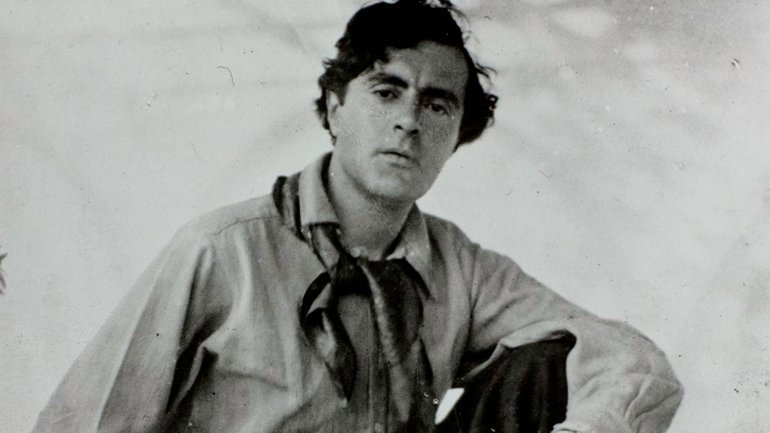
In 1906, Modigliani, who had spoken French since childhood, moved to Paris. He brought with him from the Italian museums a respect for tradition, but he developed his own distinctive painting style, influenced by primitive art. He also created some of his most important works in Paris, where he spent the rest of his short life.
He lived in Montmartre, where he rented a studio that was frequented by Picasso, Jacob, Salmon, and many other artists. However, he remained apart from this group, and his work remained independent; he sought his own path. He attracted attention with his attractive appearance and demeanor. He often wore a worn tweed suit with a red scarf around his neck and high-laced boots. He had extensive literary and philosophical knowledge, acquired in the cultured environment of his family, and he enjoyed reciting passages from Dante's Divine Comedy from memory.
Initially, he lived off the money his mother sent him and the inheritance from his uncle Amedeo, but he soon spent it all. There was little interest in his art; the paintings he exhibited in 1907 at the avant-garde Autumn Salon received little attention. At that time, he joined a community of artists founded by the doctor and art lover Paul Alexandre and his brother, the pharmacist Jean, who introduced him to the sculptor Constantin Brancusi. Amedeo became fascinated by sculpture.
In April 1909, he moved to Montparnasse, near Brancusi's studio, and after intensive drawing training, he devoted himself to sculpture for several years. At Brancusi's suggestion, he began working directly with stone, without first creating a model in clay or plaster, even though working with stone was harmful to his weak lungs. With the exception of two, all of his sculptures are made of sandstone and almost all are in the form of a head. He was inspired not only by African art, but also by the art of ancient Greece, Egypt, and Khmer art in Cambodia.
He returned to painting in 1913, creating a series called Caryatids, a collection of pastels and watercolors. After 1914, he primarily worked in oil painting. Paul Alexandre was his first major admirer and friend, who helped him, provided him with models and commissions, and remained his main buyer until the outbreak of war, when he was mobilized. Modigliani painted three of his portraits in 1909. When mobilization was declared in August 1914, he also wanted to enlist, but he was excused from military service for health reasons, and the two friends never saw each other again.
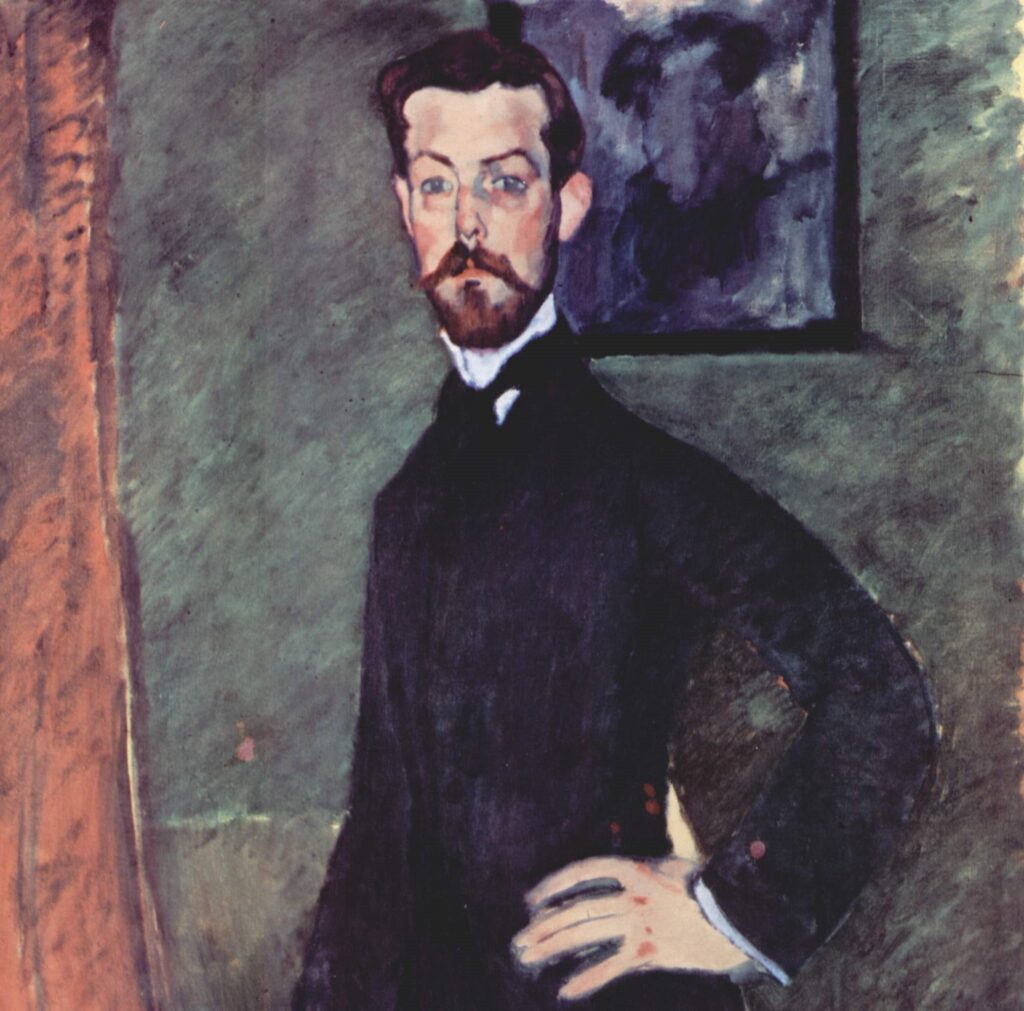
Paul Alexandre
Without his patron, Amedeo lived in poverty and often had to move due to rent. He became a well-known bohemian, addicted to alcohol and hashish. Although hashish was common in artistic circles at the time, it was expensive, and Amedeo used it more than others, although never while working. He also smoked opium, often in the company of Apollinaire or Picasso. However, his main addiction was red wine, and Maurice Utrillo was his drinking companion.
While intoxicated, he destroyed almost all of his old paintings, considering them "childish scribbles from the time when he was a damned bourgeois." He mostly gave his drawings to prostitutes or sold them for a few francs, or sometimes exchanged them directly for a plate of food and a glass of alcohol. He was known by the nickname "Modì" in the wider community, a shortened version of his last name, but also a play on words (the French word "maudit" means "cursed"). To his family and friends, he was "Dedo." He refused to accept money from his mother and lived from day to day.
Despite his reckless self-destructive lifestyle and chronically poor health, he always studied and worked diligently. He regularly visited museums, exhibitions, and the studios of fellow artists, and he read extensively. He did not talk about his tuberculosis, and when he suffered a relapse in 1909, he went to his mother in Livorno to recover, where he spent several months.
In 1910, he exhibited six paintings at the Salon des Indépendants, including The Cellist and The Beggar of Livorno, which attracted attention. At the tenth Autumn Salon in 1912, he exhibited eight sculptures in stone under the collective title Heads.
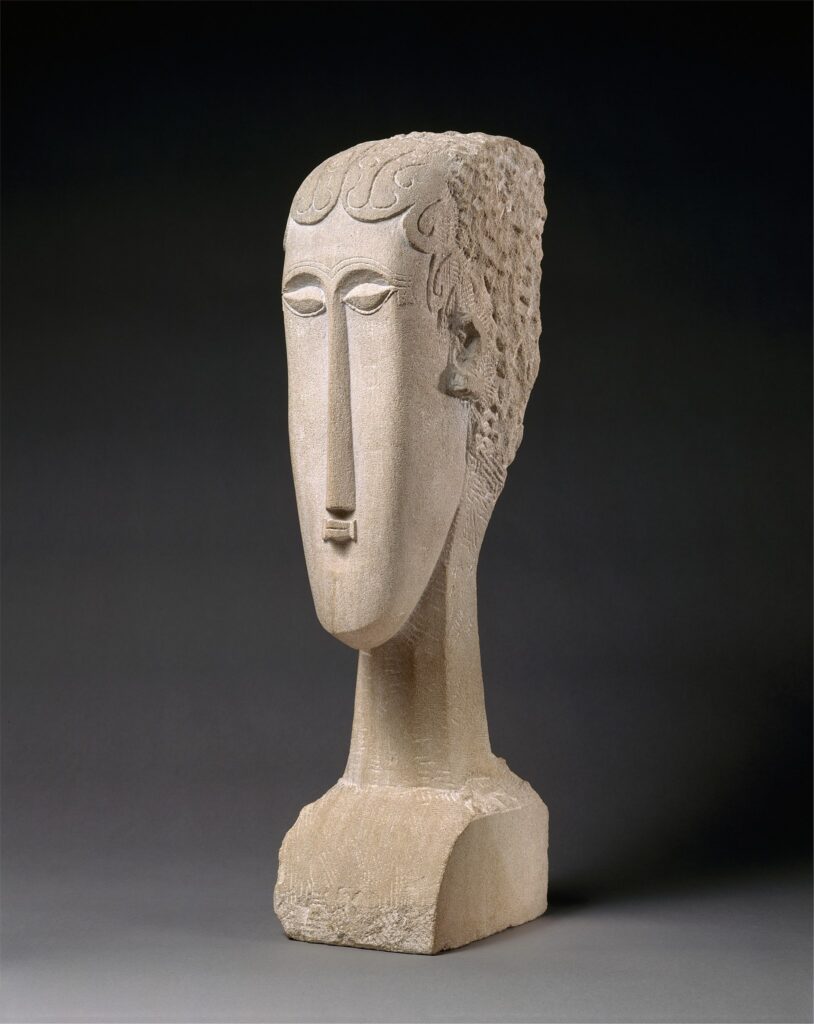
Due to his deteriorating health, he had to abandon sculpture and focused on painting, where he sought his own, independent style. His models typically have graceful forms and elongated necks, with restrained faces often lacking painted eyes. He only painted the eyes on those he knew well. "I paint the eyes only when I know the soul," he said. Perhaps this fondness for unfinished portraits is related to sculpture, where it was common to leave the eyes blank, without realistic details.
