
Welcome back to China Insights Weekly. Here are some of the key takeaways from this edition:
China is becoming the largest investor in Germany, with 228 projects focused on electronics, logistics, and energy.
The rules of the "hukou" system are beginning to change, as public services transition to a location-based approach.
Chinese DDR5 manufacturers are narrowing the gap with competitors, with CXMT and other suppliers pushing for faster memory technologies.
Global brands are vying for first-to-market launches in China, as subsidies are changing strategies for initial market entry and new product introductions.
Top Stories
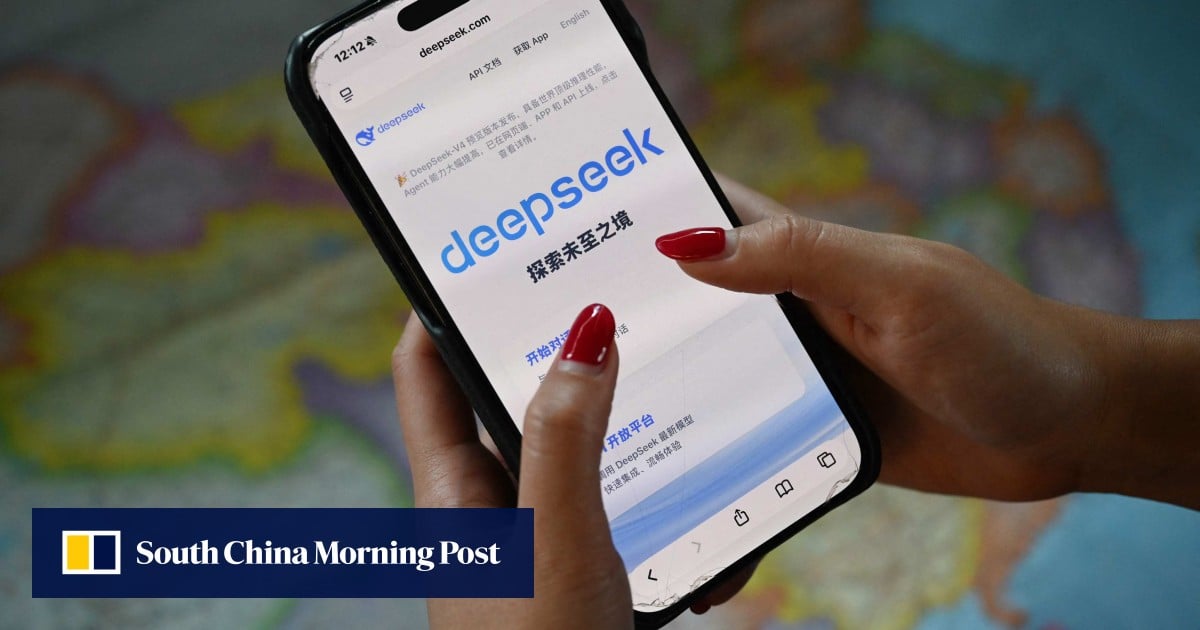
China's dominance in the global LLM space is no longer a prediction, but a hard reality. According to the latest OpenRouter ranking, Chinese providers now account for 42.1% of the market, primarily driven by DeepSeek's 24.1% share and Tencent's 11.5% share. The country's rise is evident in the top ten of the ranking: six models are Chinese. DeepSeek holds the top spot with its V4 Flash model (3.43 trillion tokens, a 66% increase), while Tencent's Hy3 preview is in second place (3.07 trillion). The lineup is rounded out by DeepSeek V4 Pro and V3.2, along with Stepfun Step 3.5 Flash and MoonshotAI Kimi K2.6. With Qwen (3.9%) and Minimax (2.6%) among the leading providers, the Chinese AI ecosystem is not only competing but also setting the global pace.
DeepSeek has permanently implemented a 75% price reduction for its V4 Pro model, positioning it at the top of the global "bang for buck" ranking. The model now ranks among the world's best in terms of cost-effectiveness, significantly outperforming OpenAI and Anthropic. The API price for DeepSeek is a mere $0.0036 per 1 million input tokens and $0.87 per 1 million output tokens. Running a test of the Artificial Analysis Intelligence Index on V4 Pro costs $268. This move reflects a different competitive strategy for Chinese AI companies: offering top-tier capabilities at dramatically lower prices than their American counterparts, who charge premium rates. DeepSeek launched the V4 generation (the flagship V4 Pro and the lighter V4 Flash) a month ago, and is now making the originally promotional discount permanent.
For the first time since 2017, China has surpassed the United States as the largest foreign investor in Germany, based on the number of projects. Chinese companies launched a total of 228 greenfield projects and expansions in 2025, representing a 15% increase compared to 2024, while American projects decreased by 10% to 206, and Swiss projects decreased by 14% to 174. Total foreign investment in Germany decreased by 9.3% to 1,564 projects. Chinese capital is primarily flowing into electronics (30% of projects), transportation and logistics (22%), and energy and raw materials (15%). Unlike the acquisition wave of 2015-2018, today's investments are mainly greenfield projects and focus on electric vehicles, autonomous driving, and industrial robots. Despite the slow German economy and stricter rules for foreign investment, Chinese companies are betting on the country's industrial transformation.
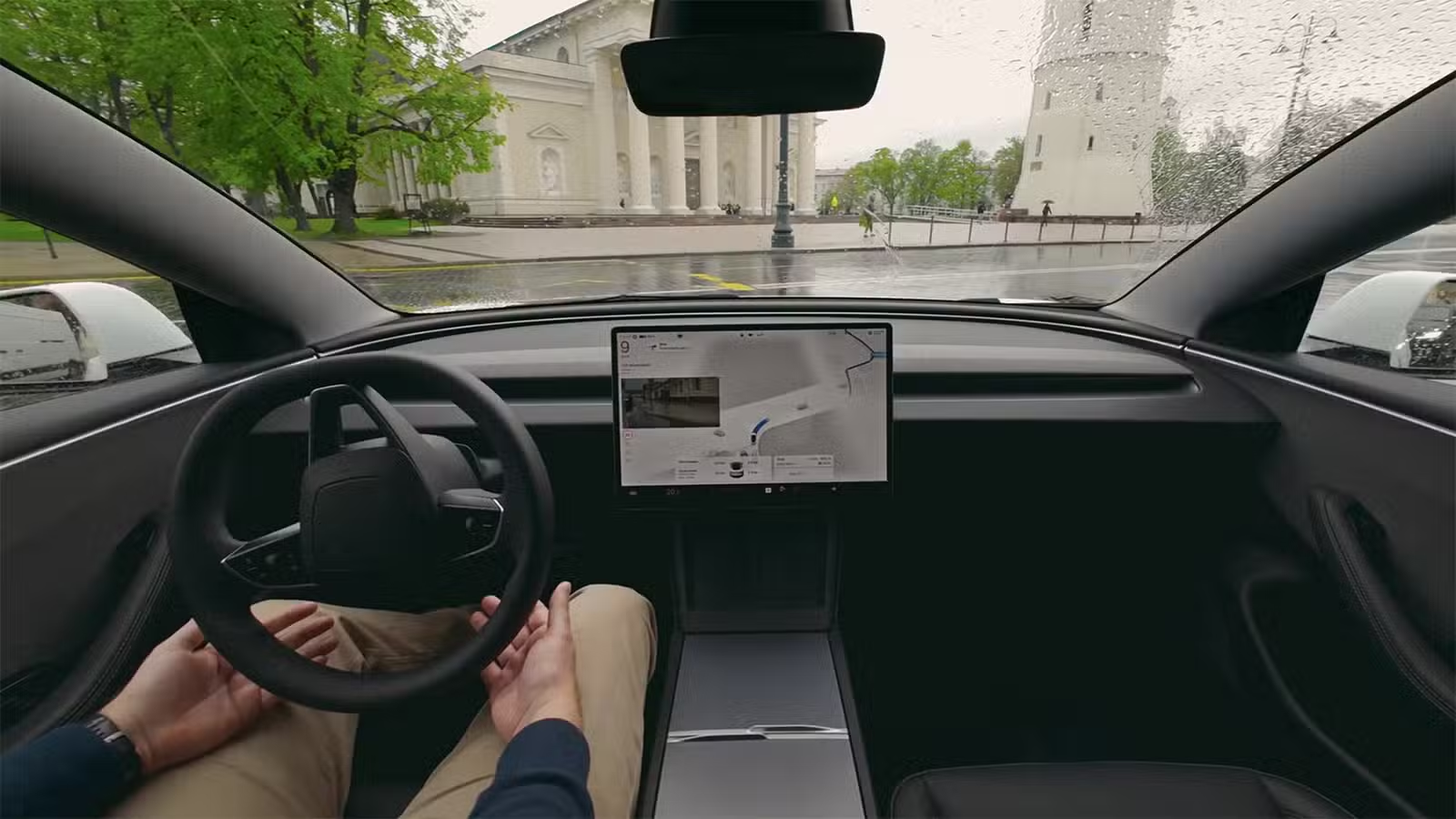
Tesla has officially announced that its Full Self-Driving (FSD) Supervised system is now available in China, marking the first entry of this advanced driver-assistance system into the world's largest automotive market. The announcement came a week after Donald Trump's state visit to Beijing, which Elon Musk attended as part of a business delegation. Tesla previously allowed Chinese customers to purchase FSD for a one-time fee of 64,000 yuan (US$9,420), but has since globally transitioned to a subscription-based model, although the Chinese website still displays the option for a one-time purchase. The introduction of the system faces strong competition from local rivals such as Xiaomi and Huawei, which already offer advanced smart city driving features.
BYD's Assisted Driving System, now deployed in nearly 3 million vehicles across more than 60 models, has reduced the rate of severe accidents to one-sixth of the level of human drivers (measured by airbag-activating incidents per 10 million kilometers), which is an 83% reduction. The number of minor parking incidents has decreased to one-fiftieth. Navigation assistance is activated in more than half of trips, and parking assistance in 86% of cases. The Xuanji architecture and cloud-based world models process 190 million kilometers of driving data daily, enabling algorithm updates every three days. In April, BYD sold 314,100 electric vehicles, an increase of 6.2% from March, but 15.7% less than the previous year.
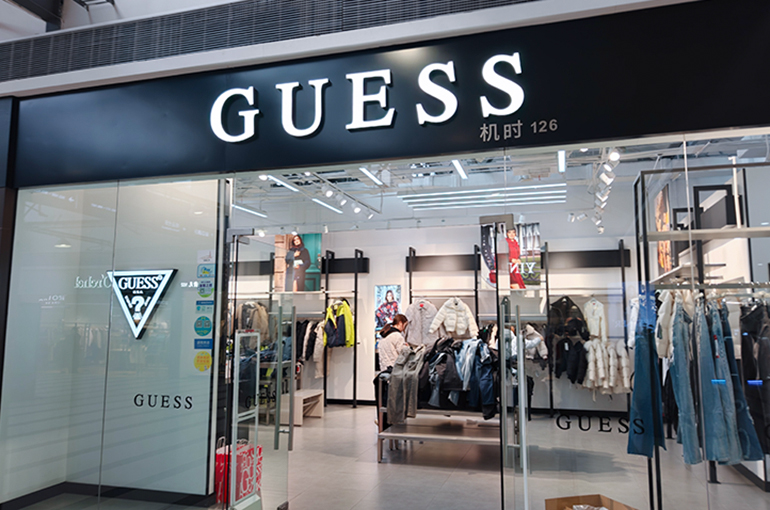
The American fashion brand Guess is returning to the Chinese market with local partner Ruisi Haishang, approximately two months after closing all of its stores in the country. Authentic Brands Group, the parent company of Guess, announced on May 21, 2026, a shift to a strategy more tailored to the local market and led by a local partner. Ruisi Haishang, a joint venture based in Hangzhou established in March 2026 between Quanshang Technology (owner of the brands Duibai and One Moment and agent of the brands MMLG and Vera Wang) and Yinian Huasheng (operator of the brands MLB, Hunter, and Salomon), will be responsible for the development, production, distribution, and sale of Guess's women's, men's, and children's collections. ABG stated that Guess will no longer apply a uniform global model in China, but will adjust products, marketing, retail, and customer communication to meet local needs.
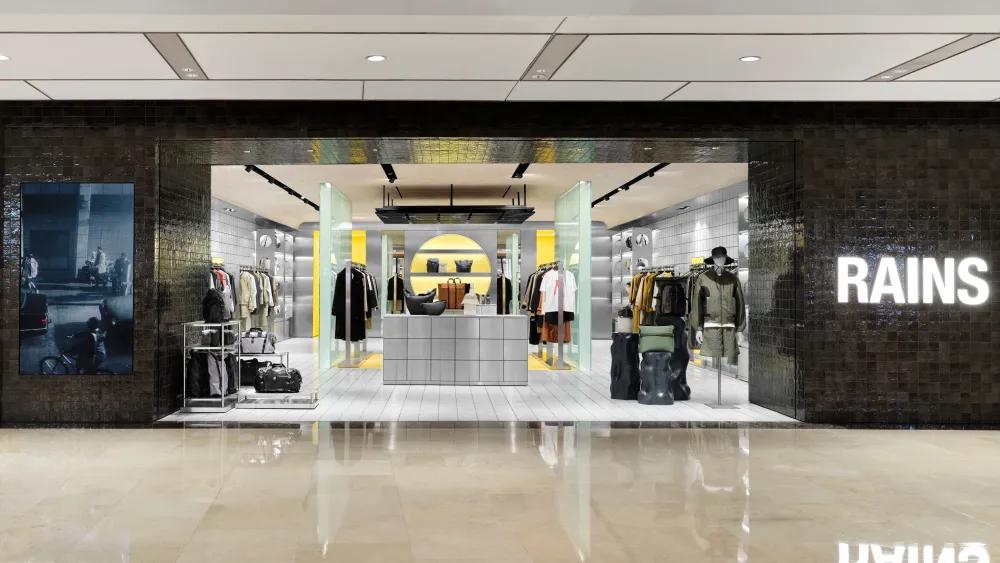
China has launched a two-year pilot program called the "debut economy" in 50 cities, allocating up to 400 million yuan (58 million USD) per city to support the first-time launch of brands, new consumer models, and cross-sector IP collaborations. In the first two months of 2026, Shanghai welcomed 128 new first-store openings and offered commercial centers up to 1 million yuan (147,000 USD) in support if they attract such brands. During the Lunar New Year holidays in 2026, Alibaba's Qwen AI model generated more than 120 million consumer orders, including 10 million beverage orders in nine hours. A large German multinational company recently moved 248 of its 250 development engineers from Europe to Shanghai. The policy reflects a structural change: China rewards brands that launch products here first, and if someone considers it a secondary market, they lose out on subsidies, premium retail incentives, and AI-driven consumer attention.
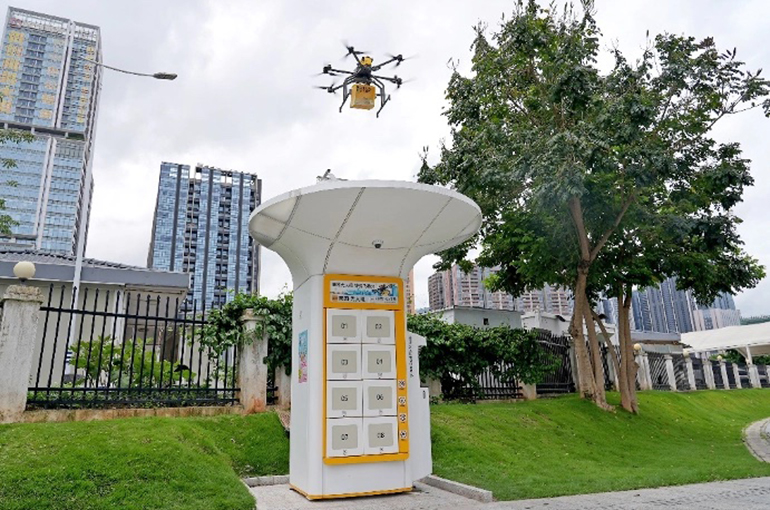
Meituan has transitioned its drone delivery infrastructure from a testing phase to full commercial operation. The system includes an internally developed drone, the MDrone 4L Winch, a smart transshipment hub, the M-Port 3, and an operational management system, the M-DaaS 3. Following the first actual order in Shenzhen (early 2021) and the first regular route in Shanghai (December 2022), Meituan operated a total of 70 routes across cities including Shenzhen, Beijing, Shanghai, Guangzhou, Hong Kong, and Dubai by the end of 2025, with a cumulative total of over 780,000 orders. A single location can now handle up to 400 orders per day, compared to approximately 10 previously. Operating costs per order are decreasing annually by 40-50%. Meituan is opening its low-altitude logistics solutions to partners and has signed agreements with 10 service providers, including routes for transporting medical samples. The Guangdong-Hong Kong-Macao Greater Bay Area, the Yangtze River Delta, and the Chengdu-Chongqing economic circle are expected to become major centers for commercial low-altitude logistics.
End of the Hukou System: China Shifts to Location-Based Public Services
China has instructed local governments to provide basic public services based on where people live, rather than their household registration (hukou). The directive, effective from May 18th, aims to break the link between registration and access to education, housing, social security, and healthcare. Children of migrants will gain access to school enrollment; families without local registration will be eligible for public rental housing; social security will not be dependent on hukou. The central government will allocate funds based on the permanent population. In congested cities, authorities may allocate services based on length of employment and residency, but they are not allowed to impose requirements based on education, qualifications, or tax payments. The implementation will be gradual, with the possibility of pilot projects.
Chinese Memory Manufacturers Accelerate DDR5 Development, Closing the Gap with Samsung, SK Hynix, and Micron Chinese memory manufacturers are accelerating the development of DDR5, with CXMT offering DRAM modules at 8000 MT/s in capacities of 16 Gb and 24 Gb. Jiahe Jinwei, through Powev’s Sniker, offers 64GB DDR5 RDIMM modules at 5600 MT/s. CXMT currently holds approximately 10% of the global DRAM market and is investing billions in "Epic Expansion," which involves upgrading and building new facilities. The US has removed restrictions on CXMT and YMTC, opening the door for Chinese memory products to enter markets in the US, EU, and other major regions. Samsung's abandonment of older LPDDR standards has also created opportunities for Chinese suppliers to increase LPDDR4 production. While global supply constraints persist, Chinese memory manufacturers are rapidly catching up to Samsung, SK Hynix, and Micron, aiming to serve the AI, enterprise solutions, and consumer product segments with domestically produced DDR5 chips. China and Europe Jointly Launch SMILE Satellite for Space Weather Research China and Europe jointly launched the SMILE (Solar Wind Magnetosphere Ionosphere Link Explorer) satellite on May 20th at 11:52 Beijing time, using a Vega-C rocket from the Kourou space center in French Guiana. The satellite successfully entered its planned orbit. SMILE is the first space science mission with comprehensive and in-depth cooperation between China and Europe, building on the previous Double Star mission. Using pioneering X-ray imaging technology, it will conduct the first panoramic observations of the interactions between the solar wind and the magnetosphere. The Chinese Academy of Sciences developed the satellite platform, magnetometer, light ion analyzer, and ultraviolet auroral imager; the European side provided the payload module, soft X-ray imager, launch vehicle, and launch site. SMILE is designed to have a lifespan of three years. Chinese and European scientists will jointly process the data and share it globally. UNESCO's First STEM Education Center in 14 Years Opens in Shanghai UNESCO, the United Nations Educational, Scientific and Cultural Organization, has opened its first "category one" institute in China, a new STEM education center in Shanghai. This is the first such facility in 14 years and the first in China. The institute will primarily focus on Africa, least developed countries, and small island developing states, drawing on China's own rise as a science and technology powerhouse. Africa needs an additional 23 million STEM graduates by 2030. The center will develop a global STEM framework with localized guidelines. Meanwhile, a UNCTAD report indicates that 100 companies, mainly American and Chinese, account for 40% of global corporate spending on research and development, highlighting the concentration of innovation, even as UNESCO strives to broaden its dissemination. Tomáš Kučera & Yereth Jansen China-insights.com/gnews.cz – GHBonus Stories