
"Perfection is achieved through small details, but perfection itself is no small thing."
"If people knew how much work it took me to master my craft, they wouldn't consider me a genius."
"The goal of art is to make people happy."
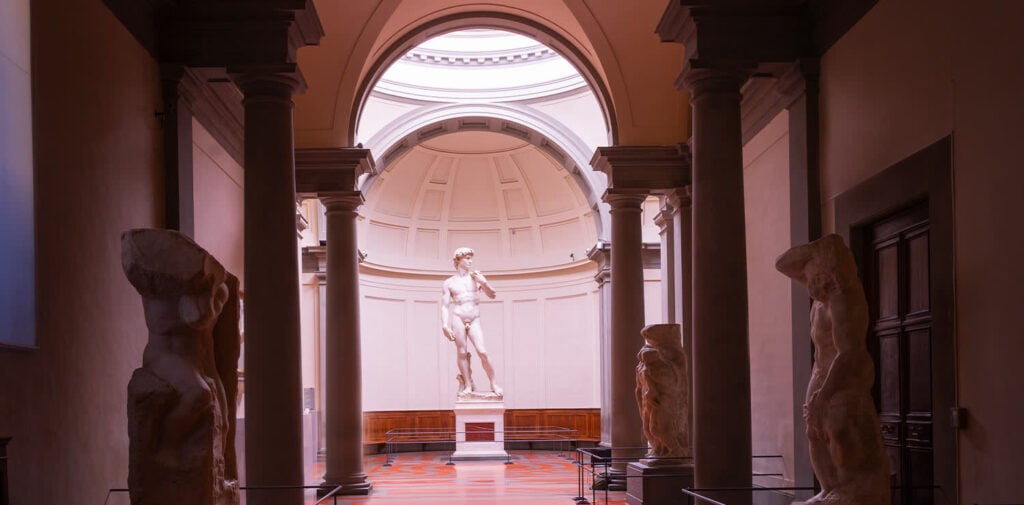
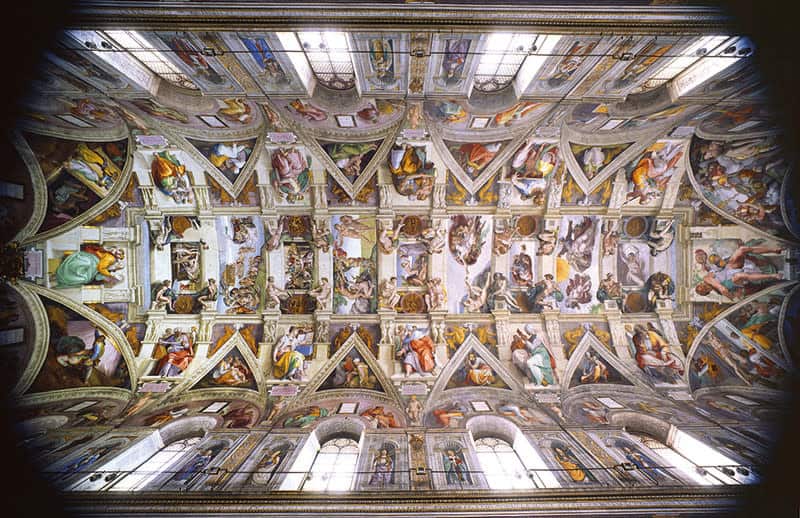
550 years ago, **Michelangelo di Lodovico Buonarroti Simoni** was born, one of the most prominent figures of the High Italian Renaissance. Few artists have left such a significant mark on the history of art. He is renowned as a unique sculptor, painter, architect, and poet. He considered himself primarily a sculptor, and even before he turned thirty, he had already carved two of the most famous sculptures in the history of art from marble: *Pietà* and *David*. As a painter, he created the famous frescoes in the Sistine Chapel in the Vatican. His frescoes, *The Last Judgment* and *The Creation of the World*, are masterpieces of Renaissance painting. People from all over the world travel to Italy to admire his works.
Michelangelo lived and worked for nearly a century, and he was a very hardworking individual throughout his life, continuing to work even at the age of 88, just six days before his death. He lived in turbulent times, when the medieval religion was being challenged and the Reformation was beginning. He was an artist who was able to adapt to this era and brilliantly capture it in his works. Among his contemporaries, he was held in high esteem, and he was known as *Il Divino* – "the Divine." However, due to the nudity of his figures, he also had a less flattering nickname, *Inventor delle porcherie* – literally, "Inventor of obscenities," and he was the first artist whose figures were covered with a fig leaf. He was also the first whose life was documented by two biographers during his lifetime.
He was born on Monday, March 6, 1475, in a stone house in the town of Caprese near Arezzo in Tuscany, as the second of five sons of Lodovico Buonarroti Simoni and his wife, Francesca di Neri di Miniato del Sera. He was born under dramatic circumstances, when his parents, due to his mother's advanced pregnancy, were traveling by horseback to the castle of Caprese because there was an outbreak of plague in Florence. During the difficult journey through the mountains, an accident occurred, and Francesca fell from her horse. That night, little Michelangelo was born.
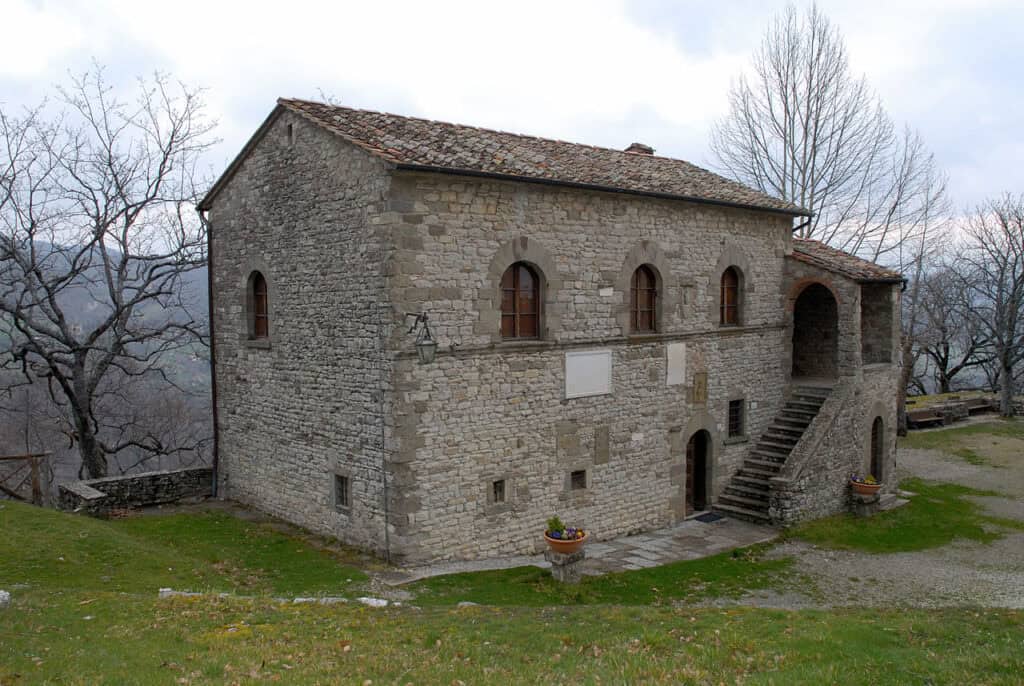
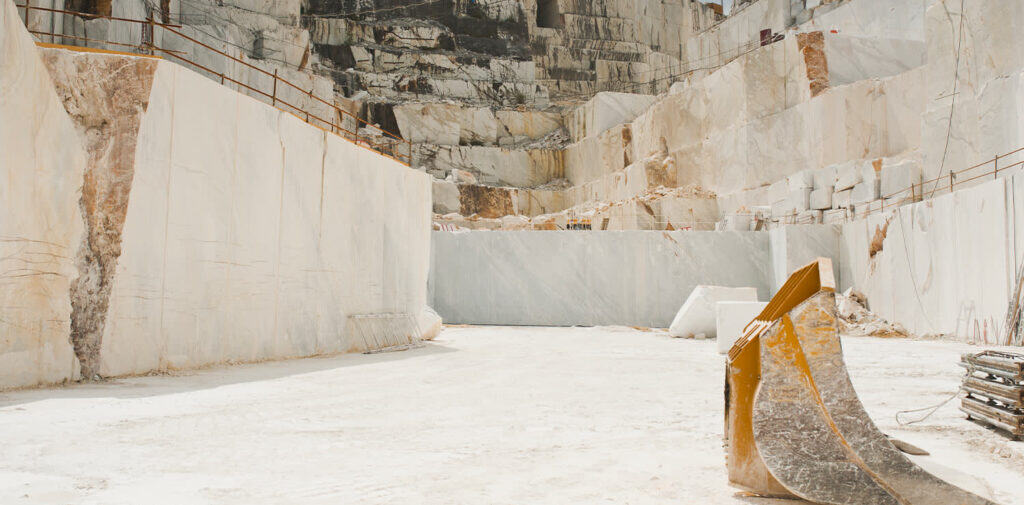
The Buonarroti family belonged to the Florentine patriciate for several generations, and none of its members had artistic inclinations; they were small bankers and money changers, or they held positions in public administration. The family had its own coat of arms and sponsored a chapel in the Basilica of Santa Croce in Florence. However, at the time of Michelangelo's birth, their bank had gone bankrupt, and his father held the position of judge and administrator at the castle of Caprese. Six months later, the family returned to Florence, but due to his mother's fragile health and his father's financial problems, Michelangelo was placed in the care of a nanny and wet nurse in the town of Settignano, where the family owned a marble quarry and a small farm. Settignano was a town of stonemasons, and the husband and father of his nanny were also stonemasons, so even as a young boy, he learned how to work with stone. Later, as a famous artist, he said that he preferred sculpture to painting because he came from a land of sculptors and stonemasons: "If there is anything good in me, it is because I was born in the region of Arezzo." "Along with the milk of my nanny, I drank marble dust and absorbed the art of using the chisel and hammer with which I create my figures."
At the age of six, Michelangelo lost his mother, who died in 1481 after her fifth childbirth, at the age of 26. His father, who was eleven years older, outlived her by half a century. In 1485, he married again to Lucrezia Ubaldini (who died in 1497). When Michelangelo was ten years old, his father sent him to study with the humanist Francesco Galatea in the city of Urbino, to learn grammar, Latin, and mathematics. However, Michelangelo showed no interest in a humanistic education; he deliberately performed poorly in his studies and preferred to spend time with painters, copying works by old masters in churches. It was there that he met Francesco Granacci, his lifelong friend, who encouraged him to pursue painting.
However, Michelangelo's father considered this unthinkable. He viewed art as a manual labor that was not suitable for a son from a patrician family, and he chose a career in law for him. However, the family friend, Lorenzo de' Medici, known as "il Magnifico" – the Magnificent, the uncrowned ruler of Florence and a patron of the arts – assured him that a career as an artist would not tarnish the family's reputation. So, in April 1488, his father agreed to let Michelangelo become an apprentice to Domenico Ghirlandaio, one of the most popular Florentine artists of the time. Another interesting fact for the impoverished Lodovico was that the master did not charge tuition and paid advanced apprentices for their work. Later, the father came to rely on financial support from his son.
In the workshop, Michelangelo learned the basics of fresco painting, which he would use twenty years later in Rome. After a year, Ghirlandaio, at the request of Lorenzo the Magnificent, sent two of his best students – Granacci and Michelangelo – to the art and sculpture school in the garden of the San Marco monastery. Lorenzo brought the talented young man to the Medici palace, where he met prominent Florentine artists, writers, and scholars, and Michelangelo became almost a member of the family, living in the palace until Lorenzo's death in 1492.
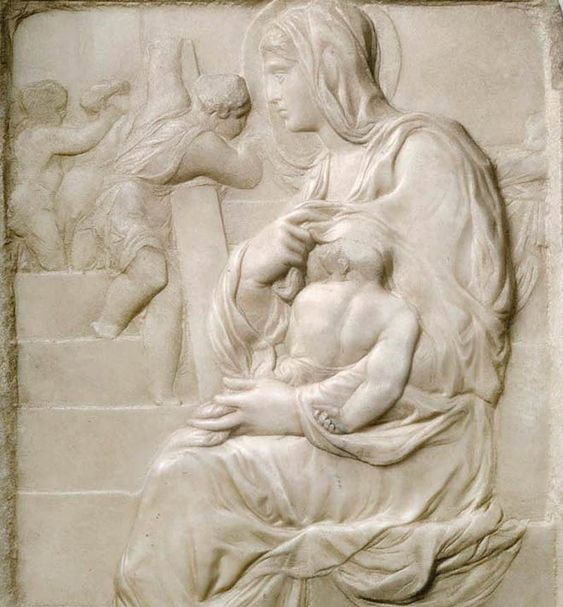
He met the young Medici brothers, who would later become popes: Giovanni, Pope Leo X (1475-1521), and Giulio, Pope Clement VII (1478-1534). The famous Medici court and gardens were his further artistic school, where he preferred sculpture to painting. Among his first known sculptural works are the reliefs "The Battle of the Centaurs" and "Madonna on the Stairs," completed in 1492. For the "Madonna," he received 50 gold florins from Lorenzo.
At that time, his classmate was Pietro Torrigiani, the two-year-older son of a wealthy Florentine winemaker, who punched him in the nose during an argument, causing permanent disfigurement. Fearing the wrath of Lorenzo de' Medici, Torrigiani fled Florence. He worked in England, where he created the tomb of Henry VII and his wife, Elizabeth of York, which can still be found in Westminster Abbey. Later, he became a significant sculptor in Spain, but his life took a turn for the worse. In Seville, he became the victim of a fraud, when one of his patrons paid him for his work with a bag of small coins and then, fearing a scandal, denounced him to the Inquisition as a secret heretic. Torrigiani was imprisoned and died of starvation in his cell. His masterpiece, a terracotta statue of Saint Jerome in life-size, is still on display at the Museum of Fine Arts in Seville.
Michelangelo was left with a lasting reminder of the incident: a deformed nose and difficulty breathing for the rest of his life. After the death of Lorenzo the Magnificent, he left the Medici court and returned to his father's home. For the Florentine Basilica of the Holy Spirit, he carved a wooden crucifix, and in return, the basilica allowed him to study anatomy on corpses from the nearby hospital. He dissected them to understand how muscles worked, which is why his sculptures are so incredibly realistic. In 1493, he purchased a block of marble and carved the statue of Hercules, which was later sent to France for King Francis I (who ascended to the throne in 1515). However, the statue was lost around the year 1700. In early 1494, Michelangelo returned to the Medici court, where Lorenzo's son and heir, Peter (also known as "the Unfortunate"), commissioned him to create a snow sculpture. However, later that same year, Peter Medici had to flee Florence from the armies of French King Charles VIII. Despite his attempts to seek help from neighboring kings and princes, he never returned to Florence and drowned in the Garigliano River in 1503. Florence was then taken over by the fanatical Dominican monk Girolamo Savonarola, who was greatly admired by Michelangelo's uncle, Francesco. From 1494 to 1498, Savonarola transformed the republic into a strict theocratic state – the "Republic of Christ" – with the aim of eradicating all the decadence and injustices of the Renaissance. Unfortunately, during this "cleansing," he also ordered the destruction of artworks that he considered immoral. However, he made a mistake by criticizing not only members of the Borgia family but also Pope Alexander VI, who excommunicated him for heresy in 1497. When Savonarola ignored this and continued his sermons, he was arrested, tortured, hanged, and finally burned posthumously in 1498. This is somewhat reminiscent of the fate of the Czech Master Jan Hus in 1415, who pointed out the corruption of the church but did not criticize society as a whole. The Medici family did not return to Florence until 1512. Influenced by these turbulent events, Michelangelo left Florence, first for Venice and then for Bologna. In Bologna, he received a commission for a small altar of Saint Dominic for the church of the same name. However, he needed more commissions to help his father pay off his debts. There is a story that he resorted to a small deception: in 1496, he created a life-sized statue of the sleeping Cupid, painted it with acidic clay, and Baldassare del Milanese, an art dealer, sold it as an antiquity from ancient Rome to Cardinal Raffaele Riario of San Giorgio. The deception was convincing, but the cardinal eventually discovered it, returned the statue, and demanded his money back. The cunning dealer immediately resold it, and in the 16th century, it appeared in the collection of the d'Este family in Mantua, alongside an original ancient statue, and eventually ended up in the British palace at Whitehall, where it was destroyed in a fire.Michelangelo, instead of being punished, was soon invited to Rome, where his art made a strong impression on the cardinal. He lived in Rome from 1496 for five years, and fortune smiled upon him. He was not yet twenty-five years old when he created one of his most famous works, the *Pietà*. This sculpture brought the young artist fame and new commissions. He depicted the Madonna based on his memory of his mother, and when criticized for appearing too young compared to Jesus, he replied that people with pure souls do not age. It is the only work he signed, because after its installation in St. Peter's Basilica in 1900, doubts arose that such a young and relatively unknown sculptor could have created something so remarkable. Therefore, he carved the inscription *Michelangelus Buonarrotus Florentinus Hic Faciebat* (Michelangelo Buonarroti from Florence made this) on the marble across Mary's chest. He received 450 papal gold ducats for the work.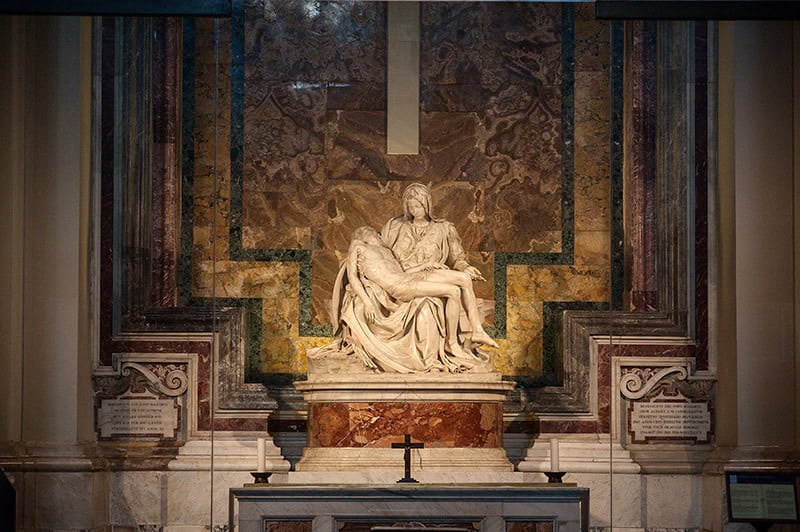
The completed fresco was ceremoniously unveiled on the eve of All Saints' Day (November 1st) in 1512, and it caused widespread excitement.
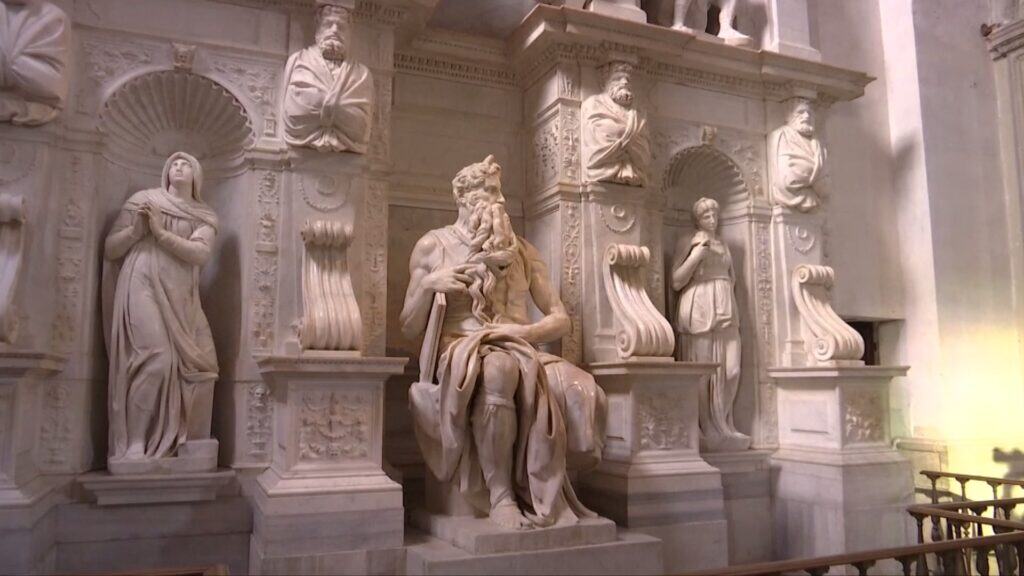
Julius II died a few months later, in February 1513, and his successors resumed the project for his tomb, but on a smaller scale and with fewer sculptures. The tomb was never completed to Michelangelo's satisfaction. After Julius II's death, Giovanni Medici (Leo X), who was well acquainted with Michelangelo and his talent, was elected pope and employed him from 1513 to 1534. He demanded so much work from him that Michelangelo did not have time for the tomb. Eventually, he only managed to create six sculptures, including the famous statue of Moses, which was created between 1514 and 1516. The tomb is located in the Basilica of San Pietro in Vincoli in Rome.
Pope Leo X died in December 1521. In the 1520s, Michelangelo worked in Florence on the construction and sculptural decoration of the Medici Chapel in the church of San Lorenzo, creating tombs for members of the Medici family. He interrupted the work after the Medici were expelled from the city during the revolutionary events of 1529–1530, when he was appointed as the general commissioner of the Florentine fortifications to protect the city. After the return of Alessandro de' Medici, he completed the allegorical sculptures of The Dawn and The Dusk, Night and Day, the seated Madonna with Child, and the sculptures of the saints Cosmas and Damian.
In 1534, Pope Clement VII summoned him to Rome to complete the paintings in the Sistine Chapel and appointed him the highest architect, painter, and sculptor of the papal palace. He then left Florence permanently.
Twenty-one years after completing the ceiling frescoes, he was also tasked with decorating the entire altar wall of the Sistine Chapel and repainting the existing frescoes by Perugino. Michelangelo hesitated for a long time and did not begin work on the project until two years later, under pressure from Clement's successor, Paul III, whose more liberal views allowed him to unleash his imagination. He worked alone, without assistants, for seven years, from 1536 to 1543, creating what was then the largest single fresco of the century.
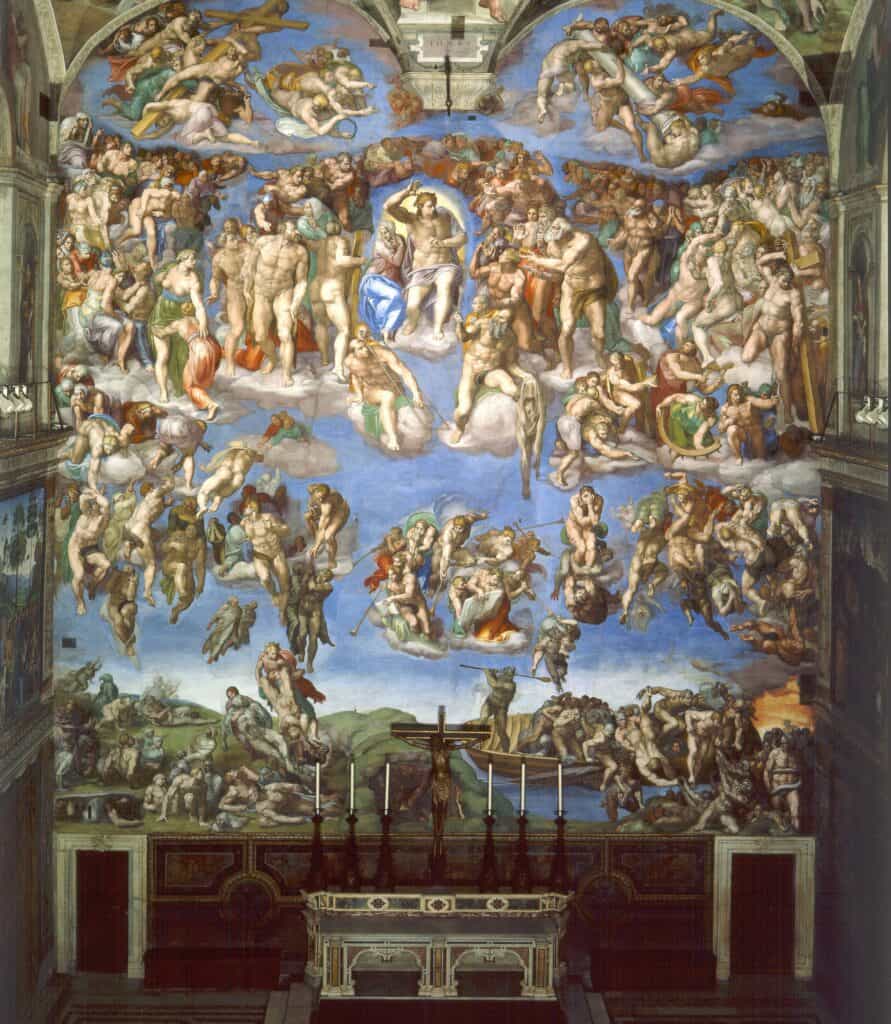
The monumental fresco covers an area of nearly 165 square meters and depicts 390 figures. It portrays events prophesied in the books of the Bible, especially in the Book of Revelation. This subject matter was reportedly chosen by the pope as a warning to believers during the period of the Reformation. It is also possible that the choice of the theme of The Last Judgment was influenced by the dramatic historical event known as the Sack of Rome in May 1527, which was seen as a harbinger of God's judgment. As is typical of Michelangelo, most of the figures were originally completely nude, but after his death, Pope Pius IV ordered that loincloths be painted on all the nude figures in 1565.
Even before the fresco was completed, Cardinal Biagio da Cesena was offended by the nudity and declared that it was suitable only for the wall of some tavern. Offended, Michelangelo promptly painted the cardinal as a nude devil with donkey ears and a snake biting his genitals. However, the pope was a fan of the artist and, when the cardinal complained, he refused to have the figure repainted, declaring that depictions of hell were outside his jurisdiction.
In the later years of his life, Michelangelo dedicated himself primarily to architecture. From 1546, he was commissioned to complete the Basilica of St. Peter, specifically the western part of the church and the dome, and to redesign Piazza del Campidoglio on the Capitoline Hill. He also oversaw the completion of the Palazzo Farnese. He was already in his seventies at this time. Many of his predecessors had worked on the Basilica of St. Peter, and Michelangelo took over Bramante's original plan, simplifying it for his purposes. He only lived to see the completion of the main dome, with its series of double columns. His last sculptural work is the Pieta Rondanini, which he began in 1552 and continued until his death in 1564. It can be seen at the Sforzesco Castle in Milan.
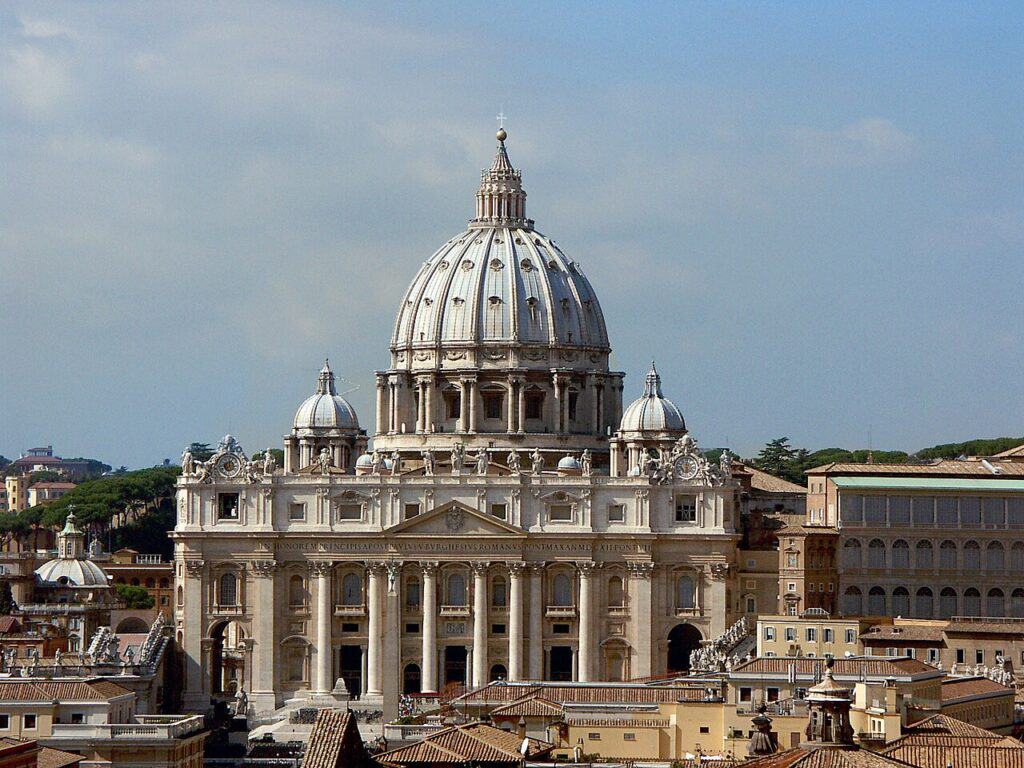
In 2007, a previously unknown sketch of the Basilica of St. Peter was discovered in the Vatican archives. Michelangelo had drawn it with red chalk. It is a rare find, not only because of the time it spent in the archives, but also because Michelangelo destroyed all of his architectural drawings towards the end of his life.
It is said that Michelangelo was left-handed, but he hid this from the public due to prejudices, as the Church considered left-handedness a sign of the devil. He learned to write and paint with his right hand, but he used his left hand when sculpting, as he had more strength and dexterity in it. Incidentally, Leonardo da Vinci was also left-handed.
Due to the scope and number of his commissions – he worked for a total of nine popes and the most important church officials, as well as the Medici family and the Florentine Republic – Michelangelo became a very wealthy man. He surpassed his contemporaries in fame and fortune, including rivals like Leonardo da Vinci, Raphael, and Titian.
Throughout his life, Michelangelo cared for the well-being of his family, looking after his father, his four brothers, and their families. He never married and had no children. He said that marriage was for men who needed comfort, but he only needed marble and solitude, and his sculptures were his children. According to his apprentice, Ascanio Condivi, he was very modest, eating more out of necessity than pleasure, and he subsisted on bread and wine. He worked hard and slept little, often in his clothes and shoes to avoid having to heat the room, and he rarely changed his clothes. His hygiene habits were minimal; he was a harsh and uncompromising perfectionist, a natural loner, and he avoided people. He once said about himself: “No matter how rich I was, I always lived like a poor man. I was not made for comfort. I was made for stone and struggle.” In recent times, there have been suggestions that he may have been autistic.
It was only in old age, in his sixties, after leaving Florence, that he became independent from his family and formed a relationship with the young Roman nobleman, Tommaso Cavalieri, whom he first met in 1532, when he was in his seventies.
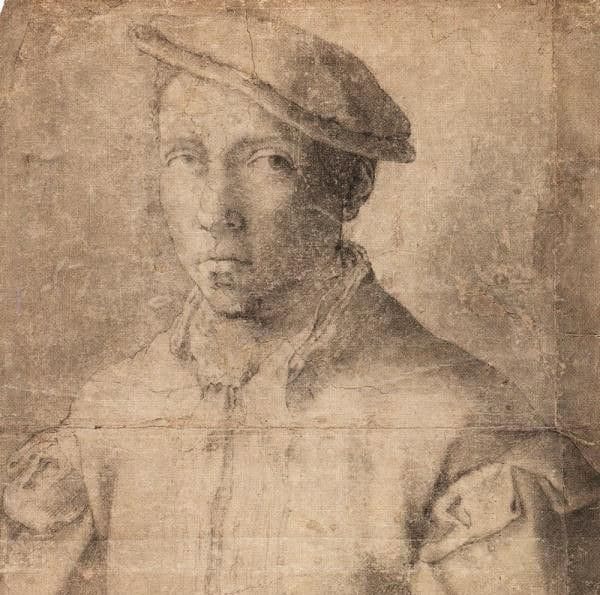
They were united by a close friendship and a love of art. Tommaso became his muse and inspiration, but despite numerous theories about Michelangelo's homosexuality, it is unlikely that the relationship between them was a sexual one. Furthermore, Cavalieri was married and had two sons (his wife, Lavinia, died in November 1553).
While working on the fresco The Last Judgment, Michelangelo also became close to the poet and noble widow, Vittoria Colonna, Marchioness of Pescara, who was in her early forties at the time.
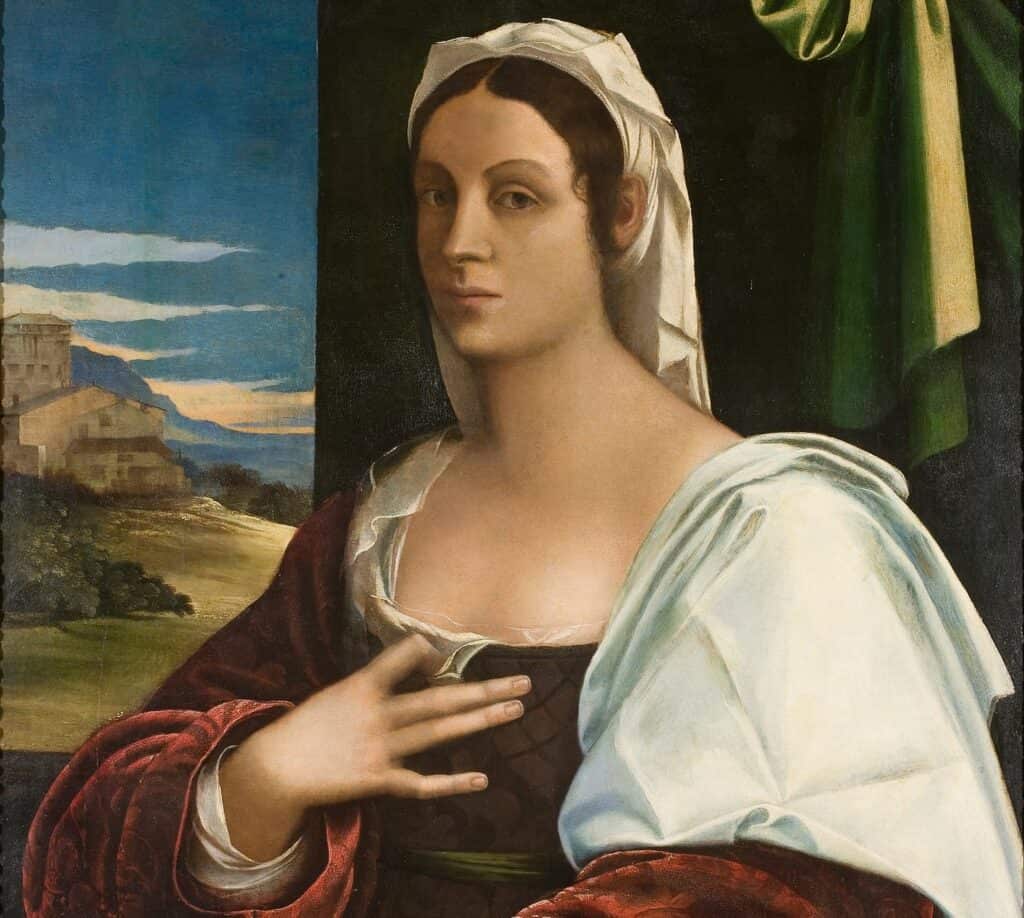
They corresponded with each other on spiritual matters, exchanged sonnets and drawings, and Michelangelo declared that she was the only person who understood his soul. They maintained regular contact until her death in February 1547. Michelangelo was at her bedside when she died, and later wrote: "Death has taken away my great friend, the only mirror in which I saw myself."
In fact, there is no definitive information, nor any documents, to prove whether Michelangelo had any intimate relationships with women or men. The famous sculptor embraced the ideals of Plato, who believed that love between two men was the ultimate spiritual experience, not necessarily a physical one. Therefore, assessments of Michelangelo's sexuality are largely based on the fact that he never married, employed young apprentices, painted nude male bodies and women with masculine features, and his poetry. He wrote more than three hundred sonnets and madrigals, mostly on the margins of his sketches, in letters, and in notes. These were mainly created in the second half of his life, under the influence of real experiences and life circumstances, and reflect his emotional life. About sixty of them are addressed to men – primarily to Cavalieri, who remained devoted to Michelangelo until his death. Michelangelo the Younger, his great-nephew, published the sonnets sixty years after the artist's death. They were translated into Czech in 1929 by Jaroslav Vrchlický.
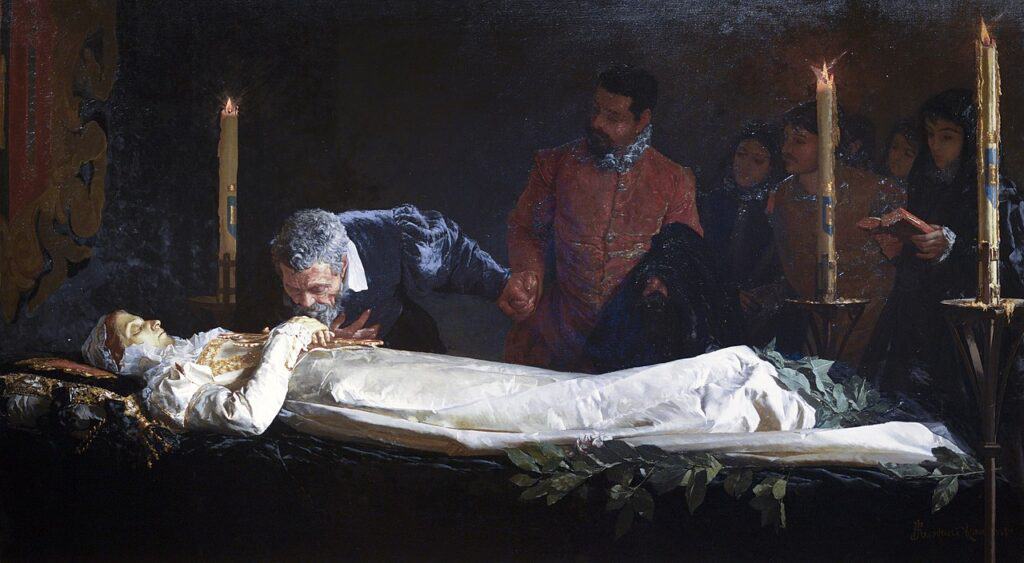
It is certain that in his old age, Michelangelo devoted himself to intense and strict religiosity. Until his death, he lived in his small, modest house in Rome. Only in 1557 was he forced to leave temporarily due to the threat of a Spanish invasion. He died of natural causes on February 18, 1564, at the age of nearly 89, surrounded by unfinished works and a few cherished objects, among which he valued the Bible and a yellowed letter from Vittoria Colonna the most. Historical records suggest that in his final days, he suffered from fever and likely kidney stones. His last wish was to be buried in his beloved Florence, but Pope Pius IV decided that his remains would remain in Rome. Michelangelo's nephew, Leonardo Buonarroti, decided to fulfill Michelangelo's wish, regardless of the consequences. He smuggled the body out of the city in a package of merchant fabric and secretly transported it to Florence in a cart as goods. The genius artist was buried in the Basilica of the Holy Cross in Florence.
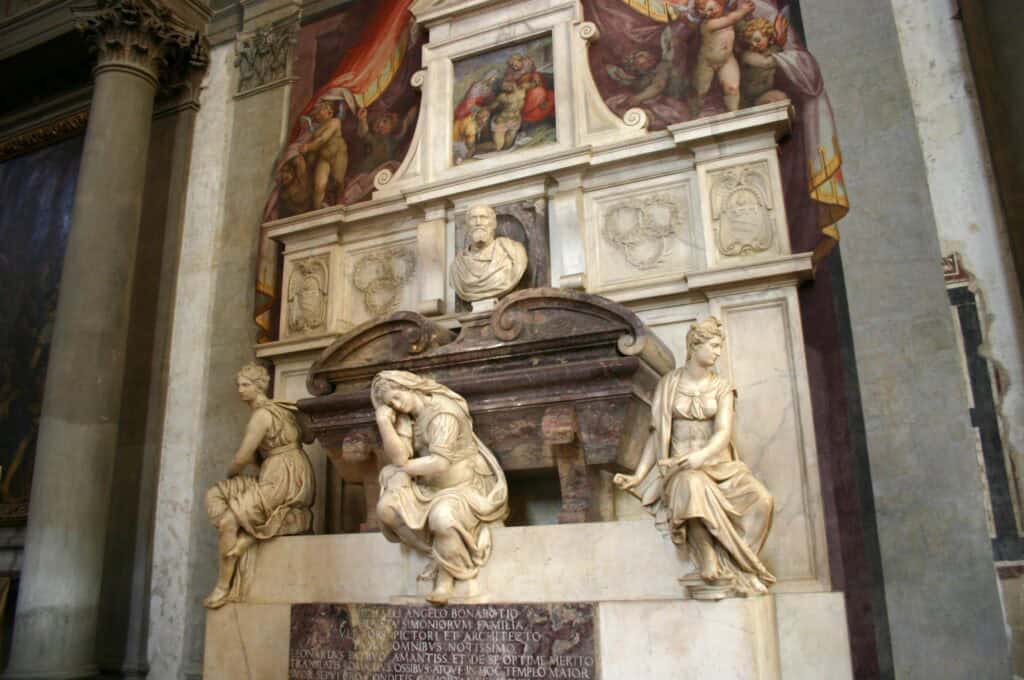
His death marked the end of an era in the history of Renaissance art.
Wikipedia/ gnews.cz – Jana Černá
Translation: legacy (English)