

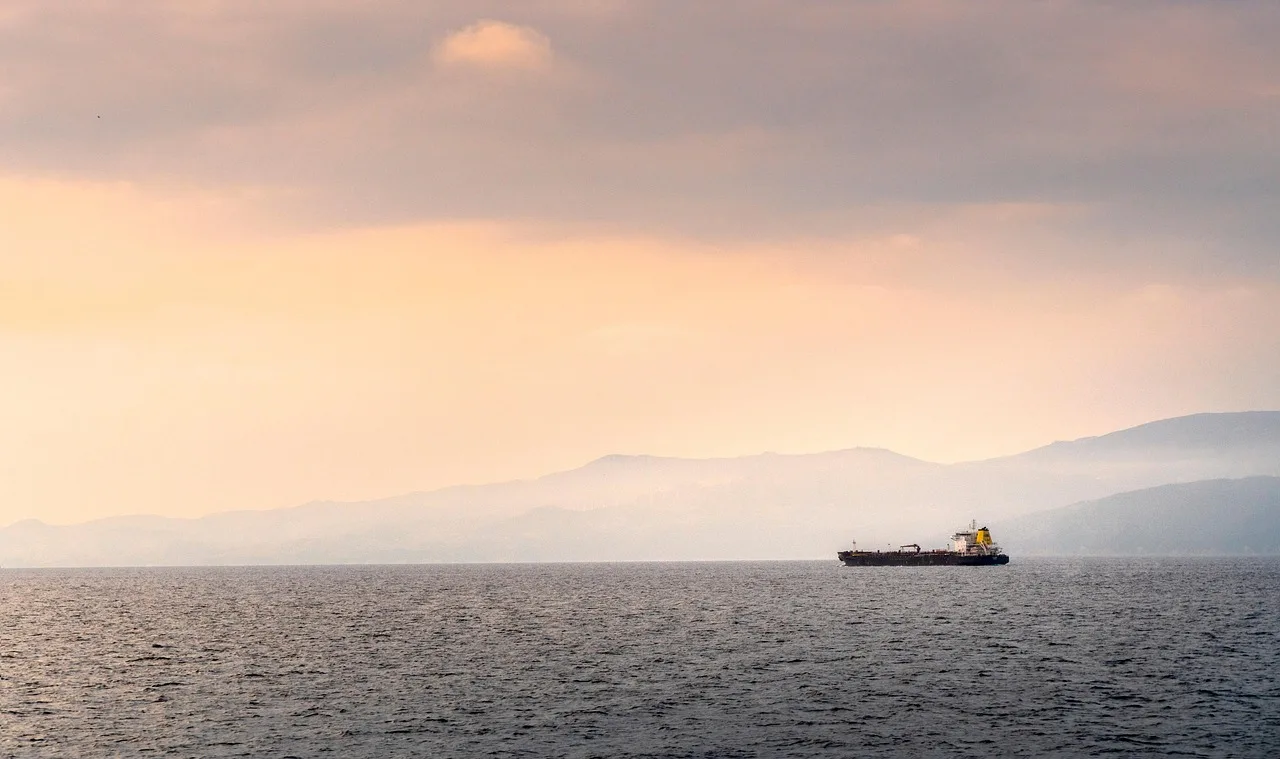
US President Donald Trump has announced an unprecedented move: a naval blockade of the Strait of Hormuz by the United States itself. The Strait, through which around a fifth of the world's oil and gas supplies normally flow, has been closed by an Iranian blockade since 28 February - and now both sides are threatening to block it at the same time, each for different reasons and by different means. In our analysis, we summarize the evolution of the crisis, chart the motivations of all the key players, and offer scenarios for future developments.
Chronology of escalation
The roots of the crisis go back to the failed nuclear negotiations in Geneva and the previous 12-day air conflict in 2025. The war itself erupted on 28 February 2026, when Israel and the United States launched coordinated attacks on Iranian military and nuclear facilities. Supreme Leader Ali Khamenei and a number of other regime officials were killed in the operation.
Iran has responded forcefully: with missile and drone attacks on US bases in the region, on Israel and on the Arab Gulf states. Above all, by closing the Strait of Hormuz. The Islamic Revolutionary Guard Corps (IRGC) has announced that no ship may pass through the Strait without Iranian approval and has begun laying naval mines in the Strait. The impact was immediate and brutal - traffic in the Strait fell by around 90 %, the price of Brent crude oil jumped over $120 per barrel, and natural gas prices almost doubled. Approximately 230 loaded oil tankers were stranded in the Persian Gulf and over 20,000 sailors were left without adequate food, water and fuel supplies.
Iran, meanwhile, introduced a system of selective access: ships flying the Chinese or Indian flag could pass through for a fee of up to $2 million per ship, but not others. The strait has been transformed from an international waterway into an Iranian toll bridge.
The failure of diplomacy and the US blockade
A two-week ceasefire, negotiated by Pakistani mediators, was announced in early April. However, the Strait was virtually unopened - Iran was neither able nor willing to remove the mines it had laid there itself, and selective traffic continued. High-level trilateral talks were held in Islamabad: the US delegation led by Vice President J.D. Vance, Iranian Parliament Speaker Ghalibaf and the Pakistani Prime Minister as host. After 21 hours of discussion, the talks collapsed. There were two key sticking points - control of the Strait of Hormuz and Iran's nuclear program - and Tehran rejected any compromise on either issue.
Trump's response came the same day. He wrote on Truth Social: „Effective immediately, the United States Navy will begin the process of BLOCKING all ships attempting to enter or leave the Strait of Hormuz.“ He stated that the U.S. Navy will stop ships that have paid the Iranian toll and called Iran's action „world blackmail“. The strait will be simultaneously mined by US forces.
Trump's decision was reportedly prepared for days as a backup plan. The day before, there was a report on CNN, leaked by US intelligence sources, that China was preparing to supply Iran with MANPADS portable anti-aircraft systems, with the shipments reportedly to be disguised through third countries. Trump responded by saying: „If China does that, it will be in big trouble.“
This report was not released by accident, it was deliberately released intelligence, fired the day before the talks collapsed as both a diplomatic weapon and a justification for what Washington was going to do anyway.
The Chinese factor: the silent player with the biggest stakes
On the one hand, China is Iran's largest oil customer, with about a third of China's oil imports flowing through Hormuz. On the other hand, it maintains its image as an impartial global player and facilitator of peace. The news of the forthcoming MANPADS shipments was thus intended to undermine confidence in Beijing as an impartial player.
The US naval blockade, which includes stopping ships that have paid the Iranian toll, implicitly targets China and India - the only countries that have actually passed through the Strait. It is therefore an indirect ultimatum to Beijing, just three weeks before Trump's planned visit to China. The Chinese embassy in Washington dismissed the MANPADS report as „false“.
The European paradox: Dependence without solidarity
Europe is in crisis in what can be called, without exaggeration, a strategic trap. The rejection of military participation by key states has been unequivocal. The German Defence Minister Boris Pistorius He said: „This is not our war. We didn't start it.“ French President Emmanuel Macron declared that France would never engage in operations to open the Strait in the current context, although it had sent half of its main warships to the region in a purely defensive role. The EU diplomatic chief Kaja Kallasová noted that there was no willingness among Member States to extend the Aspides naval mission from the Red Sea to Hormuz and that „no one wants to actively enter this war“.
Yet Europe is suffering greatly from the closure of the Strait. Fuel prices are breaking records and, as Kallas herself pointed out, high energy prices are paradoxically filling the Russian state budget and financing Putin's war in Ukraine. Europe is therefore in a situation where it is suffering economically, while indirectly strengthening its strategic adversary.
Behind the rejection is a confluence of several mutually reinforcing factors.
The legal and institutional framework is a real obstacle - Germany has constitutional restrictions on foreign military deployments requiring a mandate from the Bundestag, and NATO is defined as an alliance for the collective defence of territory, not as an instrument for operations outside it.
The moral argument is also legitimate: the US and Israel launched the war without consulting their allies and are now being asked to bear some of the costs and risks of a decision they were not invited to make.
The third factor is the most politically sensitive and least verbalized, yet very influential in real terms. France has an estimated five to six million Muslim inhabitants, Germany about five million, the UK almost four million, Spain about two million. It is not a monolithic bloc - a large proportion are secular citizens with minimal ties to Middle Eastern politics. But in specific constituencies, suburbs of Paris, London's East End or Berlin's boroughs, the Muslim electorate may make up 20-40 % voters.
The British election of 2024 served as a direct laboratory for this phenomenon: Starmer's Labour Party lost several traditionally safe seats precisely because of the outflow of Muslim voters outraged by his stance on Gaza, while pro-Palestinian independent candidates succeeded. Starmer has experienced this electoral trauma personally - and his caution in the Iran crisis is a direct consequence.
The political calculus of governments in this context is coldly rational, even if it is not spoken about out loud: military involvement would score a symbolic point for solidarity with the U.S., but at the cost of thousands of votes lost in key districts, months of protests and real security risks. European intelligence services have repeatedly warned that escalation in the Middle East increases the risk of domestic attacks - joining an operation perceived as an attack on a Muslim state would be exactly the catalyst for radicalization they warn of.
Trump harshly criticizes Europe for refusal, threatens to withdraw US troops from uncooperative countries and his meeting with NATO secretary general Mark Rutte has turned into a „a tirade of insults“. The alliance is facing serious structural tensions.
The Iran factor: blackmail or dead end?
Iran is in the most difficult position of all the actors. The war has largely devastated its military potential - its leadership, including Khamenei, has been killed, its air force, air defence and part of its navy destroyed. The economy is under pressure, supplies are running thin. Yet Tehran holds the only real trump card: the strait.
The mines that the IRGC hastily laid in the early days of the war are not all documented - Iran has lost track of some of them and physically cannot open the strait as quickly as Trump demands, as its defense is based on diversification of resources. „technical limitations“.
Meanwhile, the Iranian parliament is drafting a bill that would formally charge for passage through the strait - an attempt to institutionalise tolls and permanently change the legal status of the international waterway. Trump rejects this as unacceptable and illegal, and the European Commission has also described any toll, by Iran or the US, as a violation of international law and the strait as a „public good of all mankind“. It is the only strait in the world that has not yet been tolled.
Scenarios for further development
The situation changes by the hour and any prediction carries a high degree of uncertainty. Yet, based on the logic of the actors and historical precedents, five probabilistic scenarios can be identified.
- Diplomatic breaking of Iran is a medium-probability scenario: the US blockade economically stifles Iran enough to return to negotiations on worse terms. Analysts estimate that the U.S. Navy is capable of degrading Iran's ability to block the Strait to „a “manageable level".
- Direct military escalation in the Strait is a real risk: an American ship stops a Chinese or Indian tanker, Iran or another actor responds militarily. The Strait is only 39km at its narrowest point - reaction times for anti-ship missiles, drones and fast boats are minutes, and even a powerful navy is vulnerable in such an area.
- China as a new intermediary is an interesting possibility: Beijing is interested in opening the strait but does not want to accept US conditions, and could offer its own diplomatic solution in exchange for guarantees of its energy access.
- Trump's backpedaling cannot be ruled out - if the blockade effectively stopped Chinese and Indian tankers, it would cause an immediate global price shock and Trump could quickly reformulate the terms to save face. Political analysts call this tendency by the acronym TACO.
- Long-term energy fragmentation is probably the most realistic medium-term outcome, regardless of immediate military developments: the crisis causes a permanent realignment of the world energy market, Asia seeks alternative suppliers, Europe accelerates diversification, and world trade further fragments into geopolitical blocs.
A world without good solutions
The crisis in the Strait of Hormuz is not just a regional military conflict. It is the intersection of several systemic crises at once - US hegemony and its limits, Sino-US competition for influence, demographic and political transformations in Europe, the instability of the Middle East after decades of failed interventions, and the fragility of a global energy system built on the premise of peace.
Trump's blockade has pushed the crisis into a new phase. It is not a solution - it is an escalation with an unclear goal. If Iran stands up to it and China does not back down, the US is in a situation where it must either back down with a damaged reputation or escalate further. Both options have grave consequences.
For Europe, the moment is coming when it will have to decide whether passive compliance is a sustainable strategy or whether the cost of non-participation in terms of economic pain, energy dependence and eroding influence is ultimately higher than the cost of participation. For now, they are opting for acquiescence. But time is playing against her.
gnews.cz - GH


 Czech
Czech  English
  Spanish
  French
  Italian
  Russian
  Chinese
  German