


Overview of the latest economic events in the Czech Republic
The Prague Stock Exchange followed up on Monday's losses on Wednesday and weakened for the second time this week. Index PX fell 1.02 percent to 2,502.5 points. Most of the traded titles stagnated or deteriorated, with the most significant losses recorded by bank issues and energy companies CEZ. The stock exchange is thus reacting to a combination of domestic and external factors: the persistent geopolitical uncertainty around the Strait of Hormuz, the weak outlook for the German economy as a key trading partner and the upcoming earnings season for domestic companies are causing investor caution.
The preliminary estimates of the Fruit Growers' Union of the Czech Republic brought worrying news for Czech agriculture on Tuesday. April frosts destroyed about half of this year's fruit harvest in the orchards of Czech growers. Apple growers report the greatest damage - apples are the main fruit species in domestic production. The total damage is estimated at hundreds of millions of crowns. Martin Ludvík, chairman of the Fruit Growers' Union of the Czech Republic, also warned that the situation could be further aggravated by the ongoing drought. The shortfall in production will inevitably be reflected in the price of fruit on the shelves in the second half of the year - at a time when energy inflation is already pushing up the price of consumer goods.
The current economic mirror of this pressure is the situation in the company Onsemi, which from the Brno plant ON Semiconductor in Rožnov pod Radhoštěm confirmed a large investment of CZK 44 billion. The company, whose shares have risen by almost 170 percent in a year thanks to contracts for data centres Nvidia and Chinese car companies Geely a NIO, is building a key production base in Rožnov for silicon carbide chips for high-voltage applications in electric vehicles and servers.
Foreign investment
The most explosive M&A news of the day came from the world of technology and consumer internet. American e-commerce eBay publicly rejected the takeover proposed by the head of the GameStop Ryan Cohen: a $125 per share offer worth approximately $56 billion. Chairman of the Board eBay Paul Pressler, in a letter to Cohen, called the offer „neither credible nor attractive“ and pointed to the uncertainty surrounding the financing plan, operational risks and management approach GameStop.
Cohen gradually accumulated a five percent stake in eBay since February and submitted a formal non-binding offer on May 3, declaring the bank's commitment as a $20 billion debt financing TD Securities. Shares eBay after the rejection, the stock dropped approximately four percent GameStop reacted by dropping over 10 percent after Cohen's appearance on CNBC, where he failed to dispel doubts about the reality of the funding.
British telecoms giant Vodafone published its results for the 2025/26 fiscal year, confirming progress on the integration of VodafoneThree - the UK telecoms leader formed by the merger of Vodafone UK and Three UK in 2025. Vodafone also declared a target to achieve annual cost and capital expenditure savings of £700 million by fiscal year 2030.
Full buyout of 49% stake CK Hutchison the £4.3 billion (about $5.8 billion) conglomerate of Hong Kong billionaire Li Ka-shing - is now going through the regulatory process under the UK's National Security and Investment Act. The transaction is a direct demonstration of how the European telecoms sector is responding to the need for investment in 5G infrastructure and network consolidation at a time when geopolitical tensions and energy uncertainty are driving up operating costs.
Significant events outside the Czech Republic with global impact
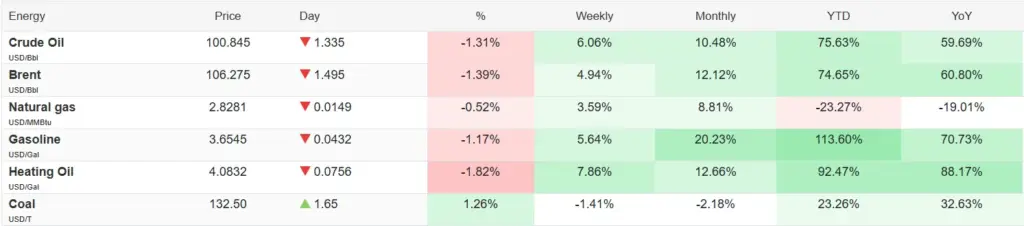
US inflation accelerated sharply. Annual consumer price inflation in the United States reached 3.8 percent in April - up from 3.3 percent in March, the fastest pace since 2023 and the highest in nearly three years. That's according to a report from the U.S. Department of Labor's Bureau of Labor Statistics released Wednesday. The main driver of the acceleration is significantly higher fuel prices - a direct result of the blockade of the Strait of Hormuz and the conflict in the Middle East. Core inflation (excluding energy and food) remained steadier at 3.2 percent, but the energy component added over 22 percent year-on-year.
Markets reacted immediately: US Treasury yields rose, the dollar strengthened and the likelihood of a rate cut Federal Reserve System in June, it fell to practically zero. Analysts Morgan Stanley in their updated outlook, raised their estimate of average U.S. inflation for this year to 3.6 percent and cautioned that tech companies' gains - so far solid - are only beating, not eliminating, geopolitical risks.
gnews.cz - GH
tradingeconomics.com


 Czech
Czech  English
  Spanish
  French
  Italian
  Russian
  Chinese
  German