

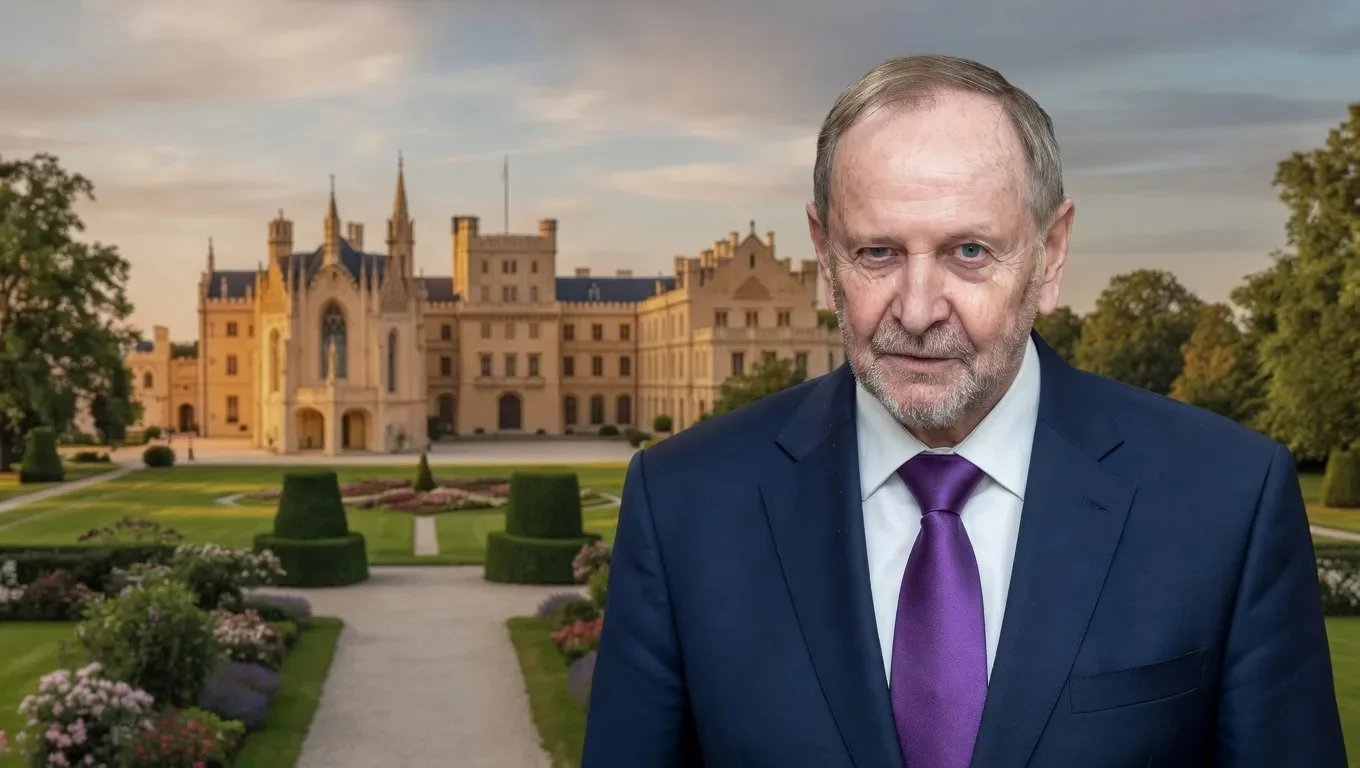
Learn about the lawsuit at the European Court of Human Rights, in which Liechtenstein is suing the Czech Republic over the Beneš Decrees and 600 hectares of primeval forest.ídays of soil. Historian Milan Calábek reveals shocking collaboration with the Nazis, medieval coin fraud and the looming financial collapse - could it unravel post-war Europe?
In the high-stakes world of international law, a ticking time bomb is about to go off in Strasbourg. European Court of Human Rights is just days away from a potentially devastating judgment against the Czech Republic in a lawsuit filed by Princely Foundation of Liechtenstein. What's going on? It's more than 600 hectares of lucrative forests and farmland near Říčany, not far from Prague - a „gift from heaven“ for the immensely wealthy Liechtenstein royal family, as the historian dramatically puts it Milan Calábek in an engaging podcast on the YouTube channel Radio Universum, who moderates Martina Kociánová.
This is not just a local dispute over property. This is about přímy attack on the Benes Decrees, post-war measures that confiscated property from ethnic Germans and collaborators and reshaped the map of Central Europe after the Nazi destruction. Milan Calábek, an 86-year-old expert on history and epigenetics, warns: „It could openít the way to the abolition of the so-called Benes Decrees... which in the case ofíif successful, could mean the financial collapse of our republic.“ What's going on? It's not just about getting the land back, it's about „a huge noáusage fees, interest - financial collapse“, says and estimates that it is billions in back payments plus interest for decades of state use.
The saga began in 2013 during digitisation of the Czech Land Register. During the digitization process under Marian Jurecka, officials discovered that the land in Říčany is still owned by Prince Franz Joseph II. Liechtenstein. Officials quickly reassigned them to The Prince's Foundation as an heir. In the year 2014 However, the Czech state filed a lawsuit for their return, which started a counterattack. Liechtenstein argues that the decrees are „extinct“, which constitutes a new expropriation based on „collective guilt“, and insists that they do not apply because are not „Germans“. „First we gave it to them... then in 2014 we filed a lawsuit against the Prince of Liechtenstein's foundation,“ Kociánová says, emphasizing the irony of the situation.
Precedents portend doom. At Slovakia in the year 2020 were acquired by the heirs Miklós Bositse back 160 hectares at Bardejov after the victory at the European Court of Human Rights, whereupon fines and other similar actions followed. „The second part of the lawsuit is the biggest danger,“ Milan Calábek stresses. This is the the first complaint before the European Court of Human Rights, aimed at Czech Republic in this matter for more than 60 years - out of a total of only 28 cases. Even the Czech Constitutional Court once decided that restitučlaws take precedence over land registries, but Strasbourg carries more weight.
Calábek's detailed look into the past of the Liechtensteins portrays them not as neutral alpine innocents, but as opportunistic chameleons with blood on their hands. When they came to the Bohemian lands under the king Přemysl Otakar II., quickly betrayed the locals in the Battle of Moravian Field and sided with the Habsburgs. After the Battle of White Mountain (1620) Charles I. von Liechtenstein - nicknamed „Bloody Liechtenstein“ - overseeing executed 27 Czech nobles and presided over confiscation trials. „Why did our ancestors call Charles bloody Liechtenstein? Because after the Battle of White Mountain... he condemned them (himself) to death,“ Calábek reveals.
Their fortune? It came from shame. In a medieval masterstroke, they founded Coin Consortium, that used to publish „long coins“ - copper coated with a thin layer of silver - and at the same time banned the use of real gold and silver. This devalued currency has caused economic collapse, that triggered famine and „kalad“ (financial collapse). For sale prices the Liechtensteins bought the estate as Říčany a Kostelec nad Černými lesy. „All the goods he bought were for these long coins... he caused a huge financial collapse,“ Calábek says. „The blood of the Czech nobility and Czech townsmen is on this property,“ concludes - blood money from dead Czechs and Moravians.
The Second World War compounded this situation. Despite the „neutrality“ Prince Francis Joseph II. after the Munich Agreement CongratulationsáAnd to Hitler, visited Berlin to secure possessions in the „German sphere of influence“, and financed SS troops in Krnov and Opava. Prisoners from concentration camps toiled on Austrian farms - the prince claimed to enjoy their emaciation „didn't notice“. „The prince himself negotiated with the SS... he didn't notice that the prisoners from the concentration camps were not well-fed Austrian agricultural workers,“ Calábek grins sarcastically. Hitler sent a wedding telegram in 1943; the Viennese gauleiter Baldur von Schirach - head of the Hitler Youth and accomplice to the Holocaust - praised them. After the war, minimal compensation for the Jews: „It is true, however, that after 1945 some of the survivors... had their property returned. Fortunately, there weren't many.“
The identity games continue. During the land reforms in 1919 denied family ties to the Habsburgs so that they could keep their property while appropriating Czechoslovak compensation. The census of the year 1930? The Liechtensteiners applied as German nationalsíAttendants. And today? „Liechtensteiners“ or „Alemanni“ - not Germans, which is avoid the decrees. Liechtenstein's Foreign Minister Katrin Eggenberger criticises the Czech courts for ignoring Liechtenstein's sovereignty.
The current twists and turns are coming. Czech President Petr Pavel in the year 2023 informed the Czech government about the Liechtenstein proposal: a „common fund“, to pool confiscated property and circumvent the decrees. „The creation of a joint Czech-Liechtenstein fund... (it would) circumvent disputes over the validity of the Benes Decrees,“ notes Calábek. „Can you imagine us administering half of Moravia together with another state?“ asks moderator Martina Kociánová - a possible gradual surrender make Liechtenstein the „administrator of Czech property“.
Broader revanchist tendencies are coming into play. Hungarian Prime Minister Peter Magyar criticizes the decrees; Sudeten Germans are gathering in Brno. Hungarian Péter Magyar refers to the trauma of Trianon Treaties - „White Mountain for Hungarians“ - and demands money from the EU and Slovakia: „You want peace. We need money. Give it back to us.“ He's got his sights on Benes Decrees and uses 400,000 Hungarian „hostages“ in Slovakia.
Milan Calábek calls for unityCzechs, Slovaks, Poles (to whom Germany owes more than $1.3 trillion in reparations), even Trump's allies. „We must not give up... we need to take immediate, major diplomatic action.“ Germany must pay under the Paris Agreements of 1945.
This battle at the European Court of Human Rights goes beyond Czech borders and threatens the post-war order in Europe. Will the Strasbourg gavel destroy sovereignty based on justice? Or will it unite nations against historical fraudsters? The mosaic of intrigue exposed by Milan Calábek demands action.
gnews.cz - GH
You can watch the full video in Czech here: https://www.youtube.com/watch?v=X2hRGS-3SAM


 Czech
Czech  English
  Spanish
  French
  Italian
  Russian
  Chinese
  German