

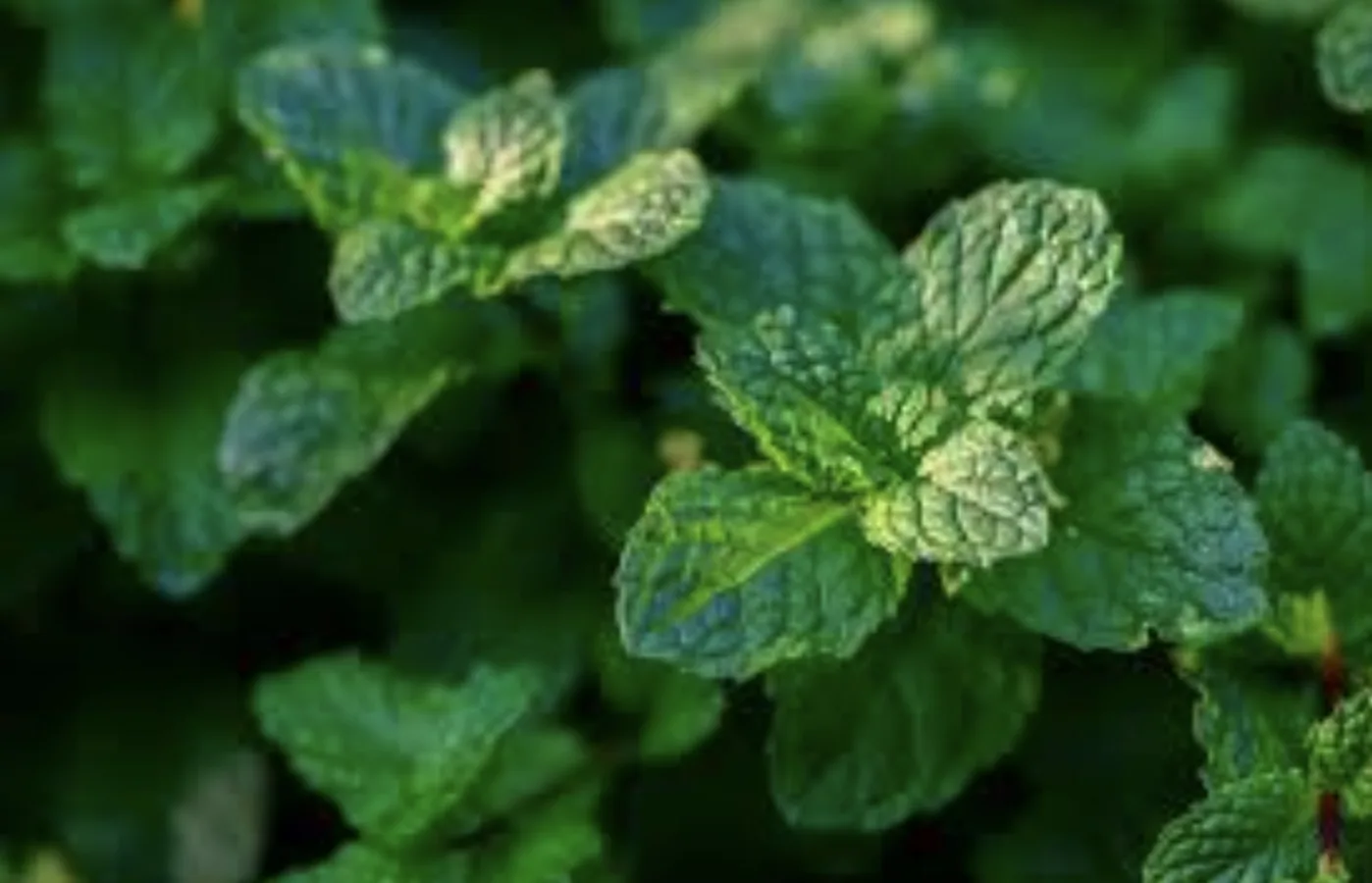
Peppermint (Mentha piperita) is a perennial herb that has a woody rhizome with tall, quadrangular hairy or glabrous stems. All leaves are long-petioled or lanceolate and branched at the top. The fruit is an ovoid drupe. The whole plant smells of its characteristic menthol.
Especially its species peppermint, is a hybrid of water mint and spearmint. It is rather rarely found in nature, usually near places where it used to be cultivated.
The closest relative of peppermint is the wood mint. It is mainly the leaf or flowering bud that is harvested, usually at the beginning of flowering in June to August, preferably around 10 o'clock.
The main active ingredient is menthol essential oil (menthol and ester). It contains menthone, sabinene, menthofuran, piperitone, as well as tannins, bitter substances, flavone glycosides.
The reason for the effectiveness of the substance and the direction of use is mainly determined by menthol with its strong antiseptic properties. By locally irritating sensitive receptors, it produces a sensation of coldness that is able to cover weaker adverse stimuli such as persistent itching. This effect can be used therapeutically both internally and externally.
We can see it as mints if we don't focus on the medicinal component. In therapeutic use, it significantly reduces bloating and cramping pain in the digestive tract, improves digestion and positively affects gallbladder function. It slightly lowers blood pressure and slightly stimulates the central nervous system. Aromatherapy, a form of inhalation, can be used successfully for upper respiratory catarrh. Peppermint baths have also proved to be very useful in relieving mental tension.
The common medicinal form is an infusion, but herbal balm and Kloud's homeopathic tea in potencies are also known. If inhalations are performed, the time should not exceed more than 10 minutes. For mint baths, a high concentration is not necessary, so preparation can be economical.
A common dose of tincture is 40 drops for a single dose. If we use concentrated essential oil, a dose of 3 to 5 drops is sufficient, but we recommend diluting the essential oil with distilled water.
Peppermint is completely unsuitable for long-term use, especially at higher doses. It acts as a mild anaesthetic, but this otherwise positive characteristic eventually manifests itself in a decrease in the sensitivity of the organism to other herbs. Children in particular are very sensitive to menthol.
It is therefore recommended for mixing into mixtures. It is also unsuitable for pregnant and lactating women as it reduces breast milk production.
In Diochi products you will find it in the form of essential oil in both tablets and drops ASTOFRESH, in dried form in tea blends DETOXIN a ReDIAn and at the same time peppermint essential oil is added to the bioinformation drops: DETOXIN, GEROCEL, DINAVIR and capsules DIOCEL SUPRACID.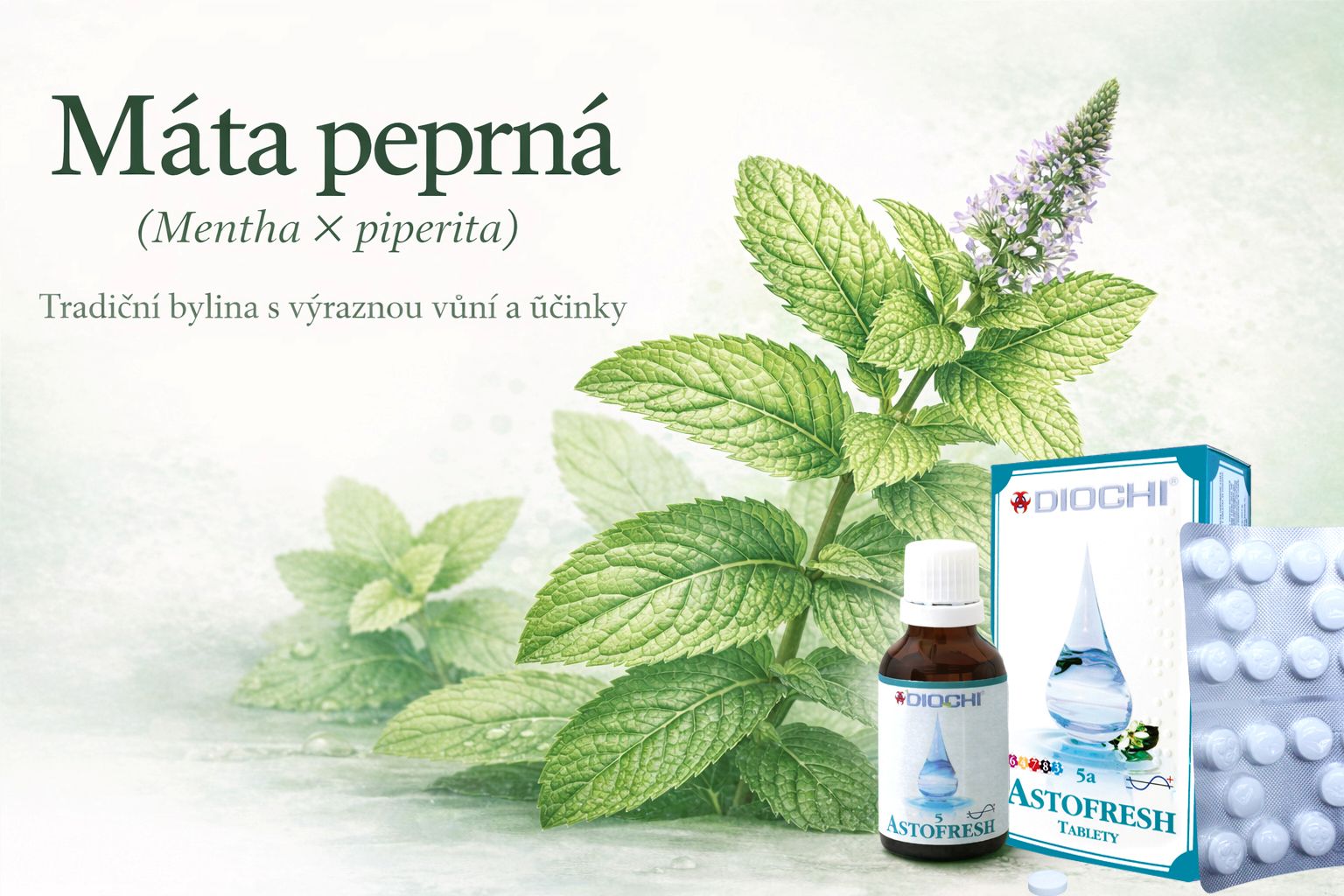
This article was published with the kind permission of of the magazine Sphere
casopis-sfera.cz / gnews.cz-HeK


 Czech
Czech  English
  Spanish
  French
  Italian
  Russian
  Chinese
  German