
Welcome back to China Insights Weekly. Here are some of the key takeaways from this edition:
European companies continue to expand production in China despite pressure from Brussels to reduce risks.
Huawei unveils LogicFolding technology as a solution to limitations in advanced chip manufacturing processes.
CATL launches battery swapping service for trucks with a swap time of 120 seconds.
Urban renewal program receives a five-year plan focused on housing, pipeline networks, and older residential districts.
Despite the European Union's rhetoric about reducing risks, European companies are further strengthening their manufacturing ties with China. A survey of nearly 300 members of the EU Chamber of Commerce in China, conducted in early 2026, showed that the proportion of European companies reporting a worsening business environment in China fell for the first time in five years.
Optimism is slightly increasing. A total of 48 percent of respondents said that access to the market has improved, compared to 44 percent in the previous period. The proportion of companies that cite the slowdown in the Chinese economy as one of the main challenges fell by 14 percentage points to 57 percent. Profitability remains strong. Seventy percent of companies achieved a positive operating result before EBIT in 2025, and 75 percent say that their production in China is more efficient than anywhere else in the world.
A full 94 percent of companies consider China to be an important sourcing and supply destination due to its speed, cost, and reliability. The survey also showed that 68 percent of companies are maintaining or expanding their activities in China, while only seven percent are shifting production elsewhere.
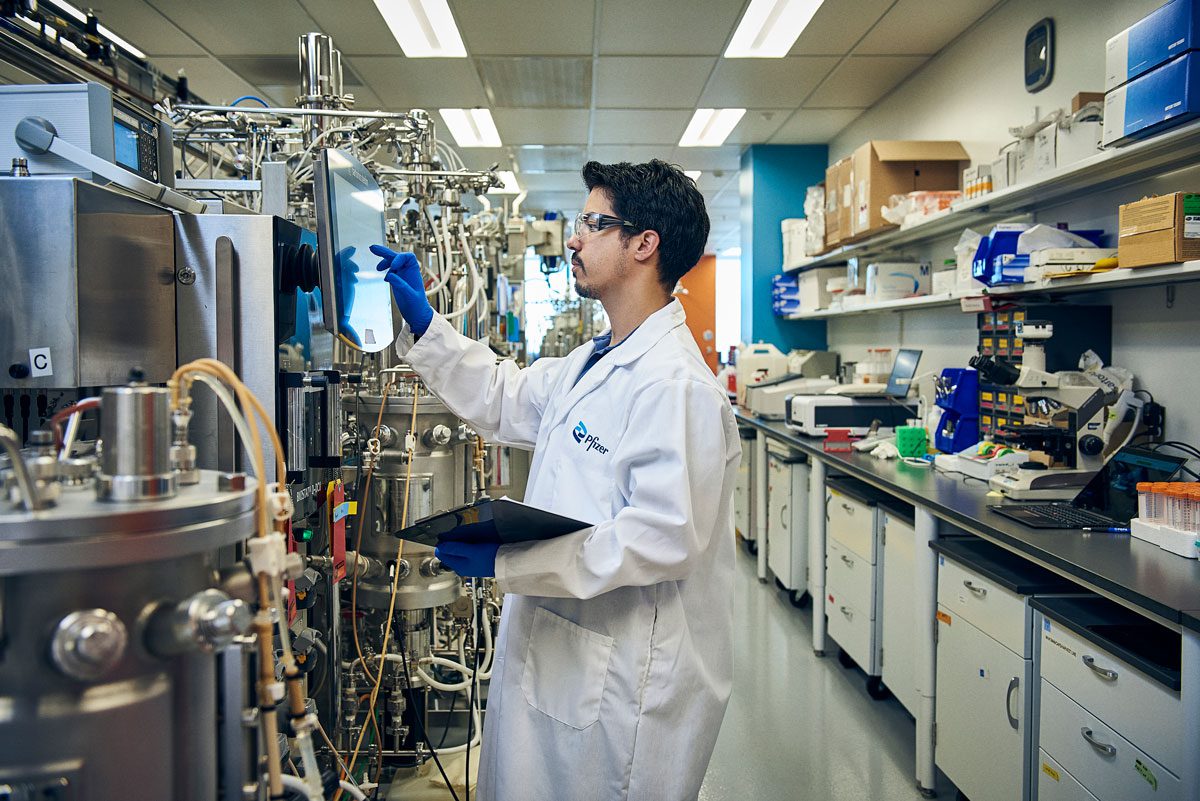
Pfizer has entered into a global oncology partnership with Chinese company Innovent Biologics worth up to $10.5 billion, underscoring the growing appeal of Chinese biotechnology innovation to Western pharmaceutical giants.
The agreement, announced on May 29th, includes an immediate payment of $650 million and up to $9.85 billion in milestone payments within a portfolio of 12 programs. Eight of these are early-stage development projects from Innovent, and four are research initiatives from Pfizer.
For Innovent, which has already entered into licensing agreements with Roche, Takeda, and Eli Lilly, this agreement represents a validation of the quality of its research portfolio, including the PD-1 inhibitor Tyvyt, which is approved in China for eight oncology indications.
For Pfizer, which is still integrating the $43 billion acquisition of Seagen and is simultaneously facing patent expirations for some key drugs, the agreement represents a cost-effective way to expand its oncology portfolio through partnerships rather than direct acquisitions.
Huawei has unveiled a new chip design technology called "LogicFolding," which it plans to use in its Kirin processors as early as this fall.
The company claims that this approach could achieve capabilities equivalent to a 1.4-nanometer manufacturing process by 2031, while TSMC, the world's largest custom chip manufacturer, has only recently begun mass production of 2-nanometer chips.
After being cut off from the most advanced lithography equipment, Huawei has focused on alternative technical solutions. According to its data, it has mass-produced 381 chips based on the so-called "τ Scaling Law" over the past six years.
This move represents another attempt to circumvent Western sanctions and maintain technological competitiveness with Apple and Nvidia.
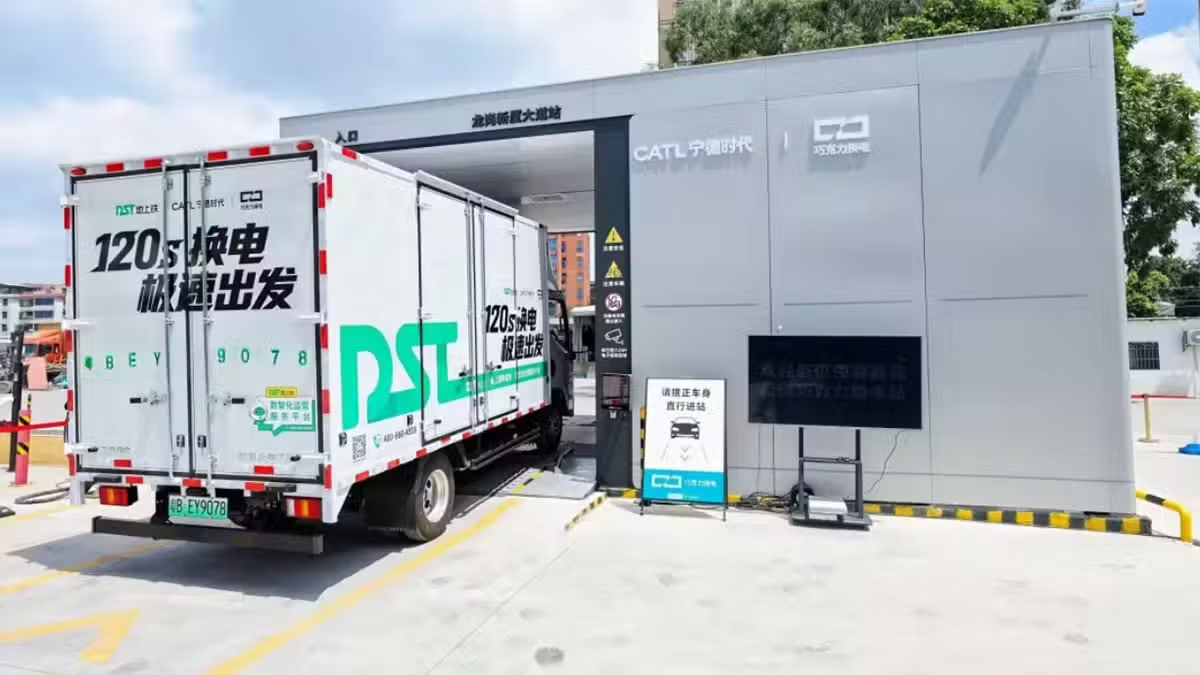
CATL has launched the first standardized battery swap ecosystem for light-duty trucks in China in collaboration with logistics company DST.
The battery swap process takes only 120 seconds. During the eight-year lifespan of the vehicle, energy costs are approximately half those of diesel vehicles, while also saving more than 2,000 hours of time spent refueling.
The modular stations support vehicles with wheelbases from 2.7 to 3.75 meters and are compatible with both passenger and commercial vehicles using CATL #25 and #35 batteries.
There are currently 31 stations operating in the Greater Bay Area, and the number is expected to increase to 140 by the end of the year. By the end of 2026, CATL and DST plan to deploy 5,000 light-duty trucks with swappable batteries, creating the largest fleet of its kind in the country.
The battery manufacturer also plans to operate more than 3,000 battery swap stations for passenger and light commercial vehicles in 2026. The long-term goal is to build a network of 30,000 stations.

At the Cannes Film Festival, the film "Hell Grind," a 95-minute film touted as the first full-length film completely created by artificial intelligence, was presented.
The film was created by the American company Higgsfield using video generation technology from ByteDance. A team of just 15 people completed the project in 14 days with a budget of less than $500,000, a fraction of the cost of a typical film of similar scope.
Most current AI tools for video creation still generate clips that are only 15 to 30 seconds long, making long narrative formats one of the biggest challenges. "Hell Grind" suggests that this barrier is beginning to disappear.
For independent creators, this is a revolutionary economic change. At the same time, it raises questions about authorship, job displacement, and the very meaning of artistic intent in a time when emotions can be optimized by algorithms.

China has unveiled a five-year urban renewal plan for the period 2026-2030, which shifts the focus from expansion to modernizing existing urban areas.
The plan calls for the renovation of 500,000 substandard housing units, the modernization of 115,000 older residential communities, and the redevelopment of 4,000 urban villages. A total of 365,000 kilometers of underground pipeline networks will also be modernized. Investments in this area alone are expected to reach approximately five trillion yuan, or about $737 billion.
Local governments will be able to use special bonds to finance eligible projects. The government also plans to activate unused land and unfinished properties and encourage developer participation. The announcement led to a rise in the stock prices of real estate companies, as the market expects an increase in construction activity.

Three Chinese state-owned telecom operators are changing their business model and focusing on selling AI tokens instead of data services.
China Telecom now offers plans starting at 9.9 yuan for 10 million tokens, and professional packages up to 299.9 yuan with 150 million tokens. It has also created a token ecosystem alliance. China Mobile, in collaboration with Tencent and Alibaba, is testing a package of 400,000 tokens for one yuan in Shanghai.
China Unicom is targeting OPC users and offers 30 million tokens for free, along with other tiered packages. This is due to rapidly increasing demand. The daily consumption of tokens in China has increased from 100 billion at the beginning of 2024 to 140 trillion in March 2026, a tenfold increase in just two years.
Alipay, the payment division of Ant Group, has also launched the world's first personal AI wallet, which allows users to monitor and approve payments made by AI agents. Users can manually approve each transaction or set a limit for automatic processing of smaller payments. Alipay has also introduced the Token Pay service for payments using tokens.
According to the company, AI Pay is compatible with 95 percent of major agent frameworks, including Qwen, Claude Code, and Hermes Agent, as well as the intelligent cockpits of Li Auto, Chery, and Geely vehicles.
AI Pay processed 300 million payments made by agents as of May 27, compared to 120 million in February. Industry experts emphasized that the foundation of secure AI-driven payment systems lies in the "three trusts": identity, intent, and execution.
China's aviation market continues to experience strong growth. Domestic traffic remains the backbone, accounting for 83 percent of all air capacity within the country and to international destinations. In May 2026, this amounted to 70.1 million seats.
The largest airport by capacity is Guangzhou Baiyun International Airport, with 3.4 million seats, representing a year-on-year increase of 1.5 percent. Shenzhen follows with 3.1 million seats and a growth of 2.8 percent.
On the domestic market, China Southern and China Eastern dominate, each holding 15 percent of the market with a capacity of 10.3 million and 10.2 million seats, respectively.
The fastest-growing airline is Spring Airlines, with a capacity growth of 13.8 percent.
International traffic is also continuing to recover. The largest foreign destination is South Korea, with one million seats and a growth of 13 percent. Russia and Malaysia are also growing significantly, with increases of 25 and 21 percent, respectively. Turkey and the Philippines have seen increases of 62 and 43 percent, respectively.
South Korea, Malaysia, Singapore, Vietnam, Russia, the United Kingdom, Turkey, and Italy have already surpassed their 2019 levels.
Beijing, with 5.3 million seats, and Shanghai, with 4.9 million seats, remain the largest aviation hubs in the country. Urumqi has entered the top ten airports thanks to a nine percent growth.
In May 2026, the total air transport capacity increased year-on-year by one percent, while international capacity increased by two percent.
Tomáš Kučera & Yereth Jansen
China-insights.com/gnews.cz – GH