


Overview of the latest economic events in the Czech Republic
Tuesday's trading on the Prague Stock Exchange did not break the downward trend. Index PX weakened by 0.26 per cent to 2,528.19 points, with banking titles being the downward drivers. On the other hand, insurance stocks VIG (Vienna Insurance Group) and the Energy Group CEZ have experienced growth. Among the smaller issues, the securities of the armaments company lost significantly Czechoslovak Group (CSG) - still in the reverberations of the critical report Hunterbrook - as well as shares in the arms manufacturer Colt CZ and unmanned aerial vehicle manufacturer Primoco UAV. The market is waiting for the results CEZ for the first quarter, which are expected to be published in the coming days.
On Monday, 11 May, President Petr Pavel signed a new law on fuel price regulation. The law gives the government the power to regulate diesel and petrol prices by decree for up to 12 months in the event of a market emergency. The law will enter into force on the day of its publication in the Collection of Laws. The adoption of the law is a direct response to the energy crisis caused by the blockade of the Strait of Hormuz - the Czech Republic experienced one of the largest month-on-month increases in diesel prices in the whole EU in March (+27.6 %) and legislators want to have a tool in case of another price shock. The law has been criticised by part of the opposition and business associations, arguing that price regulation distorts the market and may lead to supply shortages.
On Monday, the cabinet of Prime Minister Andrej Babiš (ANO) brought a programmatic surprise: the government decided not to continue to prepare an annual report on the Czech Republic's readiness to adopt the common European currency. Babiš told journalists that it was unnecessary to produce such reports if the current cabinet did not want to introduce the euro in the Czech Republic. It is a symbolic but politically significant step - the regular assessment reports were meant to serve as an analytical basis for a possible decision on joining the eurozone. Their termination de facto signals that the euro issue has been postponed indefinitely under the ANO government.
Foreign investment
Key transaction on the global M&A scene was the sale of a 5% stake in a German food delivery platform Delivery Hero by an Amsterdam-based technology investor Prosus. The buyer is a Hong Kong investment fund Aspex Management - second largest shareholder to date Delivery Hero - which paid EUR 335 million (approximately CZK 8.2 billion) for the transaction. The price of 22 euros per share represents a 10 percent premium over Friday's closing price and a 22 percent premium over the 30-day weighted average.
Shares Delivery Hero reacted to the news by jumping over seven percent. The transaction meets the commitments that Prosus has accepted against to the European Commission as a condition for approval of the platform takeover Just Eat Takeaway.com in August 2025 - the regulator requires a reduction in the share of Prosus v Delivery Hero below 10 percent by the end of the summer. The previous step in this process was the sale of a 4.5 per cent stake to a US Uber in April for 270 million euros. After today's transaction, it holds Prosus still approximately 17 percent and will have to make further sales.
In the field of technology and financial services, the crypto exchange giant finalized a groundbreaking acquisition in recent days Bullish, which bought the British company for $4.2 billion Equiniti from a private equity fund Siris Capital. Equiniti is a leading provider of outsourced financial and shareholder services to UK and international corporations. This is one of the largest entries by a cryptocurrency firm into the traditional financial sector and a signal that digital assets and traditional capital markets are increasingly intertwined.
Closing of the previously announced acquisition continues in parallel Boston Scientific, which is taking over a medical device manufacturer Penumbra for $14.5 billion - the transaction is going through the regulatory process and is expected to close in the second half of the year.
Significant events outside the Czech Republic with global impact
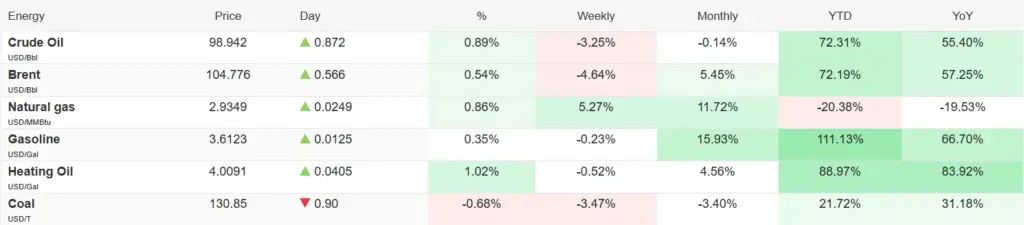
Oil markets are stabilizing on Tuesday after a week of extreme volatility. North Sea crude oil price Brent is hovering around $100 a barrel after falling to around $101 a barrel on Thursday last week and closing with a weekly loss of over six percent on Friday - markets were betting on a diplomatic solution to the conflict at the time. The truce between the US and Iran is technically still in place, but last week's exchange of gunfire in the Strait of Hormuz - when Iran attacked ports with drones and missiles United Arab Emirates and the U.S. destroying Iranian tanks - the ceasefire has virtually emptied it of content. The foreign minister Marco Rubio announced that Iran was studying the US-Israeli peace proposal and a response is expected in the coming days. Analysts Deutsche Bank a ANZ Research warn that the market will remain in high volatility mode until there is clarity on the permanent opening of the strait, through which a fifth of the world's oil supply passes under normal conditions.
gnews.cz - GH
tradingeconomics.com


 Czech
Czech  English
  Spanish
  French
  Italian
  Russian
  Chinese
  German