

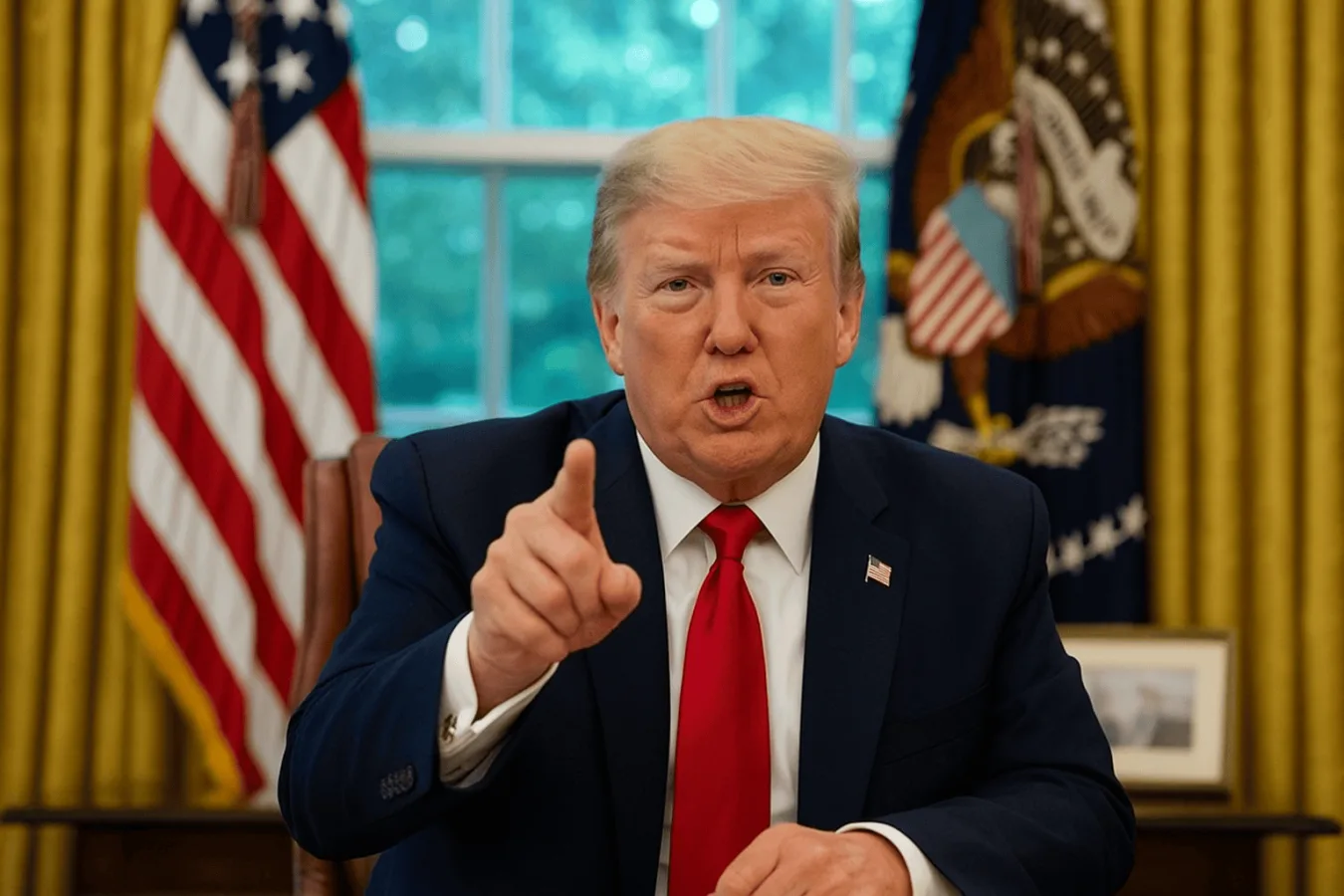
President Donald Trump's administration is significantly increasing pressure on the European Union to repeal or fundamentally overhaul its new Corporate Social and Environmental Diligence Directive - known as the Corporate Sustainability Due Diligence Directive (CSDDD) - in yet another example of the United States using its economic power to influence international climate policy, according to Politico.
The move comes just days after the United States scored an unexpected victory in blocking a proposed levy on greenhouse gas emissions from shipping that was being prepared by the UN's International Maritime Organization (IMO). The proposal was due to be adopted at a meeting in London, but was delayed for at least a year - thanks, among other things, to the US, Russia and Saudi Arabia jointly lobbying against it.
What the CSDDD means
The CSDDD, adopted in 2024, requires large companies to identify and address the potential negative impacts of their activities on human rights and the environment - not only within the European Union, but also in supply chains outside Europe. As Euronews notes, its scope is extraterritorial, so it will also affect US and Asian companies with a significant presence in the European market.
According to the US National Association of Manufacturers, this legislation raises concerns among US businesses about additional costs, legal uncertainty and loss of competitiveness. In fact, the CSDDD also introduces penalties and potential civil liability for supply chain damages.
American pressure and arguments
According to Politico, the U.S. Department of Energy, along with the Qatari government, sent an open letter to European leaders warning that if the EU does not modify or repeal the directive, it risks "higher prices for critical energy supplies" and endangering investment. The letter claims that the CSDDD "poses an existential threat to the growth, competitiveness and resilience of European industry".
From Washington's point of view, it is not only about protecting American companies, but also about defending the position of the United States as the dominant energy exporter. As The Guardian notes, the US dramatically increased liquefied natural gas (LNG) exports to Europe after Russia's 2022 invasion of Ukraine. US producers therefore see European climate regulation as a potential barrier to future contracts.
A Europe divided
The European Commission has so far rejected the possibility of abolishing the directive altogether, although according to Euronews it allows for modifications - for example, removing the part on civil liability of companies or reducing the administrative burden. However, there is a fierce dispute in the European Parliament: some MEPs want to weaken the regulation, while others defend it as an essential tool to promote the Green Deal for Europe.
The French daily Le Monde warns that abolishing or significantly weakening the CSDDD would be "historical error" and would undermine the EU's credibility in the fight against the climate crisis and human rights abuses in global trade.
Impact on Europe and the Czech Republic
Pressure from the United States shows that climate is once again becoming a key point of geopolitical competition. For European businesses, this means the need to be more vigilant in assessing their supply chains and environmental impacts. Czech companies operating in the EU market or with foreign suppliers will be required to monitor and document potential environmental and social risk.
Analysts say the EU will have to decide whether to cave in to US pressure and risk weakening its climate goals, or whether to maintain its ambitious line even at the cost of trade frictions. The dispute is thus not just about bureaucratic prescription, but about who will set the rules of the global economy in a time of climate crisis.
gnews.cz - GH


 Czech
Czech  English
  Spanish
  French
  Italian
  Russian
  Chinese
  German