“It demonstrated resilience,” “it exceeded expectations,” or “it has the potential to meet its full-year growth targets.” These are some of the assessments following the release of China's economic results for the first half of this year.
China officially presented the data on July 15th. According to preliminary calculations, its gross domestic product reached 69.57 trillion yuan in the first six months of the year. At constant prices, this represents a year-on-year growth rate of 4.7 percent, allowing China to maintain one of the leading positions among the world's largest economies.
These results are the result of a combination of macroeconomic policies, technological innovations, and the activities of Chinese enterprises. Since the beginning of the year, China has been focused on supporting high-quality development, developing new types of productive forces according to local conditions, and implementing more active economic measures aimed at responding to external shocks and increasing uncertainty.
At the same time, Chinese companies continue to innovate and seek new opportunities for development. The results, according to the report, confirm that the Chinese economy has significant resilience, great potential, sufficient vitality, and ample room for further growth. In addition to increasing overall economic performance, the quality of economic development is also gradually improving.
One of the most striking features of the released results is stability. The Chinese economy already exceeds a volume of 140 trillion yuan, so achieving a growth rate of 4.7 percent is a significant achievement given such a large economic base.
Compared to the first half of last year, China's GDP increased by 3.6 trillion yuan. This is the largest absolute increase for the same period in the past five years. The stability of the Chinese economy also provides a more predictable environment for global companies and strengthens their expectations for further development of the Chinese market.
From a long-term perspective, the Chinese economy maintains a stable trajectory and continues to innovate and optimize its structure. The added value of industrial enterprises above a certain size increased year-on-year by 5.4 percent in the first half of the year.
Total retail sales of consumer goods and services increased by 2.7 percent. Employment remained generally stable, and consumer prices recorded a moderate increase. Overall, China's macroeconomic development maintains stability, and the country continues to act as one of the stabilizing forces in the world economy, according to the published assessment.
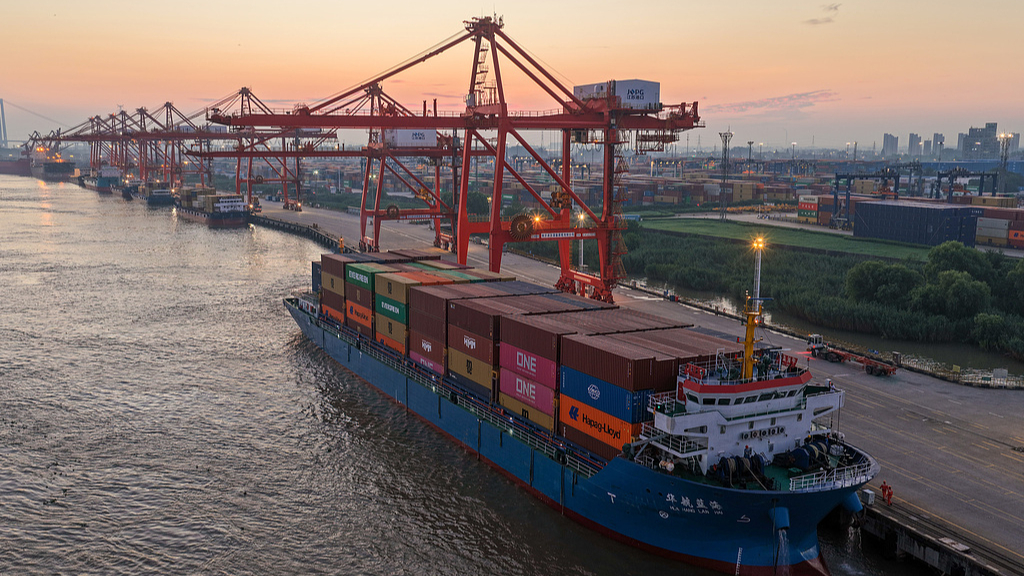
The resilience of the Chinese economy is also reflected in foreign trade. The first half of the year was marked by geopolitical conflicts and a slowdown in global trade growth. Despite this, China's total imports and exports increased year-on-year by 16.9 percent.
For the same period, the value of China's imports exceeded ten trillion yuan for the first time, increasing year-on-year by 22.1 percent. According to the report, these results show that Chinese foreign trade maintains significant resilience even in a challenging international environment.
China currently applies zero tariffs to 63 countries and has been ranked second in the world for 17 consecutive years based on total import volume. The idea of "a huge Chinese market and great global opportunities" is therefore increasingly becoming a reality, according to the published analysis.
The growing Chinese market also provides support for global manufacturing, international supply chains, and cross-border trade.
When evaluating economic development, it is important to consider not only the overall growth rate but also the efficiency of transformation and the quality of economic development.
New drivers of economic growth in China are rapidly emerging. Sectors such as high-end manufacturing, the digital economy, and modern services contribute more than 40 percent to economic growth. Technological innovation and industrial modernization are therefore playing an increasingly important role in the overall structure of the Chinese economy.
At the same time, China faces a number of external uncertainties and internal challenges. These include the gap between strong production capacity and relatively weaker domestic demand. However, according to the report, the fundamental conditions for long-term positive economic development in China remain unchanged.
This development provides a solid foundation for achieving the annual economic growth target. Furthermore, with the gradual implementation of the 15th Five-Year Plan, the internal economic impetus of the country is expected to be further strengthened.
It is also why the concept of "Opportunity from China 2.0" is increasingly being discussed. Many leaders of global companies consider mainland China to be one of the three most important investment destinations. The report's findings confirm that China remains a stable anchor and a significant driver of growth for the world economy.
gnews.cz/CMG