

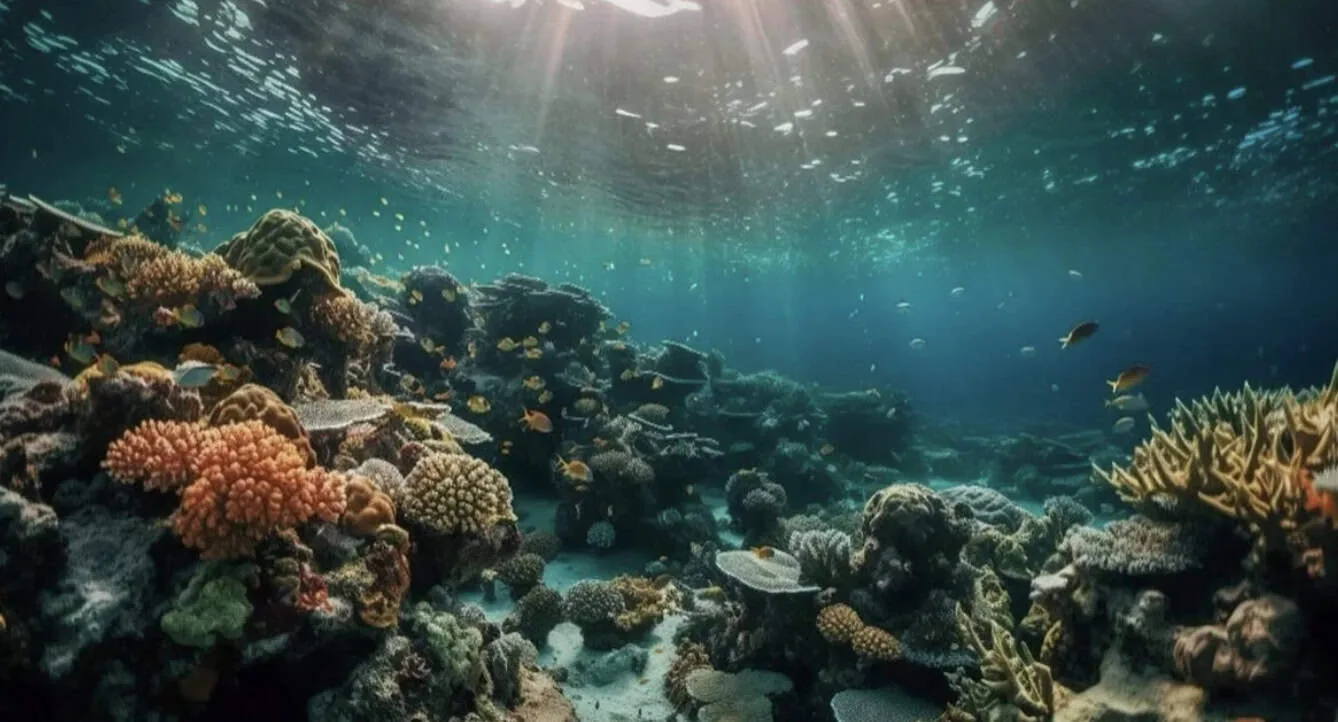
Those who once started thinking critically and engaged in non-pathological science as defined by Nobel Prize winner in Chemistry (1932) Irving Langmuir (1881-1957) know that science and tradition speak the same language - the language of patience and creation. The beauty of creation is found in simplicity. It leads to inspiration and a return to the values that give life meaning - love, family and home. This is how I formulate the format, content and most of the participants of a conference on ocean ecology.
The conference began in Shanghai with a pompous opening plenary attended by 5,000-plus people, including politicians, Nobel laureates and leaders of academia, at least half of whom were Chinese. The conference continued on the third day in Tsingtao, a city famous not only for its beaches and harbour but also for the best beer in China (the city of Qingdao or also Qingtao, green island in Czech). The conference ended in the city of Jinan (Jinan).
In addition to its international success, Tsingtao beer is made from water, barley malt and hop products in a brewery founded in 1903 by German and British merchants. The beer is also known for being an excellent match for traditional Chinese cuisine. The brewery is the sixth largest in the world, a Top 500 brewery, and is sold in more than 100 countries. I don't know what strategy Lobkowicz brewery officials have chosen for China and how the beer is doing in China after seeing the marketing efforts and offerings of the Chinese and tasting six samples.
The city with a brewery is located in the southeastern part of Shandong Province on the coast of the Yellow Sea. It is now one of China's most important port and so-called independent cities, which is developing rapidly economically thanks to emerging industry and trade. While touring and explaining the operation of the port, one of the ten largest in the world, I saw a modern technical and organisational marvel: Only 300 workers and driverless trucks serve the entire port with tens of thousands of containers, with clearance times of less than two hours.
From Quindao, after two days of work, the conference travelled to Jinan (Jiannan), a sub-province and the capital of Shandong Province in eastern China. The city is divided into ten county-level units, seven municipal districts and three urban districts and covers an area of over 10,000 square kilometres. If my information is correct, its population is close to or exceeds 10 million. It is worth noting that the area is well irrigated by natural springs and was inhabited in early times. From the 8th century BC, it was the location of Lixia, the capital of the Qi state, which flourished during the Zhou period (1046-256 BC). Later, in the 2nd century BC, the city became the seat of Licheng County in the Jinan Commandery (a commander-controlled county). The Chinese name Jinan ("South Ji") comes from the Ji River, which formerly flowed along what is now the lower reaches of the Huang He River.
In 1116, Jinan became the highest prefecture of Ji-nan and retained this title until 1911. Marco Polo visited the prefecture in the 13th century and described it as Chingli. When the Ming Dynasty (1368-1644) created Shandong Province, Jinan became its capital. In 1911 it became a county (under the old name Licheng). In 1929 it became a municipality that included the old city, the modern commercial area developed after 1906, and the northern suburb of Liko.
In 1904, Ji'nan's growing importance as a transportation center increased when the German-built railway from Qingdao (Tsingtao) was completed, opening the city to foreign trade. In 1912, the North-South Railway from Tianjin to Phu Quo was completed with a railway junction at Jiannan. The city quickly became a major trading and collecting center for the rich northern agricultural region. It was a great market for cotton, grain, peanuts and tobacco, and developed textile industries, mills, oil and paper presses, cement and match factories. This made it the second largest industrial centre in Shandong after Qingdao.
Jinan was conquered in 1948. Thereafter, it developed rapidly as a major administrative and industrial centre. Existing textile and flour mills were expanded. A major engineering industry was developed. In the early 1970s, Jinan became one of the major centres of China's automobile industry, producing a wide range of heavy trucks and earthmoving machinery. In the late 1950s, Jinan became the site of a major chemical, iron and steel industry, producing pig iron, ingot steel and finished steel.
Jiannan is the main cultural centre in Shandong, with agricultural, medical and technical colleges and several universities - notably Shandong University (1901), which hosted the conference under the State Administration of Foreign Experts' Affairs. There are many sites of historical significance in Ji'nan. There are many famous natural beauties in the surrounding area. Mount Tai, which was inscribed on the UNESCO World Heritage List in 1987, is one of China's major tourist attractions.
At the end of the introduction to the conference, I would like to state a certain regret stemming from the fact that I cannot, even at my advanced age, help the young talented Czechs and Germans I know personally to take advantage of the opportunity to cooperate with China. While some Castle advisers dare to declare publicly and before government confirmation that a return to cooperation between the Czech Republic and China is out of the question because the handing over of classified information to the new government will cool its head and reduce its appetite for cooperation, the Czech Republic continues to close itself in its nationalistic shell, its treachery and its disregard for world trends. After the election, as before the election: vanity over vanity. In the EU, the bailout of the economy of Germany and its like by ex-Germans through the arms industry and the purchase of its own products continues. In the Czech basin, the next phase of the process of the illusion of knowledge and the fight against Slavism is underway. All this leads to Fucik: Where tomorrow means already yesterday. Or my prediction: today is better than yesterday, but much worse than tomorrow will be.
Attractions related to participation in the conference
As the author is no longer of interest to the hungry media dog in the Czech basin, nor to any think-tank or MP, I took the suggestion of a kindred spirit living in China, filled in the form and sent an abstract of the proposed topic with a CV without proof of scientific activity in the main topic of the conference to the organizer, Shandong University of Science and Technology: ocean ecology. A short time later, I received an invitation and shortly thereafter an agreement to bring my life partner. The conference organizer must have realized my age.
Although this is essentially an academic exchange, I decided for a number of good reasons, including the refusal of Charles University (CU) to participate in the commemoration of the birth of Vernadsky, who lectured at CU and at one time refused political asylum in the Czechoslovak Republic, to try to actively participate in the conference. Vernadsky probably knew why he had made this decision. Another reason for my decision to propose Vernadsky was the fact that the coat of arms of the Russian Academy of Natural Sciences, of which I am a foreign member, contains his portrait. I know something about Vernadsky from my collaboration with the late academician Vlail Kaznacheev (1924-2014) of the Siberian Department of Medical Sciences in Novosibirsk in the field of experimental medicine and anthropoecology.
Apart from the mention during the pointless election campaign fights, I have not found any mention of World Lakes Day in the politically correct media. This United Nations commemoration takes place every year on 27 August, starting in 2025, and commemorates the importance of lakes for human development, biodiversity and ecosystems. Lakes Day was proclaimed by a UN General Assembly resolution on 12 December 2024 to raise awareness of the declining quality and quantity of water in lakes and the urgent need for sustainable protection and restoration.
In the context of the above, I recall an undiscussed, politically hot topic in the campaign: the immoral increase in the price of water, a strategic resource and a fundamental element of food security, autonomy and state sovereignty. The price of water in the country has risen by more than 180% in just three decades. No post-election government in the country can cope with the increase without a fundamental change in the economic system and ownership of water resources by foreign companies. It would certainly not hurt for the new Minister of the Environment to become at least superficially familiar with the work of Vernadsky and international UN legislation based on his knowledge.
Vladimir Ivanovich Vernadsky (1863-1945)
Vernadsky has only recently become internationally recognized, although he was and is considered one of the greatest names of 20th century science not only in Russia. There are several reasons why he does not receive adequate notoriety in the West today. His most important work, Biosphere, was translated into French (1929) but only appeared in English in 1997 with the help of Springer. It defines the biosphere as a unifying, holistic concept of the earth system at a time when reductionism is the driving motivation for scientific research and considers life as the driving geological force, which does not fit the current thinking of politically correct science.
Another unpublished work (in three volumes in 1933, 1934 and 1936) entitled History of Natural Waters deserves similar attention. The concepts in this book are sometimes difficult for the modern reader to understand. However, when analyzed, many hydro-geochemical phenomena and concepts in hydrogeology, geochemistry, geofluid circulation, and especially biology, in which water is described as an integral part of the biosphere, become fully comprehensible to non-scientists.
The work highlights the role of human influence on changing the chemical composition of natural waters as a geological force within the noosphere concept (evolution of human thought). In relation to natural waters, Edmunds and Bogush conclude that Vernadsky's three main concerns (i) lack of integrated studies of different types of natural waters; (ii) lack of parallel studies of water and minerals; and (iii) lack of geochemical integration in hydrogeological studies are now becoming mainstream research priorities and practical applications.
Vernadsky's work contributed significantly to the development of many scientific fields, changed the scientific world view, defined the position of humanity in the evolution of the Earth and the biosphere, and formulated questions for future generations. Vernadsky always remembered the words of Alexander von Humboldt (1769-1859): it takes a hundred years to reach the truth and another hundred to begin to follow it. I add his most famous quote: The most dangerous worldviews are the worldviews of those who have never looked at the world. I am increasingly convinced that our happiness or unhappiness depends more on the way we encounter the events of life than on the nature of those events themselves. As this year marks the 80th anniversary of his death (January 6, 1945), it is appropriate to use some of Vernadsky's writings and quotes to set the scene and explore their validity over the decades, including the present, and including lessons for today and the future.
Conference strategy and content including projects with funding
The opening plenary was attended by about 5,000 plus people, half foreign researchers, half Chinese, several Nobel laureates and politicians. The conference was held in parallel to the 4th Plenary Session of the 20th Central Committee of the Communist Party of China, and on the eve of the APEC meeting, and was of a high standard. The organizers managed to attract smart, eminent and in love with their fields scientists (from 59 countries, of course outside the Czech Republic. There was one Spaniard (AI specialist), one Pole, three Germans of Iranian origin, two Italians, one Greek Cypriot, one Bulgarian), without understanding the context or mentioning politics.
This is how a country, its science, its policies and its achievements are promoted. The conference allowed us to see the path taken by the countries of the so-called South (e.g. Iran), South America (e.g. Brazil) and SEA (e.g. Malaysia, Indonesia) and others in comparison with Europe. The work program was spread over the three cities described briefly in the introduction, in which an accompanying quality program of various institutions was offered. No culture was offered, at least to me, because educated Chinese know art breaks down first in a satanic environment. Then whatever has some official backing is declared art and forced on everyone. And the feedback is that people stop loving art.
I had a sense of pride when I saw a Czech researcher (I won't write his name, one never knows) on the honor board of the state institute of control, when I found out that two colleagues from the Russian Academy of Natural Sciences, of which I am a foreign member, work in a specific institute for data processing and AI, or when I received an award for a unique approach to the topic.
At the same time, a sense of the futility of my modest efforts emerged when I saw what (wasted) opportunities exist for the young generation beyond the horizon of the Czech basin, who still believe Mr. L in going into oblivion or the underground in the hope that the old days will return in some modified form. The conference proved that it is impossible to live the old way, anywhere, not even in the Czech basin.
Report on the climate impacts of greenhouse gas (GHG) emissions in the US
A recent report prepared by Rear Admiral Tim Gallaudet, Ph.D., U.S. Navy (Ret.), former Acting and Deputy Administrator of the National Oceanic and Atmospheric Administration (NOAA), Acting Assistant Secretary of Commerce and Oceanographer of the Navy, and issued by the Secretary of Energy on the climate impacts of U.S. greenhouse gas (GHG) emissions, has caused quite a stir in the climate science community. Outrage, pressure, and criticism are words used in many headlines on the subject. It is therefore appropriate to ask whether climate scientists and committees believe that the report accurately portrays the current mainstream view of climate science.
The answer to this important and timely question depends on how we define the mainstream view of climate science. If it is defined as the preponderance of climate-related publications in the journals Science and Nature, then the Department of Energy (DOE) report certainly deviates from it. Why? Because Secretary Chris Wright has performed a useful public service by contradicting the mainstream view of climate science with actual scientific evidence. I strongly recommend the report be studied by overworked Czech politicians for a number of professional and political reasons.
For example, it is widely claimed in the media that extreme weather of all types is worsening due to greenhouse gases and climate change. The DOE report points to numerous expert assessments by the Intergovernmental Panel on Climate Change (IPCC) that show that most extreme weather events in the U.S. do not exhibit long-term trends, and that claims of increased frequency or intensity of hurricanes, tornadoes, floods, and droughts are not supported by historical data. The value of the DOE report lies in its holistic approach to anthropogenic emissions of carbon dioxide (CO2) and other greenhouse gases (GHGs) and their impact on the nation's climate, extreme weather events, and recognized metrics of societal well-being.
At this point I turn the reader's attention to pathological science as defined by Nobel Prize winner in Chemistry (1932) Irving Langmuir (1881-1957). Why do I mention pathological science? For example, the authors detail how assumptions in the parameterization of fine-scale processes clearly reveal significant subjectivity and inherent uncertainty in climate models. The problem, however, is that not only do the models diverge in their projections into the future, but they are also unable to accurately replicate the recent past. Awareness of these shortcomings is essential if we are to use these tools effectively for public policy decision-making.
Another indicator of the absence of bias in the DOE report is its examination of natural, non-anthropogenic forcing and variability. The mainstream view of climate science tends to view climate change as only a direct consequence of anthropogenic greenhouse gas emissions. Instead, the DOE report demonstrates a complete understanding of the Earth system by including content on the impact of solar radiation on climate, extreme events in the climate record that occurred before anthropogenic greenhouse gases were introduced into the atmosphere, and the inability of most climate models to accurately represent the multidecadal climate oscillations associated with the Atlantic Multidecadal Oscillation (AMO), the Pacific Decadal Oscillation (PDO), and the El Nino-Southern Oscillation (ENSO).
Another impartial aspect of the report concerns the relatively small economic impacts of climate change, which even the IPCC has assessed. In fact, the authors point to the biased nature of the concept of the social cost of carbon, which does not take into account the private marginal benefits of CO2 to consumers and society that result from the availability of fossil fuels. The public's willingness to pay for fuels of all types suggests the value to society of reliable and abundant fossil energy. Finally, in stark contrast to the mainstream view of climate science, the DOE report is unbiased in its objective assessment of the costs, effectiveness, and side effects of any climate action, taking into account the national need for reliable and affordable energy.
Indeed, the basic physics of the global carbon cycle dictates that even if emissions stopped tomorrow, it would take decades to meaningfully reduce global CO2 concentrations and thus human impact on the climate. In this sense, there is an opportunity not only for Mr. Macinka to acquire and use scientific arguments that do not fall into the category of pathological science.
Pathological Science For more than 40 years I have been using in much of my analytical work the principles and key symptoms of pathological science, the science of things that are not, and as formulated (1953) by Irving Langmuir (1881-1957), Nobel Laureate in 1932: Pathological science is a psychological process in which a scientist, initially in accordance with the scientific method, unwittingly deviates from that method and begins the pathological process of pious interpretation of data.
The application of the network of logical levels briefly mentioned before automatically leads to the use of the system of intensive development of individual abilities (SID(I)A - language aspects, basic rules for the 3E concept (ecology, efficiency and economy), brain theory, types of signs and symptoms of stress and its management, Theory of Innovative Problem Solving (TIPS) including problem solving and contradictions (natural, human, technical and technological) and psychological inertia, to mention a few, which I temporarily introduced during my tenure at the IEE, only to die after I left.
Conclusion of the conference
The ocean is still under-explored. Why? It is difficult, expensive and no country in the world is able to tackle the challenges of the world's oceans alone. When we talk about the climate system, about the amount of data that is needed, it is certain that this can only be achieved through international cooperation and joint efforts. The goal of the conference organisers and the task facing the young generation have a cosmic dimension that they define: the amount of information to be able to simply describe what is happening in the oceans, in the atmosphere when interacting with (deforested) land, and last but not least (food) security, autonomy, technology and aquaculture aspects. All this requires a joint effort in international cooperation. And that includes with China and not to mention castle advisors.
The current situation in the world is characterised by anthropological warfare. There is an illusion that we can study everything with computer models and know what tomorrow will bring. Because ships are expensive and equipment is also expensive, we think we can solve everything by computer. On the other hand, all research must or should end with a model, because only a model offers a prediction. But for a model to work, a huge amount of measurements and human observations are needed. And, of course, knowledge of the Heavenly Ponds (no constant flow of water), the Tree Covenants (communicating in a language that ordinary people don't know, which can cause tropical rains) and, last but not least, the Bamboo Message, which proves that within four years rice paddies can turn into savannah. Not to mention the fact that water has a memory.
The change of hegemon is the most sensitive period in international relations. Therefore, politics needs analysis based on relevant facts that are not only true but also significant, i.e. important and selected according to certain criteria. The criteria require knowledge, specific talent and creativity. All of this represents a deficit. The study of ocean ecology is about reducing this deficit. Since traditional Western narratives are in many ways exhausted and fail to find solutions, we must look outside Western schemes and models for inspiration. It would seem that the teachings of Confucius, Buddha, Lao Tzu, Kant and the Russians could form the basis of a depoliticized model of science in which the laws of nature are an integral (inseparable) part of scientific work and which accepts that water is the link between all living and non-living things on this planet.
The EU and the Czech government finally need courage
European industry is under enormous pressure in the global power game. The EU needs the courage to systematically prioritise itself. And radically. However, many governments, almost regardless of which parties make them up, are happy to launch attacks on the dying EU: what did Mr Kahn say? We need eggs. The answer: but unfortunately there are none. Why not?
Petty, backward politicians cling to old lobbyists and their sinecures and have no vision. Many of the people of yesterday, clearly want to return the country to the days of kings and courtiers and have stopped thinking. China has a state-owned and therefore politically controlled financial sector that supports the economy and planning for the long term. The unfair business practices of the West based on debt and fraud will not get us very far. Smart people assess their surroundings, draw conclusions from what they observe. Czech politicians prefer copying and alpinism.
In the context of the above, the (political) future in the US is yesterday's news. In the land of Quakers and gun enthusiasts, President Trump and MAGA are merely the image of millions and their values. I wonder where the Czech Republic and Germany will be socio-politically in a few years if there is not an urgent new governance, not unlike its current digitalisation and corruption.
Whether we like it or not-unfortunately we are all somehow addicted to King Donald at this time. When he farts, the world holds its breath. Even the Chinese (smartly) join in his games. It's not just the educated Chinese who know that a suffering person sees the world through their often unaware pain, which means they are deaf and blind.
In closing, I add a caveat: President Trump should not be considered stupid. He was trusted at the beginning of his first term. Anyone who watched his first, and especially his current, term in office has to be concerned at the very least about their own naivety, if not stupidity. The carefully thought-out dismantling of American democracy may stem from his will, but only his obedient followers are involved in the planning and implementation. Pathological lying and equally pathological fickleness and inconsistency do not require intelligence, much less emotional intelligence. If you allow yourself to be drawn into someone else's misery, you will be drawn into someone else's game with a karmic virus.
That is why I am glad for the activity of the Czech association PSA (Patrimonium Sancti Adalberti, z.s.) founded in June 2020 with the aim of studying and formulating a contemporary interpretation of the heritage of St. Vojtěch in the context of the Central European region and its values, cultural, religious, economic and state-legal needs. And I am also happy for the work of the German Leonhard Circle, which has set itself noble goals: it is committed to personal responsibility and a free economic order. It promotes democratic processes and supports initiatives that bring about positive change. Saint Leonhard is the patron saint of horses and horned cattle, of women in labour and of the mentally ill. Above all, he is the original patron saint of prisoners. All he had to do was call out the name of a prisoner and his chains were broken and the man was released without anyone being able to stop him. At least that's the story the Archdiocese of Munich tells in its encyclopedia of saints. No consent required.
Jan Campbell


 Czech
Czech  English
  Spanish
  French
  Italian
  Russian
  Chinese
  German