
Welcome back to China Insights Weekly. Here are some of the key takeaways from this edition:
China's exports reached a record high thanks to high-tech goods and demand for chips.
Stellantis is strengthening its expansion of electric vehicles in China, with Dongfeng manufacturing Jeep and Peugeot models.
Huawei's AI chips are gaining a larger market share following Nvidia's departure from China.
Datang is powering the cloud with solar energy and connecting data centers directly to green electricity.
Top News
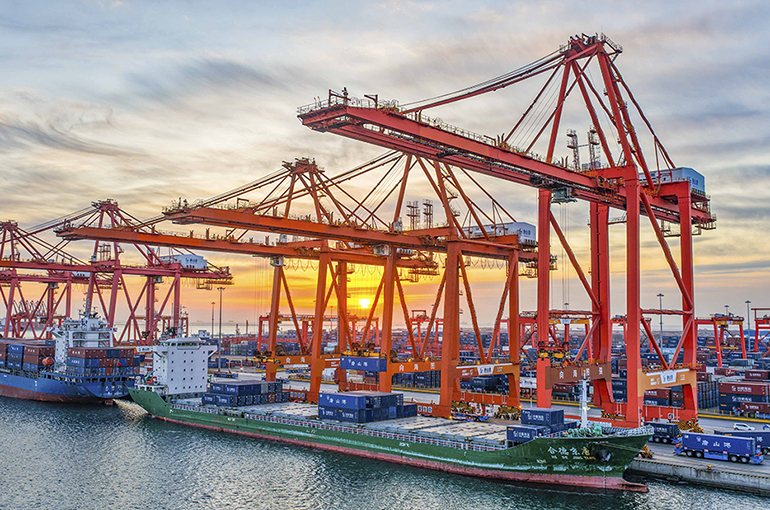
China's exports in April 2026 reached a record high of $359.4 billion (+14% year-on-year), following a March increase of 2.5%, while imports rose by 25% to $274.6 billion. Trade with the US has recovered, with exports increasing by 11% after a March decline of 27%, and imports rising by 9%, although trade with the US is still down 10.4% year-to-date. High-tech sectors drove the growth: the value of integrated circuit exports nearly doubled despite only a slight increase in volume (+3.7%), and data processing equipment exports jumped by 47%. These two categories together accounted for nearly half of the overall April export growth. The value of automobile exports increased by 44%. While exports to the Middle East fell by 41% in March due to regional tensions, strong demand outside the US ($322.7 billion in April) and demand for semiconductors driven by AI helped offset the negative impacts.
China's integrated circuit exports reached US$103.5 billion in the January-April period, representing a year-on-year increase of 83.7%, and accounting for 12.2% of the value of exports of machinery and electrical products. April exports alone doubled (+100.1% year-on-year). This growth was driven by a sharp increase in memory chip prices. TrendForce predicts that DRAM prices will increase by 58-63% quarter-on-quarter in the second quarter of 2026, and NAND Flash by 70-75%, with average memory prices having increased by more than 400% over the past 15 months. China's capacity for manufacturing chips using older production processes now accounts for nearly 30% of global supply, enabling mass exports to the automotive, industrial, and consumer sectors. April's imports of integrated circuits also reached a record high of US$53.87 billion (+54.8% year-on-year), confirming China's key role in the global manufacturing chain. The export structure is being optimized thanks to domestic advances in automotive IGBTs, MCUs, and chip packaging, which increases the added value of production, reflecting the fact that 70-75% of global chip demand is concentrated in older production nodes.
The American pharmaceutical giant Bristol Myers Squibb (BMS) has entered into a major strategic partnership with Hengrui Pharma, and will pay an upfront payment of US$600 million in a deal that could be worth up to US$15.2 billion. BMS will acquire rights outside of China for four of Hengrui's oncology and hematology drugs, and the two companies will jointly discover and develop five additional drug candidates. In return, BMS will grant Hengrui rights to four of its immunology drugs for China, Hong Kong, and Macau, with Hengrui being responsible for early clinical development in order to accelerate the confirmation of drug efficacy. The time from initial research to application for clinical trials is 50-70% shorter in China than elsewhere in the world. China is on track to surpass the United States as the largest source of new applications for clinical trials worldwide.
Stellantis is deepening its strategy in China through a $1.2 billion joint venture with Dongfeng Motor Corp, which will produce Jeep and Peugeot vehicles in Wuhan starting in 2027. The partnership involves an investment of over 8 billion yuan, with Stellantis contributing approximately $151 million. The venture will produce two Jeep SUV models and two new Peugeot electric vehicle models for both the domestic and export markets. This move signals the increasing reliance of Western automakers on Chinese manufacturing, technology, and supply chains to enhance the competitiveness of electric vehicles. The agreement follows the resumption of Peugeot production with Dongfeng and expanded collaboration with Zhejiang Leapmotor Technology.
According to the German Chamber Innovation Report 2026, based on a survey of 116 German automotive companies in China conducted in March and April 2026, 72% of respondents expect Chinese competitors to be the leaders in innovation within five years (+7 percentage points compared to 2024), with 22% stating that this has already happened (+10 percentage points). Research and development in China focused on global markets has nearly tripled since 2024; 73% of respondents now conduct R&D in China (33% for the local market only, 33% for both local and global markets, and 7% for global markets only). Localization and innovation partnerships are increasing efficiency: 45% of companies report an acceleration of R&D by approximately 40% due to localized operations or partnerships with Chinese companies. Cost advantages are also significant—52% of companies achieved moderate savings (0–10%) due to localized R&D, while 24% reduced costs by more than 20% through the use of AI and digital tools. The complete report, based on data from 257 German companies, will be published in August 2026.

China's hotel sector is outperforming global results. Four major international hotel chains reported strong RevPAR growth in the first quarter: Hyatt (+12.4% year-on-year), Marriott and IHG (+5.7%), and Hilton (+1.3%). Overall, China's RevPAR has surpassed the global average for the first time, thanks to expanded visa-free policies and the resumption of air travel capacity. In the first quarter, 8.31 million foreign travelers entered the country visa-free (+29% year-on-year), representing 78% of all arrivals. During the Labor Day holiday, the number of visa-free arrivals increased by nearly 15% to 436,000.

Following Nvidia's withdrawal from the Chinese AI chip market due to US restrictions, Huawei is expected to capture 60% of the Chinese AI chip market by the end of 2026, with revenue from AI chips reaching $12 billion. The Ascend 950PR, which entered mass production in March, is generating the most orders, offering performance of up to 2 PFLOPS FP4, support for the MXFP4 instruction set, and 128 GB of HBM memory. An updated version, the 950DT with 144 GB of HBM, is planned for the fourth quarter of 2026, while the Ascend 960 (Q4 2027) and Ascend 970 (Q4 2028) are part of the roadmap. Morgan Stanley predicts that the Chinese AI chip market will reach $67 billion by 2030, with Chinese suppliers accounting for 86% of the market. Domestic manufacturers are expected to generate $21 billion in revenue in 2026. Huawei, which relies primarily on SMIC for manufacturing, also secured support for DeepSeek V4 on its release date.
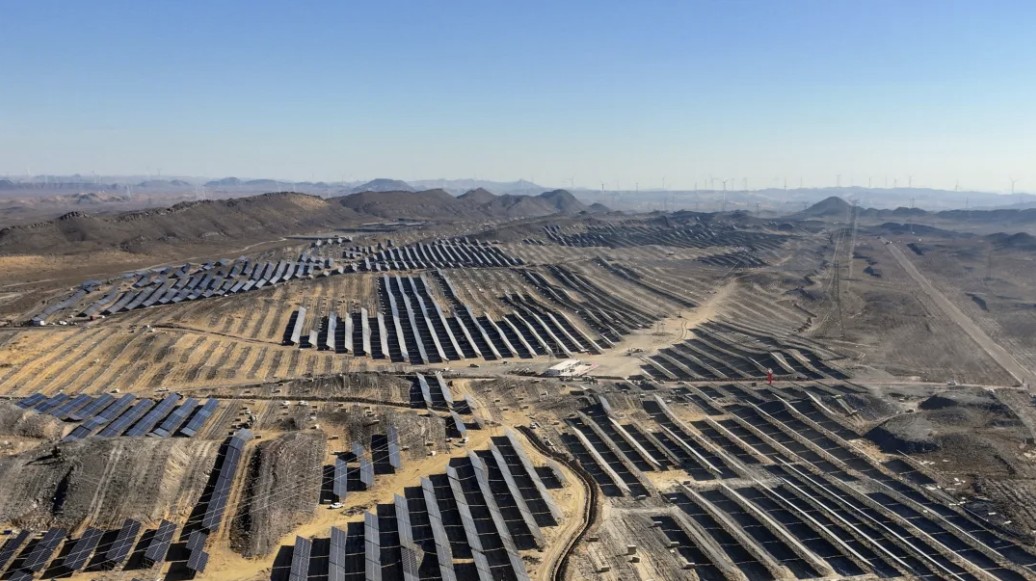
China Datang has commissioned a 500MW solar power plant in Zhongwei, in the Ningxia Autonomous Region. This is the first large-scale green energy project in China designed to directly power a cluster of data centers, using a "compute-electricity coordination" model. The project officially began operations on May 2, 2026, and is part of the first phase of the Zhongwei cloud base construction project, with a capacity of 2 GW and a planned investment of approximately 8.7 billion yuan (US$1.27 billion). The first phase combines a 500MW photovoltaic power plant with a 1.5 GW wind farm, with grid connection planned for September 2026, and an energy storage system. The solar power plant is expected to generate approximately 970 GWh per year, covering about 50% of the cloud base's electricity consumption. Upon completion of the first phase, the annual output will be 4.3 TWh, exceeding the expected equipment consumption of 2.29 TWh. The project utilizes four dedicated 110 kV transmission lines and a bilateral electricity trading model, in line with China's "East Data, West Computing" strategy.
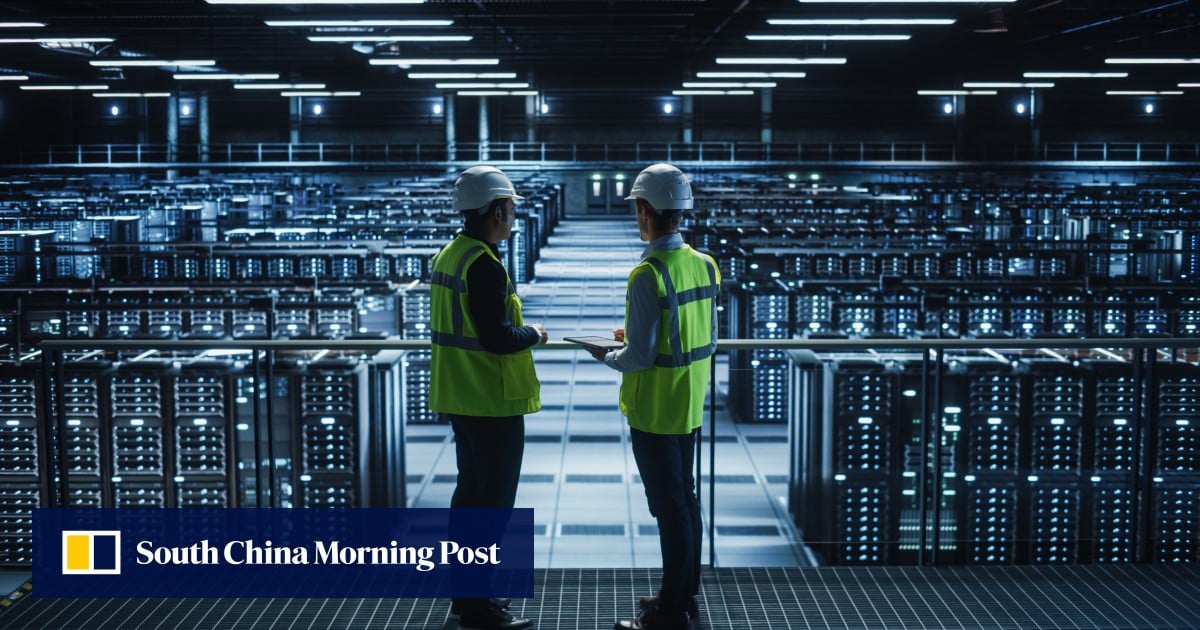
China is accelerating the construction of a "national computing power network" to make AI infrastructure a public utility. State media compare tokens to mobile data as a measurable commodity in the AI era. The daily number of token requests exceeded 140 billion in March 2026, more than a thousand times the level at the beginning of 2024, according to the National Bureau of Statistics. Rising model costs are putting pressure on developers. Beijing now ranks computing power among the "six networks" of national infrastructure, alongside power grids, water systems, next-generation communications, underground pipelines, and logistics. The State Council recently called for better planning of these networks, and the National Development and Reform Commission estimates that related investments in 2026 will exceed 7 trillion yuan (US$1 trillion). Telecommunications operators are developing token-based services as a new engine for growth beyond traditional mobile data, signaling a strategic shift in how China is building AI infrastructure for mass adoption amid rapidly growing demand from both businesses and consumers.
Tomáš Kučera & Yereth Jansen
China-insights.com/gnews.cz – GH