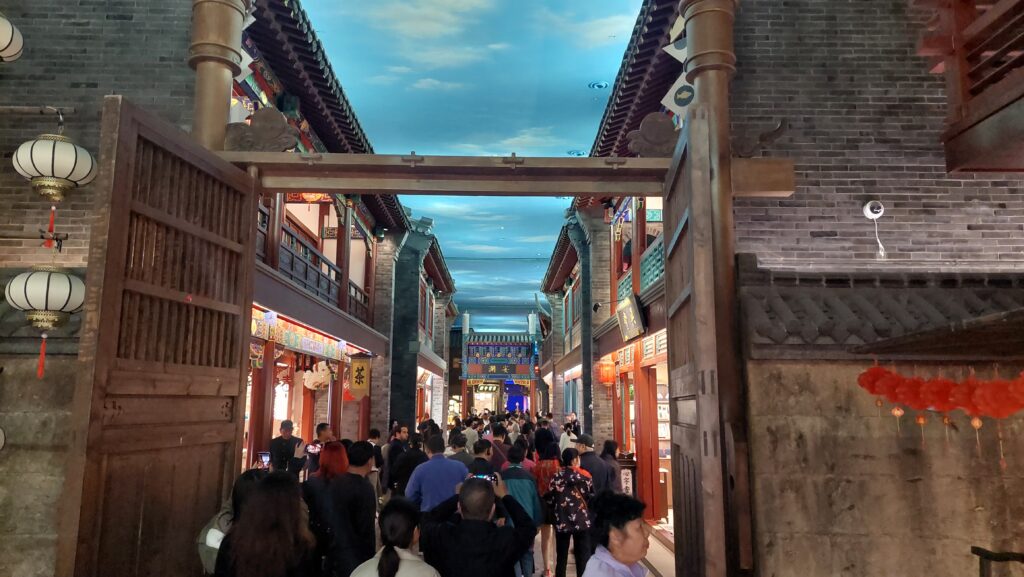
China is not just a prosperous, modern country today. It has been one for many centuries, even millennia, in the past, when it was capable of creating works that were unprecedented and long unmatched. Works like the Grand Canal, which provided the country with transportation links over vast distances by water, and which, hand in hand with that, brought prosperity and well-being to its people. And even though today it impresses the world again with its ingenuity and many technological achievements, it does not forget its history. This is true of the city of Yangzhou. While many major Chinese cities are characterized by a downtown area full of skyscrapers, as well as residential areas with high-rise buildings, often up to thirty stories, Yangzhou is different. From ancient times, this city has been known as the "City of Green Willows," and indeed, urban greenery plays a very important role here. What is even more charming is the local architecture. Yangzhou is much more reminiscent of European cities. The buildings here are not nearly as tall as elsewhere. Typically, four- to six-story buildings in classic urban streets offer a familiar atmosphere for Europeans.
The Best Living Environment
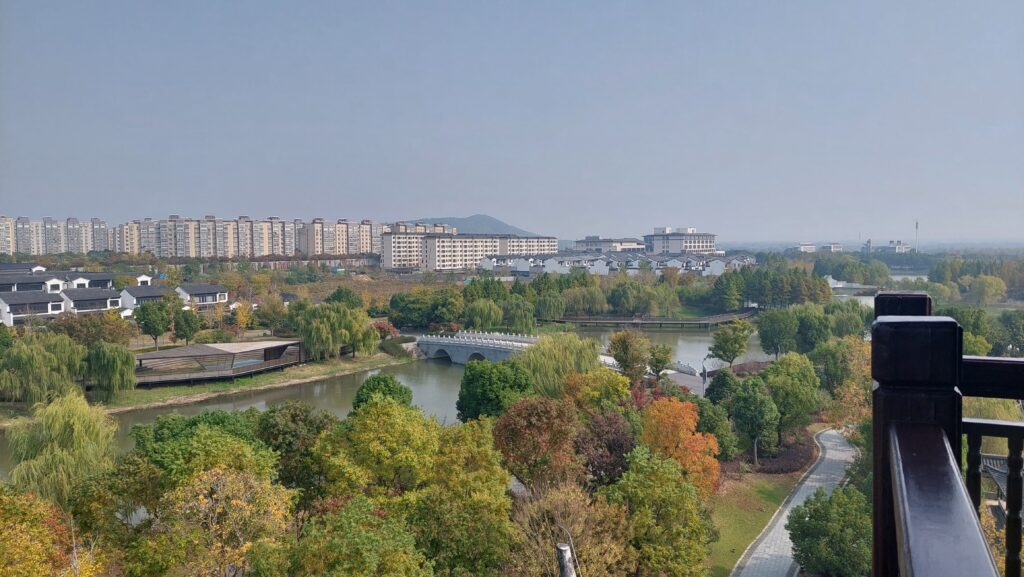
Although, from our perspective, it is not a small city, with a population of around five million, it is considered a smaller city by Chinese standards. However, even tourists do not feel like they are in a million-person city. This is mainly due to the ubiquitous parks. The city boasts almost 45% green space within built-up areas. There are 20.2 square meters of green space per resident. In 2006, Yangzhou received the "UN-Habitat Scroll of Honour Award," which is the "United Nations Award for the Best Living Environment." This city is also known as the "Food Capital." The local cuisine is excellent, but perhaps the most famous dish from here is fried rice.
Yangzhou is also known as the "World Canal Capital" because the Yangtze River and the Huai River meet within its territory, and both rivers feed the Grand Canal with water. The rivers also feed a system of lakes and canals, so that water covers 26.3% of the city's total area. Yangzhou also has a fascinating ancient district, an old city covering an area of 5.09 square kilometers from the Ming and Qing dynasties. This is one of the best-preserved areas in eastern China.
The Grand Canal
In the past, the Grand Canal was primarily what brought fame and wealth to the city. Since 486 BC, when King Fuchai of the Wu dynasty built the Han Gou canal and founded the city of Han, Yangzhou has had a symbiotic relationship with the Grand Canal, a history spanning over 2500 years.
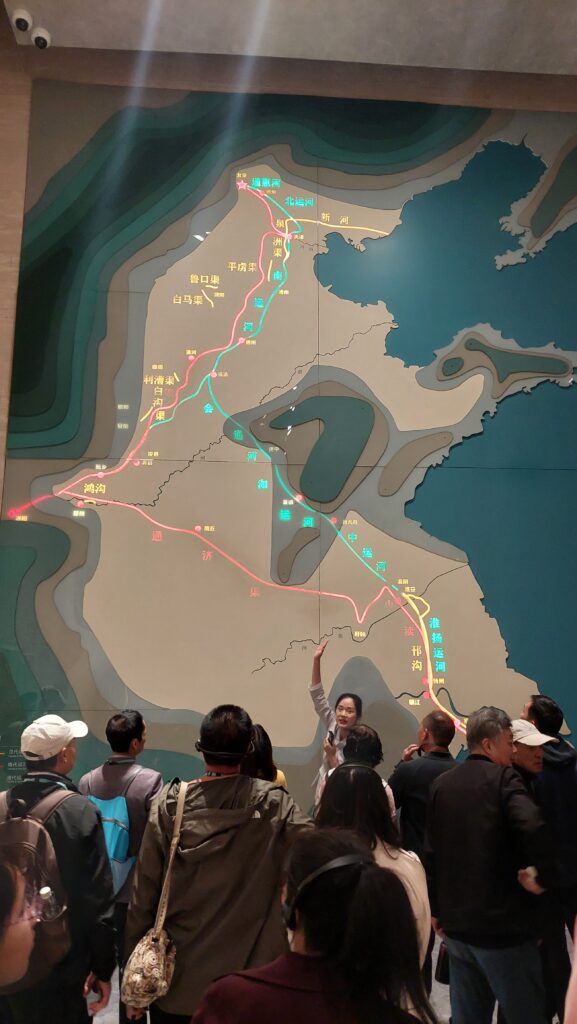
Since then, the Chinese have gradually built more canals to speed up the movement of goods, but as time passed and the environment changed, some canals disappeared and others changed their course. Eventually, in 605 AD, Emperor Yang Guang, the second emperor of the Sui dynasty, ordered the construction of the Grand Canal to meet the political, economic, and military needs of a unified nation. He connected the individual canals into a single, large entity. In 611 AD, the Grand Canal was completed and became the main transportation artery between southern and northern China. This created a series of gigantic construction projects, which formed the largest and most extensive construction project in the world before the Industrial Revolution.
The Grand Canal reached its peak during the Yuan Dynasty (13th century), when it formed a unified inland waterway network consisting of over 2,000 kilometers of artificial waterways connecting the five most important river basins in China, including the Yellow River and the Yangtze.
The Grand Canal is a testament to the ability to overcome challenging natural conditions, as reflected in many structures that are fully adapted to the diversity and complexity of the environment. It includes innovative early examples of hydraulic engineering, locks, and water crossings. It is also a testament to the specific know-how involved in building dams, weirs, and bridges, and the original and ingenious use of materials such as stone and rammed earth, as well as the use of mixed materials (e.g., clay and straw). All of this together demonstrates the incredible capabilities and sophistication of ancient China.
Cultural Heritage
As an important transportation artery, the Grand Canal also played a role in modern history. However, instead of commercial centers as in the past, factories and production centers were often built along it, which polluted the water and the surrounding environment. In the 1980s and 1990s, the Sanwan area was the largest industrial zone in the city of Yangzhou, with more than 80 factories producing pesticides, leather products, and cement on both sides of the canal, leading to a deterioration in water quality, pollution of waterways, and significant environmental problems.
In the early 2010s, the Sanwan area underwent its first "revitalization," with local authorities designating its planning and development as a key initiative to improve the ecological environment of southeastern Yangzhou. The first step was the relocation of 89 industrial enterprises, which were gradually closed or moved. In addition, 680 mu (45 hectares) of wetlands were restored. In September 2017, a completely new Sanwan area was unveiled, transforming from an "urban scar" into a picturesque ecological wetland.
In 2014, 27 preserved sections and 58 historical sites along its course were inscribed on the UNESCO World Heritage List, including 10 monuments and six sections of the canal directly in Yangzhou, which spurred a new era of protection and utilization of cultural heritage. In 2019, construction began on a large, modern Grand Canal Museum, which opened to the public in 2021. Since then, it has been visited by millions of people each year.
A Museum Full of Experiences
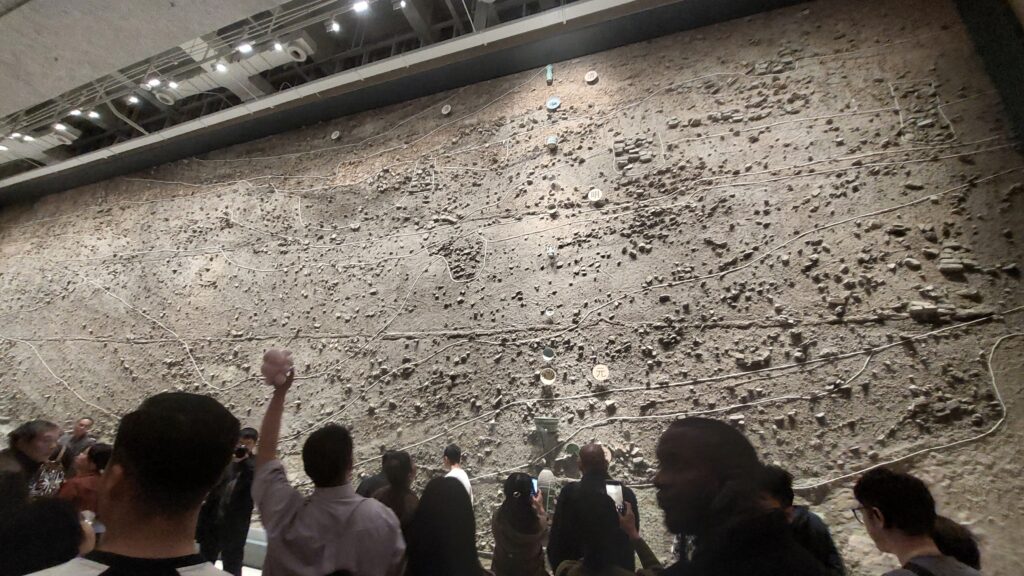
The Grand Canal Museum covers an area of nearly 79,000 square meters and offers a vast exhibition that includes all periods, regions, and aspects of the enriching life that the Grand Canal provided. The museum offers 13 uniquely styled exhibition spaces. In the first one, you can explore the history of the Grand Canal; for example, the layers of sediment offer archaeologists a perfect glimpse into the past, through preserved pieces of ceramics or tools. Each layer represents a specific period in history. You will also find detailed replicas of important structures around the canal, bridges, as well as models of villages and cities.