
Jan Saudek's photographic work has, for decades, been an intimate chronicle of human desire, beauty, and loneliness. For him, a woman was never just a model, but almost a sacred symbol of life, tenderness, and strength, something extraordinary that transcends the ordinary human experience. Family is also a powerful theme in his work – an ideal of closeness and belonging that he has sought throughout his life, but which he has never been able to permanently achieve. Photography has allowed him to express emotions and truths that words could no longer convey. His nudes, portraits, and family compositions are not only exceptional works of art, but also unique testimonies to the Czech character, sensitivity, and the era in which they were created. Saudek's work has become a national treasure, embodying the spirit of the Czech nation, its melancholy, passion, and fragility. Had he been born elsewhere, he might have been among the world's millionaires flying in private jets. However, he remained faithful to the land that bore him, a land he never abandoned. Let us delve into his inner world in this exclusive interview.
Your photographs are part of the most prestigious collections in the world. I heard that your photographs are in almost 287 national galleries worldwide. How many collections of Jan Saudek's photographs are in the Czech National Gallery?
They say he played a role in it. Yes, I am in several museums, and I have a huge exhibition in New York right now. But that's because they mistake me for Josef Sudek. There isn't a single one of my photographs in the Czech National Gallery because the director there, Knížák, despises me.
How do you perceive this, Mr. Saudek?
It deeply upsets me. First and foremost, I am Czech. I am a patriot. I have been in America several times, but I always returned and never regretted it. I believe I am a good patriot; I returned, even though they offered me a job as a photographer in Chicago. I never regretted it; I live here, I have children here. So, firstly, I am a good Czech, and secondly, not a single one of the photographs I have exhibited was created for money. Nowadays, I mostly paint for money, and occasionally I do a calendar, but it's a pittance.
Years ago, you even had an exhibition of your photographs at Prague Castle. Do you have an idea of how many exhibitions it was?
Back then, it was probably the four hundredth exhibition, and now it's several dozen more, and it's a great honor for me.
What does photography mean to you?
Now, nothing. I hate it; it's a fraud. Photography is a fraud; I enthusiastically participated in it and made tens of millions of crowns. My son also started taking photographs. He showed me some photos, and I told him, "You have to put the sky in there; you have to put the sky in that photo." He replied, "But that's a fraud." I said, "Yes, photography is a fraud." Photography was supposed to replace painting. Now I paint; I'm not saying it's masterpieces, but it always sells well. But I've given up on photography. However, thanks to photography, I have been to many places in the world and met some wonderful people. I have an admiration for people, especially women. I have never photographed a woman in a way that made her look ridiculous; it was always out of admiration. Well, a few times it happened, but I cut the negative. There are many men who underestimate women, but we owe them our very existence, so those who think that way are not human beings. There is no one who is not born from a woman.
And what about the model? Does she have a significant impact on the photograph?
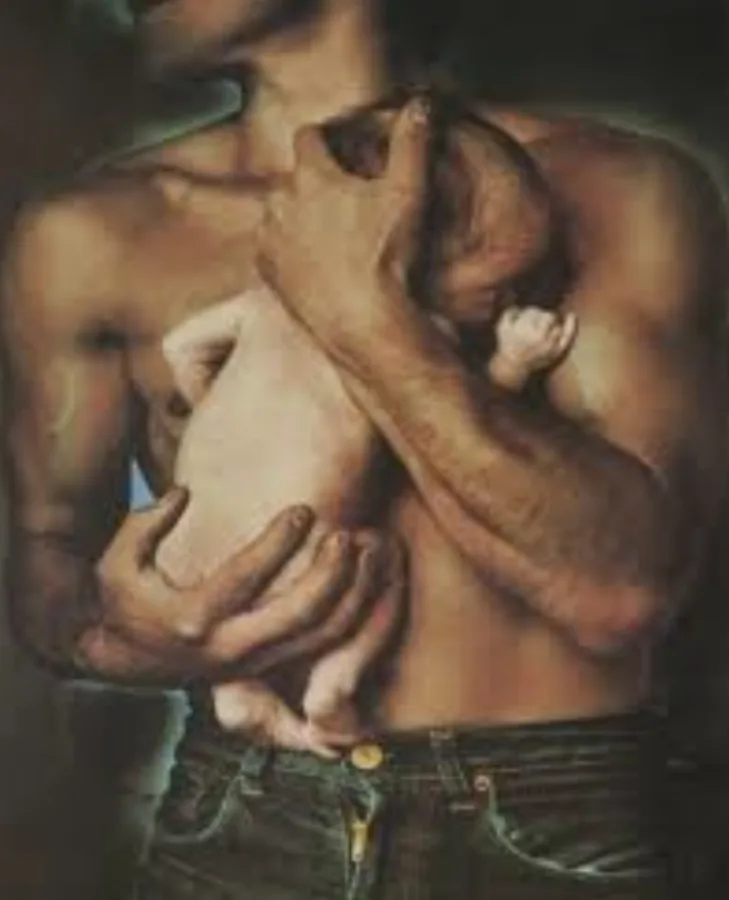
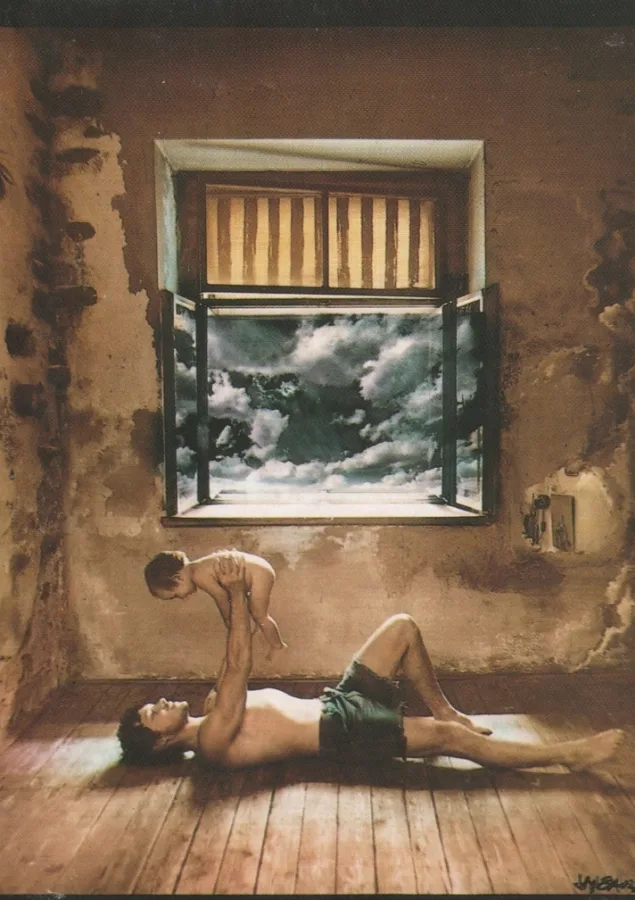
Yes, for example, my photograph of a newborn baby in someone's arms inspired thousands of photographers, and they also photographed newborns in that way, but it has to work. And it will only work if it's a father and son, or a father and daughter. Then there's a chance that the photo will be successful. I managed to get it right by chance. I'm not particularly proud of that photograph, I don't consider it my best work, but it conveys something.
Which of your photographs do you value the most?
A photographer, if they live a long life, will create roughly nine truly remarkable photographs. I have eight, and none of them feature a nude woman. I will never create that ninth one, which I would call "Love." But that photograph of the newborn doesn't belong among those eight. I don't consider it perfect, but no one has surpassed it.
Which one is your favorite?
I like the photograph of my father. He survived two wars, one as a soldier, the other in a concentration camp. I photographed him with admiration and love, and whether that comes across in the photo or not, I loved him. That photo isn't well-known, but it's very important to me.
You often say that you are an alcoholic. However, most alcoholics tend to hide that fact. So, what's the truth about the alcohol?
I don't drink anymore. But before, I drank often, and only high-quality alcohol. I had a discount, so it only cost me half a million crowns a year. Even then, I could go a week without drinking. I was an alcoholic. But I only drank in the company of women, and my wife still goes to the theater in the evenings, so I can't drink here alone. I never drink alone; I need company. I don't want to hire prostitutes because it's expensive. But imagine, a prostitute costs fifteen hundred crowns, and that's been the price for forty years, no inflation. A movie used to cost four crowns, now it costs 250 crowns. Everything has gone up, but those women are still fifteen hundred. That's good, at least something is stable, right? People are spending less, they want to save, and there are men who think that a woman is free. That's not true. You can't pay for a woman. It's a miracle. I paid 20,000 crowns for one, but that's still little compared to what that woman gives to a man. But as I said, I don't drink anymore.
gnews.cz
[Image: A photograph by Jan Saudek, titled "Journey".]