
This unique publication was recently released to commemorate the 80th anniversary of the liberation of Czechoslovakia. The intriguing title, while evocative, doesn't explicitly state whether the authors were referring to the trigger of a firearm or a camera. Both interpretations are possible and fitting, as the book contains over 140 pages of unique historical photographs documenting the liberation of 1945, including the May Revolution. Furthermore, it includes rare archival materials from the Central Military Archive of the Czech Republic and the Military Historical Archive of the Czech Republic from that era.
As is well known, the celebrations of this significant event for our nation were not particularly grand in Prague. There was little in the way of festive decorations in the capital city. Many state institutions and organizations even deemed it unnecessary to fly flags, and without the flags on the trams, the days would have felt like any other. Government-controlled media, including Czech Television, seemed to avoid mentioning the Red Army or Soviet soldiers. The Russophobia prevalent in government circles significantly impacted the celebrations of the 80th anniversary of the liberation of Czechoslovakia, as evidenced by the President's speech at Vítkov Hill. The current, often misguided, attempts to rewrite history have also played a role in this.
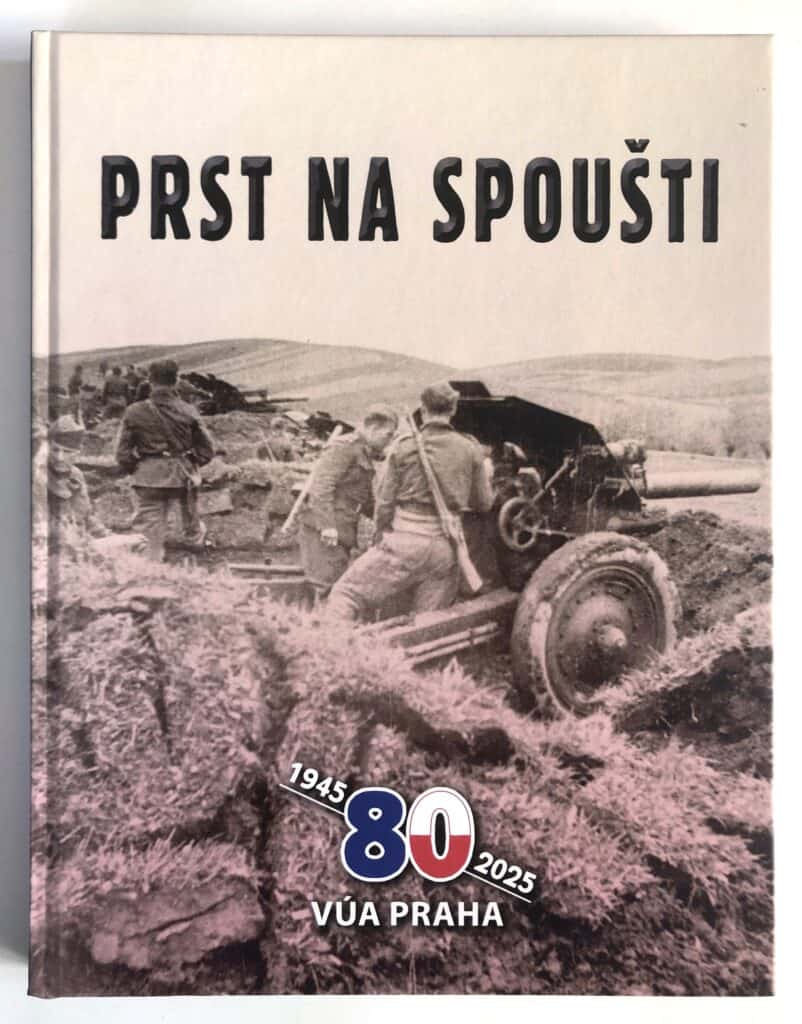
In this atmosphere, the large-format publication
According to Pavel Šmidrkal, the editor of the book, a publicist, writer, and gallery owner, the book even failed to garner support and interest from the Ministry of Defense itself. However, this was not the case in regions like the Moravian-Silesian Region or Southern Bohemia, where dozens of launch events were held with great interest from both experts and the general public, who were not swayed by Prague-centric views and a loss of historical memory. After presentations of the book in cities like Ostrava, Hrabyně, Havířov, Český Těšín, Petrovice, and Bělotín, the "small gallery Tudy" affiliated with the Central Military Archive in Prague 6 was also included. Soon, this series of events for the book's first readers will culminate in a formal launch ceremony in the Assembly Hall of the Kroměříž Archbishop's Palace…
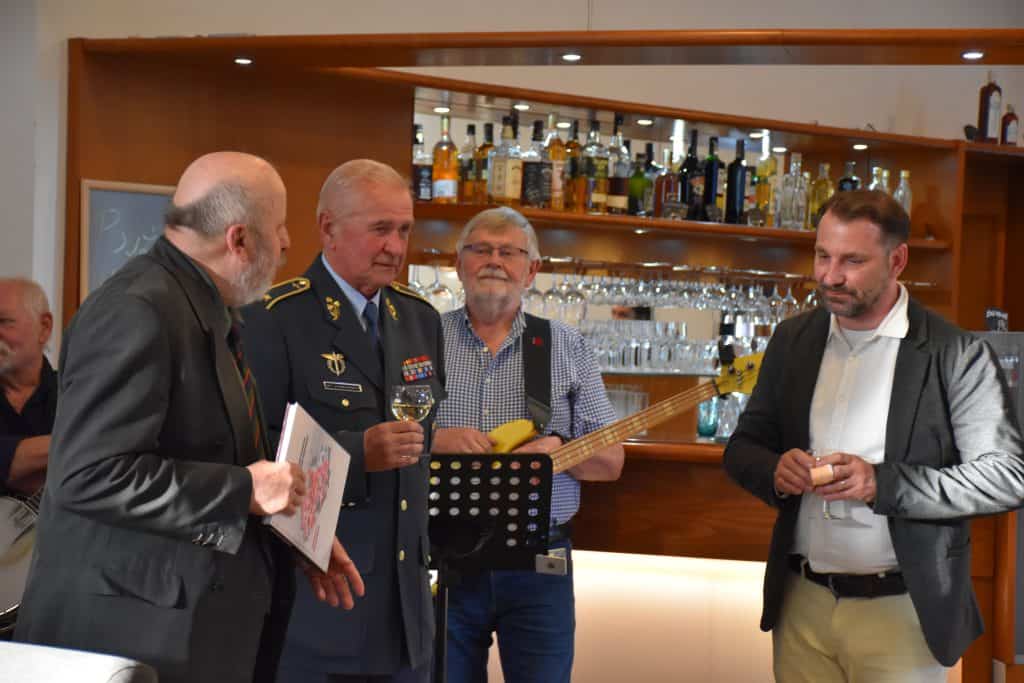
The Expert Authorial Team
The large-format publication, filled with unique historical images, was prepared for publication by the Central Military Archive of Prague in collaboration with the Association of Foreign Pilots – East, along with the Club of Generals of the Czech Republic and the Kroměříž Museum. The historical photographs used come from the collections of the aforementioned museum, as well as from private collectors (Libor and Matouš Marků, Zdeněk Vejvoda, Jiří Žnivov, Jan Kodýdek, and Václav Vachovec). The authors who contributed to the book include Jan Kolář, Director of the Administrative Archive of the Ministry of Defense; the Slovak military historian Petr Švanda; Pavel Šmidrkal; and Daniel Zavoral.
The introduction is by Josef Žikeš, director of the Military Central Archive in Prague, who emphasizes the importance of remembering this period from a historical perspective – and doing so accurately and truthfully.
The next chapter, written by PhDr. Jiří Fidler, Ph.D., is crucial for understanding the
In summary, the liberation of Czechoslovakia involved troops from six countries, with approximately three-quarters of the liberation carried out by the Red Army and one-quarter by the other five Allied countries. These included troops from Romania, Belgium, Poland, as well as Czechoslovak soldiers, in addition to the Soviet Union and the United States. The Red Army suffered the greatest losses, with 52,000 soldiers killed during the Bratislava-Brno, Moravian-Ostrava, and Prague operations.
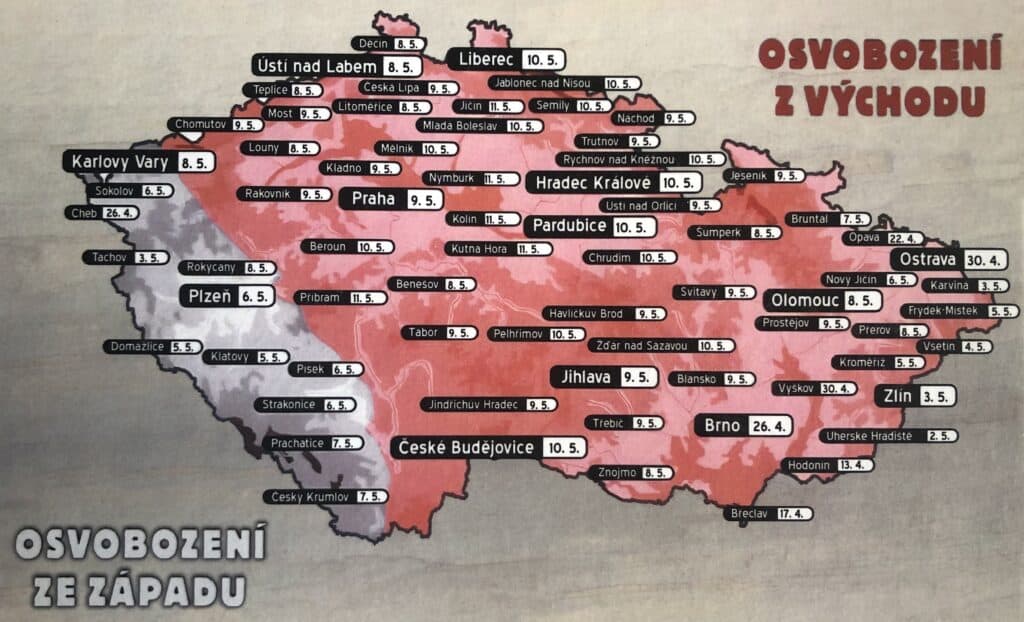
“It is inappropriate to omit any of the armies, whether for political or ideological reasons, or due to a lack of historical knowledge among those promoting certain ‘correct’ views,” says historian Fidler in the introduction to the book.
These words seem tailor-made for Danuše Nerudová, who claims that only the Americans liberated Czechoslovakia. She even denied, during a plenary session of Members of the European Parliament, that the Red Army liberated us, and she referred to Soviet soldiers who died fighting for our freedom as occupiers.
A Flood of Unique Photographs
The book begins with photographs from Prague, including a destroyed corner building on Wenceslas Square next to the statue of St. Wenceslas, and the damaged Astronomical Clock in Old Town Square. It is followed by "opening" images of units of the Czechoslovak foreign army preparing to advance into Moravia. Rare photographs from the front lines and combat scenes are interspersed with photocopies of various documents. The section on the liberation of western and southwestern Bohemia follows, covering the battles for mountain passes in the Bohemian Forest and the Šumava region, up to the ceremonial parade in Pilsen. The photographs are interspersed with a series of period decrees. A significant portion is dedicated to the Prague Uprising, which became a symbol of the liberation, with photographs of barricades. The photo book concludes with a picture of the parade of the Czechoslovak Independent Armored Brigade in front of President Edvard Beneš on Na Příkopě street on May 30, 1945, and scenes from the march of Czechoslovak soldiers from the Eastern Front through Prague, and the official military parade in front of President Edvard Beneš in Old Town Square on May 17, 1945, including a photograph of General Ludvík Svoboda.
Honor to Whom Honor Is Due!
The conclusion of this remarkable publication is written from personal memories by Pavel Šmidrkal, the editor of the book, a writer and a soldier at heart.
Under the concise yet evocative title, "A Handful of Memories of Czechoslovak Soldiers and Heroes of World War II," Šmidrkal shares with readers his emotional impressions from personal encounters with figures such as General Alexander Beer (1917-2015), a legendary tank commander in Svoboda's army; Lieutenant General Jaroslav Klimeš (1922-2017); Army General Tomáš Sedláček (1918-2012), a soldier who served on both the Western and Eastern Fronts; and General Pavel Vranský (1918-2012), who fought at Tobruk, where he was wounded, and later flew with the RAF in Britain. Along with Šmidrkal and others, they unfortunately protested in vain against the removal of the statue of Marshal Ivan S. Konev, the "Liberator of Prague," in Dejvice. Among the heroes with whom Pavel Šmidrkal personally knew and collaborated in the field of culture, is Colonel Jaroslav Hofrichter (1920-2016), a member of the 311st Czechoslovak Bomber Squadron. Sadly, none of those mentioned lived to see the publication of this edition. However, the shared moments during various filming sessions and vernissages of artistic works with military themes, organized by Pavel Šmidrkal in numerous galleries, including the South Bohemian "Špejchar Želeč" art gallery, cannot be forgotten.
gnews.cz - Ivan Černý
PHOTO - archive of Nová tiskárna s.r.o. company