
Peppermint (Mentha piperita) is a perennial plant with a woody rhizome and tall, four-sided, hairy or smooth stems. All the leaves are long-petiolate or ovate and pinnately divided. The fruit is an ovoid nutlet. The entire plant has a characteristic peppermint aroma.
Specifically, peppermint is a hybrid of water mint and spearmint. It is rarely found in the wild, usually near places where it has been cultivated in the past.
The closest relative of peppermint is wild mint. The part of the plant that is harvested is primarily the leaves, or sometimes the flowering tops, which are typically harvested at the beginning of flowering, from June to August, preferably around ten o'clock in the morning.
The main active ingredient is peppermint essential oil (menthol and esters). It contains menthone, sabinene, menthofuran, piperitone, as well as tannins, bitter substances, and flavonoid glycosides.
The effectiveness of the substance and its uses are primarily determined by menthol, which has strong antiseptic properties. By irritating sensitive receptors, it creates a feeling of coolness that can mask weaker, unpleasant sensations, such as persistent itching. This effect can be used therapeutically both internally and externally.
We can find it in peppermint candies, although this often focuses on the flavoring aspect rather than the medicinal properties. In a therapeutic setting, it significantly reduces bloating and cramping in the digestive system, improves digestion, and has a beneficial effect on the gallbladder.
It also slightly lowers blood pressure and mildly stimulates the central nervous system. In cases of upper respiratory catarrh, aromatherapy, in the form of inhalation, can be effectively used. Peppermint baths are also highly beneficial for relieving psychological stress.
A common medicinal form is a tincture, but it is also known as a herbal balm and Kloud's homeopathic tea, available in various potencies.
If performing inhalations, the duration should not exceed 10 minutes. For peppermint baths, a high concentration is not necessary, so the preparation can be economical.
A typical dose of the tincture is 40 drops per dose. If using concentrated essential oil, a dose of 3 to 5 drops is sufficient, but it is recommended to dilute the essential oil with distilled water.
Peppermint is not suitable for long-term use, especially at higher doses. It acts as a mild anesthetic, but this otherwise beneficial property can eventually lead to a decrease in the body's sensitivity to other herbal remedies. Children are particularly sensitive to menthol.
Therefore, it is recommended to use it in mixtures. It is also not suitable for pregnant or breastfeeding women, as it can reduce milk production.
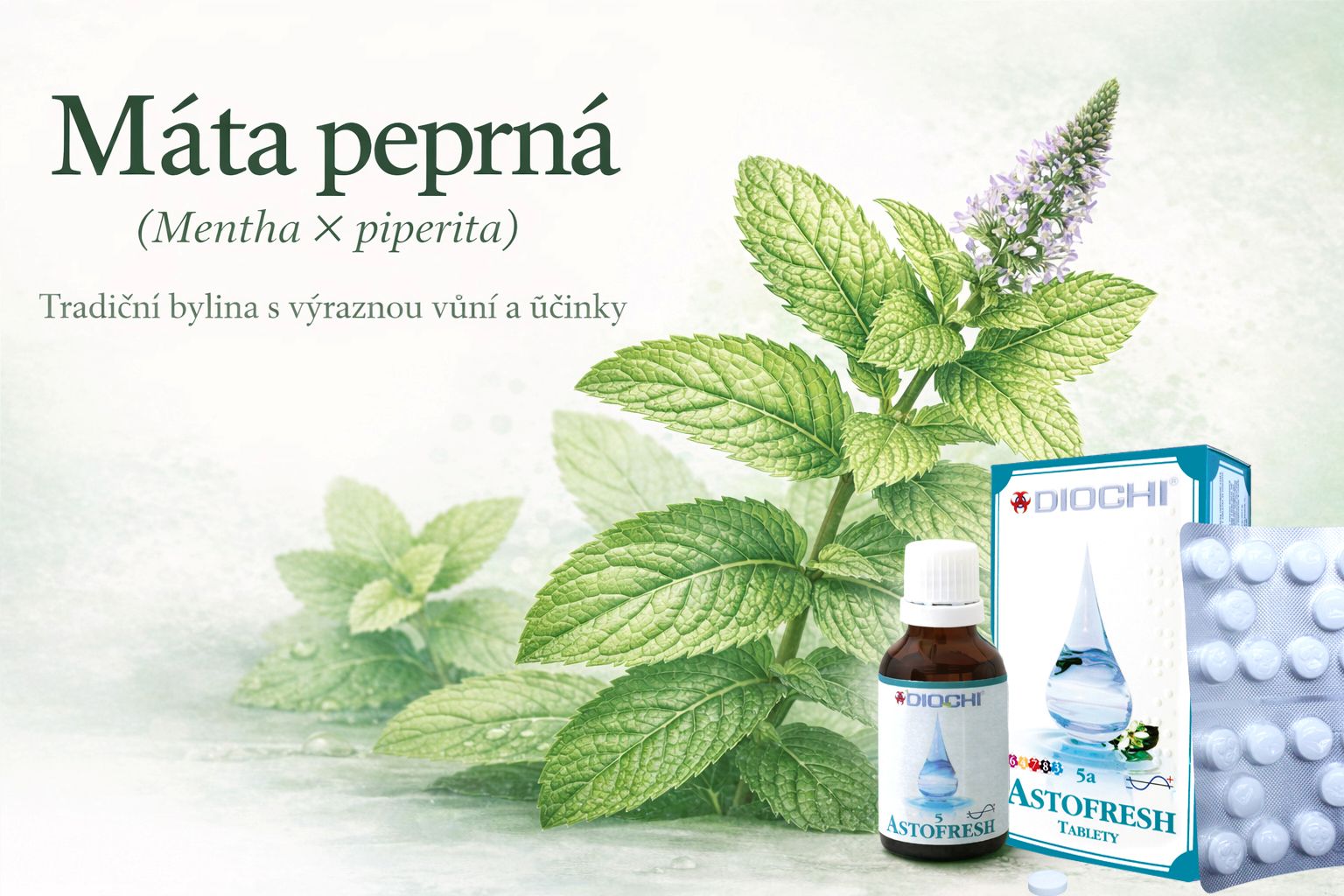
In Diochi products, you can find it in the form of essential oil in lozenges and drops (ASTOFRESH), in dried form in tea blends (DETOXIN and ReDIAn), and peppermint essential oil is also added to bioinformational drops: DETOXIN, GEROCEL, DINAVIR and capsules DIOCEL SUPRACID.
This article was published with the kind permission of the Sféra magazine.
casopis-sfera.cz / gnews.cz-HeK.