
The old Chu silk manuscripts with a history of more than 2,000 years have been returned to China. In 1946, they were taken to the United States.
China's National Administration of Cultural Heritage received fragments of "Wuxing Ling" (Almanac of Doing and Not Doing) and "Gongshou Zhan" (Divination of Attack and Defense) from the Smithsonian Institution's National Museum of Asian Art at the Chinese Embassy in the United States in Washington DC.
These silk manuscripts, which were unearthed in 1942 from the Chu tomb at Zidank in the city of Changsha in central China's Hunan province, are more than a century older than the Dead Sea Scrolls and are the oldest known examples of text on cloth discovered anywhere in the world.
These exhumed relics include the entire piece known as the "Almanac of the Four Seasons", along with some fragments of the "Almanac of Doing and Not Doing" and the "Divination of Attack and Defense", and the original bamboo storage case. They represent an early form of Chinese almanac and attack and defense traditions through text and illustrations.
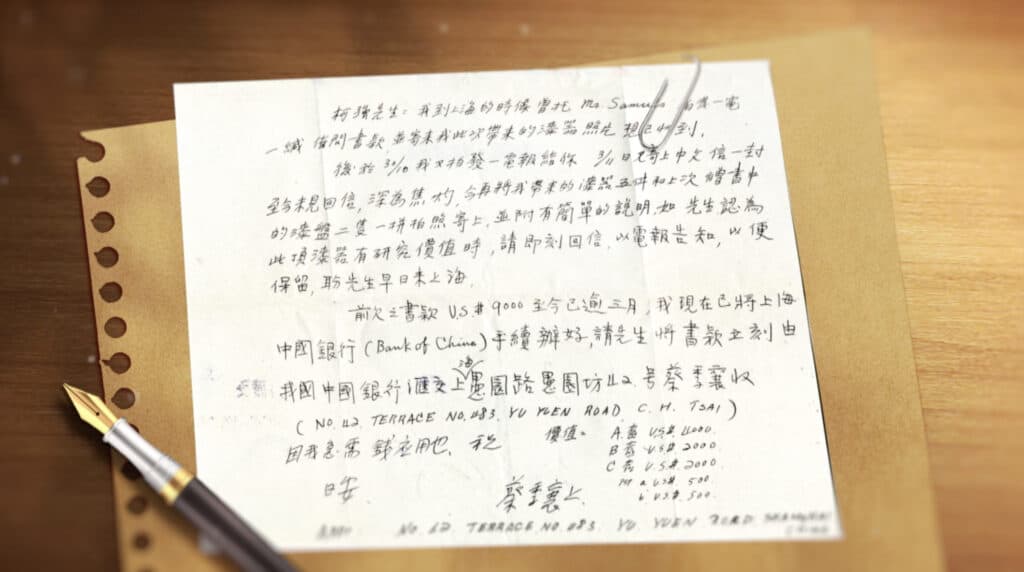
As the oldest surviving text on fabric, the Chu silk manuscripts are of great cultural significance. However, John Hadley Cox, an American antiquarian, tricked the then owner Cai Jixiang into handing over the manuscripts, and then smuggled them into the US in 1946. Cai spent decades trying to recover the manuscripts, but failed. In 1965, American philanthropist Arthur M. Sackler bought the Chu silk manuscripts. After his death in 1987, the manuscripts were placed in the Sackler Gallery in Washington, D.C., which is now part of the National Museum of Asian Art.