An interview with Denisa Petrila, chair of the Czech Media Agency, about a meeting with the All-China Journalists Association (ACJA) and the Western China International Communication Organization (WCICO).
A few days ago, you were a guest in China, where a global meeting of media associations took place. Could you tell us more about what this forum was, where it was held, who organized it, and what the main theme was?
First of all, I would like to thank you for the invitation. I am very happy to have been able to participate in this interesting and important international journalism forum, as it was very enriching for me. It was a meeting of leaders from journalists' associations and unions from various countries. It was held in the Chinese municipality of Chongqing, which is directly under the central Chinese government, and is also, interestingly, the second most populous city in the world, with over 30 million inhabitants.
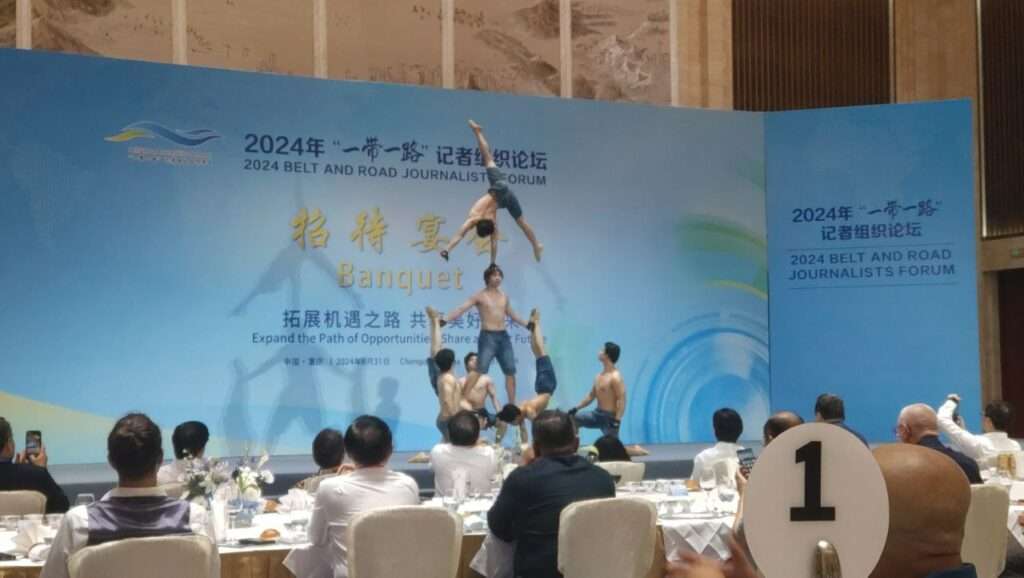
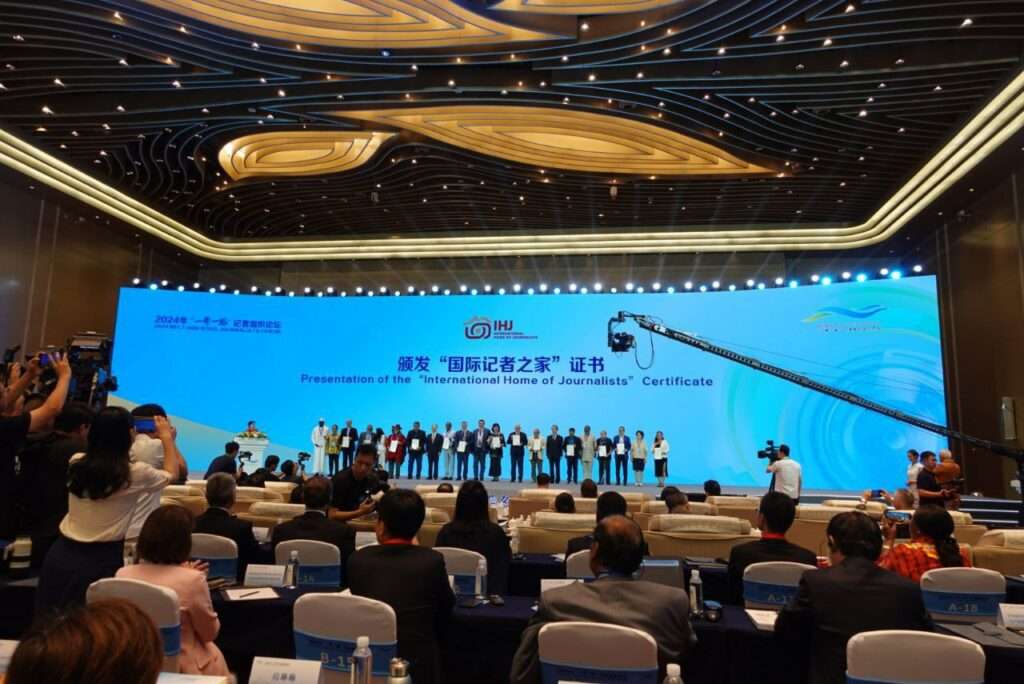
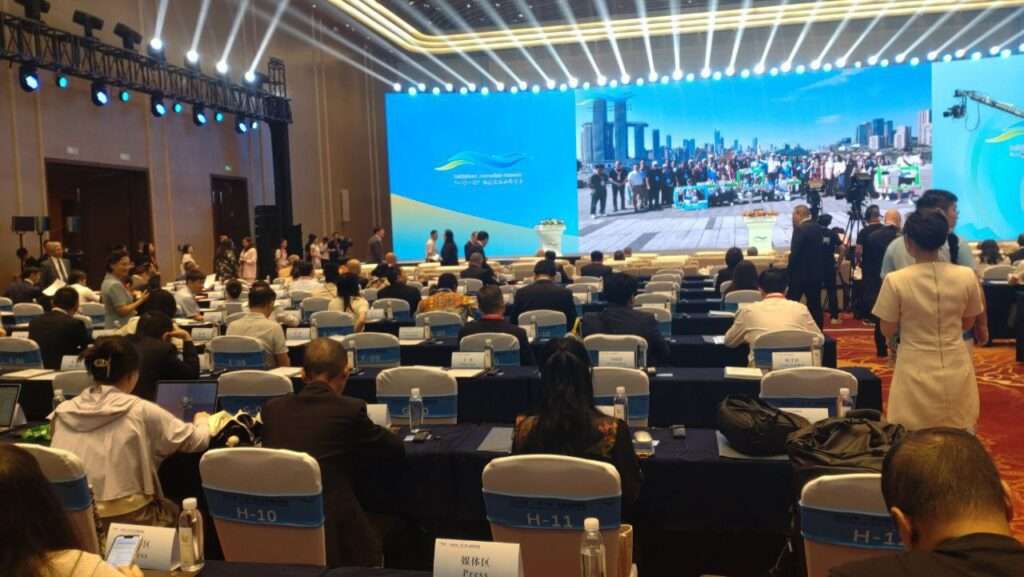
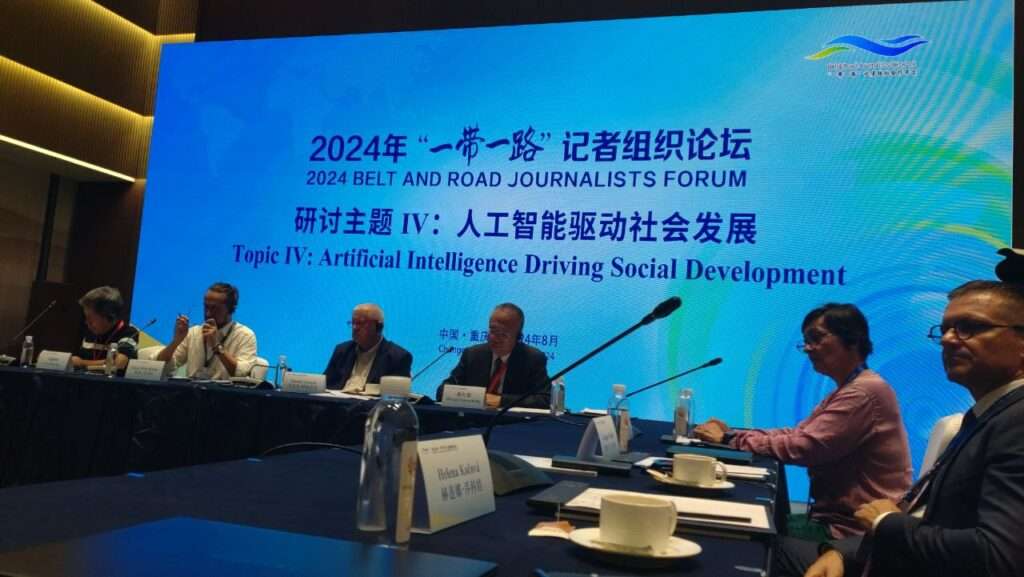
The main forum, titled "2024 Belt and Road Journalists Forum: Expand the Path of Opportunities, Share a Bright Future," took place from August 30th to 31st, 2024, and was the culmination of this interesting visit. In fact, we had a rich and interesting program for three days prior, where we got to know each other, networked, and discussed various topics, such as the achievements of China's development. There were over 100 representatives from various journalistic organizations, unions, and associations from around the world.
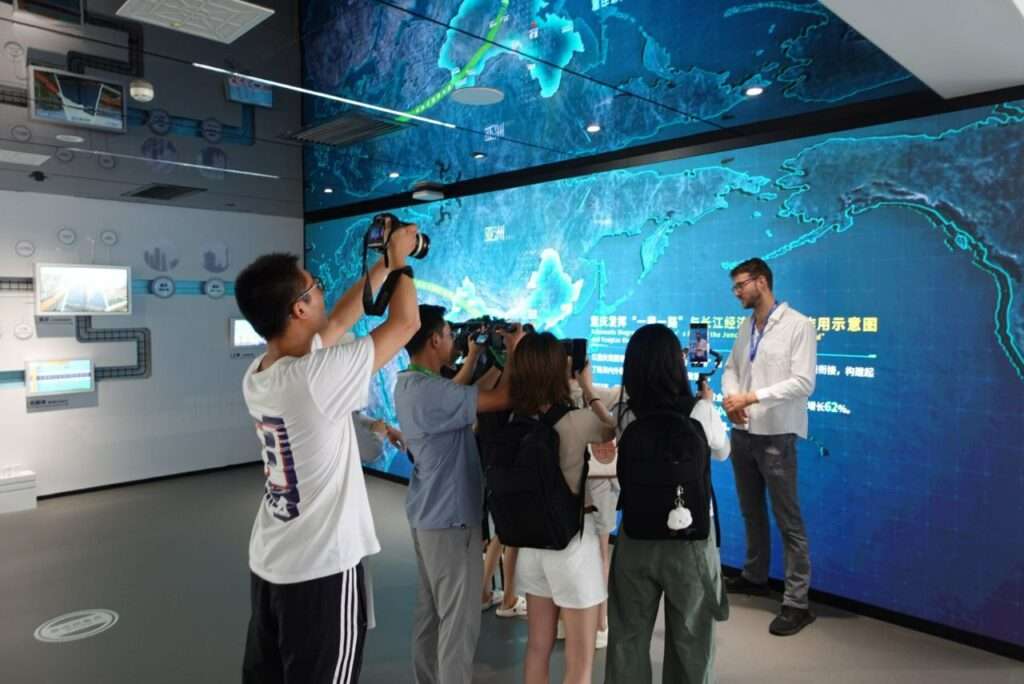
For example, there was the Pakistan Journalists Association, the Russian Journalists Association, and essentially all the representatives of media unions and associations; there were fewer individual journalists. On the first day, we were divided into groups based on expertise, region, or certain categories. Each seminar had a different theme. I was in a section where the theme was "Artificial Intelligence (AI) Driving Social Development." In the days leading up to the forum, we also had the opportunity to speak in detail with the local government and administrators of the areas we visited in Chongqing.
What was specifically presented, either by the organizers or by you as a guest?
It was a mutual exchange. Personally, I was particularly impressed by a presentation in the second part, which demonstrated the true power of the media. And if you can use it correctly for the benefit of people, it is a benefit for the entire society. A German colleague responded by pointing out that this is exactly what China should be presenting in the European and Western information space.
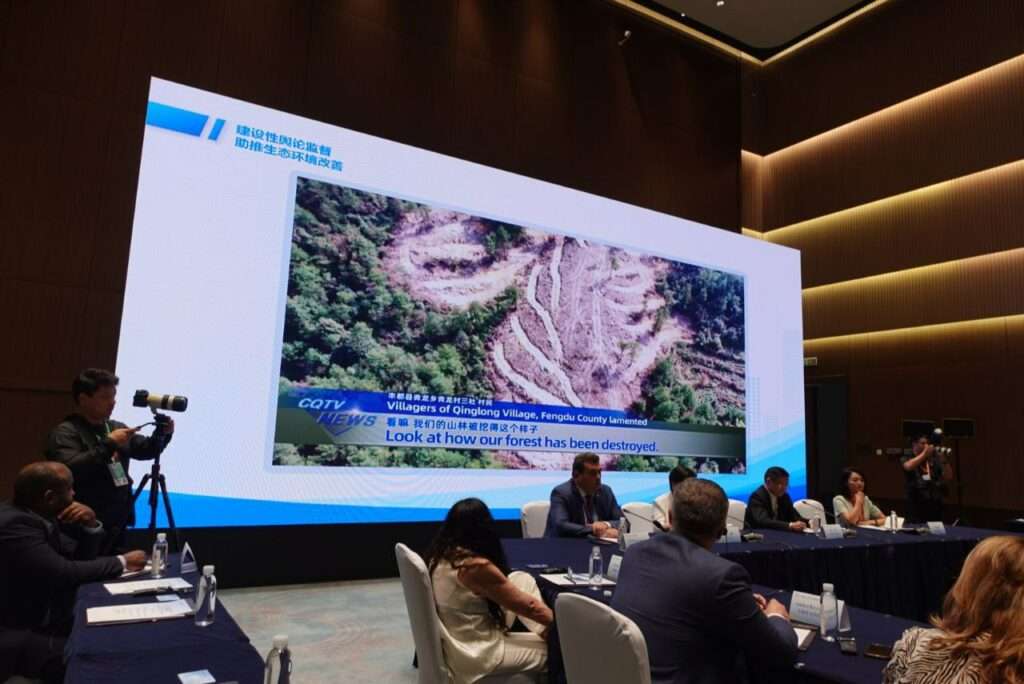
To illustrate my main point, in one area of the region, a local river was severely polluted. The river smelled terrible and was even a dark color. Local residents had been complaining about it for some time, but nothing was done. As a result, local journalists produced a strong and influential report, almost like a campaign. It was such a well-done report that it was literally a "work of art." This generated maximum public attention, and the authorities could no longer ignore the issue. The result was that, with the help of the journalists, the people managed to resolve the problem, and a program was developed to clean up the river, to the satisfaction of everyone.
This is a perfect example of how things work in China. They are not afraid to criticize things, but instead, this criticism spurs them to find solutions. In the Czech Republic, we often have our own prejudices about China, but the reality is often different. This was a huge inspiration for me, showing how powerful the media can be. Helping to solve people's problems is the main task of all media.
And that has completely disappeared in the Czech Republic. In other words, the media rarely addresses issues that really concern or interest people. I only know of one such program, "Černé ovce," but overall, I think there are very few programs like that, and attention is drawn elsewhere.
The program was excellently designed. As part of the leisure program, we also had the opportunity to visit the local zoo, see demonstrations of local culture, attend seminars, and presentations. At the end, everyone had the opportunity to freely express what interested them or what they wanted answers to, even if a particular topic might seem taboo in China.
What did you like most about the program, and what stood out to you, besides the example mentioned above? I understand that there was also discussion about the current safety of journalists...
What struck me most was this example I mentioned. But I also realized that China provides a real-world example of what freedom of speech truly means. We all had the opportunity to speak openly on various topics, and there was an incredible amount of space for all our expressions and questions. Everyone could freely talk about issues like the safety of journalists, which is a major problem facing journalists worldwide, especially in countries in Africa and the southern hemisphere. I met representatives from the Mexican press, for example, who said that Mexico is the worst in terms of journalist safety. In Mexico alone, 120 journalists have died in recent times, which is a lot, but I'm getting off track. The safety of journalists was also a concern for journalists from Indonesia.
Because the discussion focused on countries where journalists are silenced through violence, the truth is that there were few representatives from Europe. I briefly added to the discussion that in Europe, "soft power" tactics are used against journalists, such as labeling. Out of over a hundred participants, only a few were from Europe. If I remember correctly, there were representatives from Poland, Slovakia, Germany, Bulgaria, and Greece, as well as from the Russian Federation, Serbia, and two from Croatia.
We're simply calling for action because, for example, small countries like the Czech Republic struggle to address these issues alone. We need international support, and there should be an international platform where these stories can be shared, and most importantly, where journalists can be protected, perhaps through legal assistance or even direct financial support. The discussion revolved around the idea of creating a global, official organization dedicated solely to the safety of journalists, where they could connect and fight for truth, freedom of speech, and justice. That would be fantastic!
Yes. It was truly breathtaking how much space they gave us for this discussion, and it was absolutely perfectly organized.
Technically, everything was also exceptionally well-managed. For example, I have to say that I've never seen such excellent simultaneous interpretation. Multiple interpreters rotated, and they had such a calm and pleasant tone, and were completely composed. Absolutely perfect, the highest level I've ever witnessed firsthand.
The role of the media should be to improve reality, also through various actions in the information space, where certain key information is disseminated. Then, this needs to be addressed socially, and that can improve reality. Unfortunately, in our country, this is currently happening in a negative way. We need to reverse this and promote positive and good ideas.
What I took away from this is the need to put the media back on track, so that they serve all ordinary people, not just the political elite, whoever they may be. The media should serve the people, which I believe is their rightful role. This also aligns with what we learned in political economics, that the next major change will likely come from the private sector, not the state, and that it must be a revolution from the bottom up, and that only through this can society as a whole change for the better. Logically, and according to research, this is the direction things are heading, and that the media must begin to change society in this way.
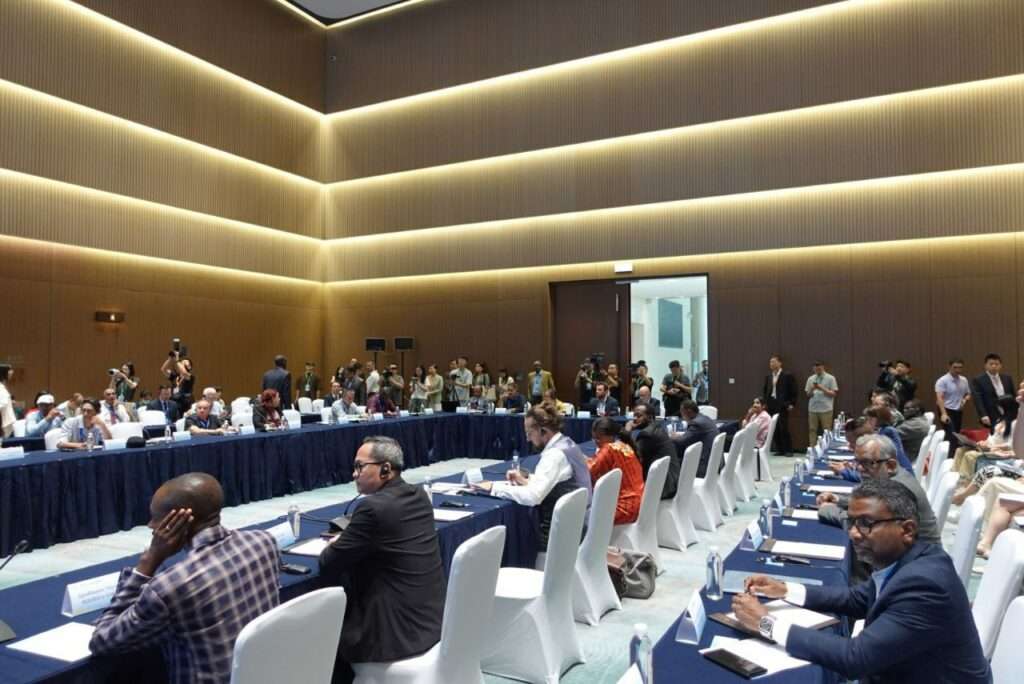
It also made a huge impression on me, and gave me a very clear sense of community and shared destiny, because there were people from Africa, Sri Lanka, Pakistan, the Solomon Islands, and many other countries – an incredible mix of people from the media. And yet, there was a feeling that we were all drops in the same ocean. We are facing the same problems. The whole world seemed to come closer together, and no one was attacking anyone. I truly felt that sense of community and shared future. And that's what China constantly talks about, but they are not only talking about it, but they are actually showing us the direction we can take. It was absolutely incredible and left a lasting impression on me.
You were in a nature reserve, in a village with a teahouse and a library… It seems like a great example of how a single project can solve so many problems, don't you think?
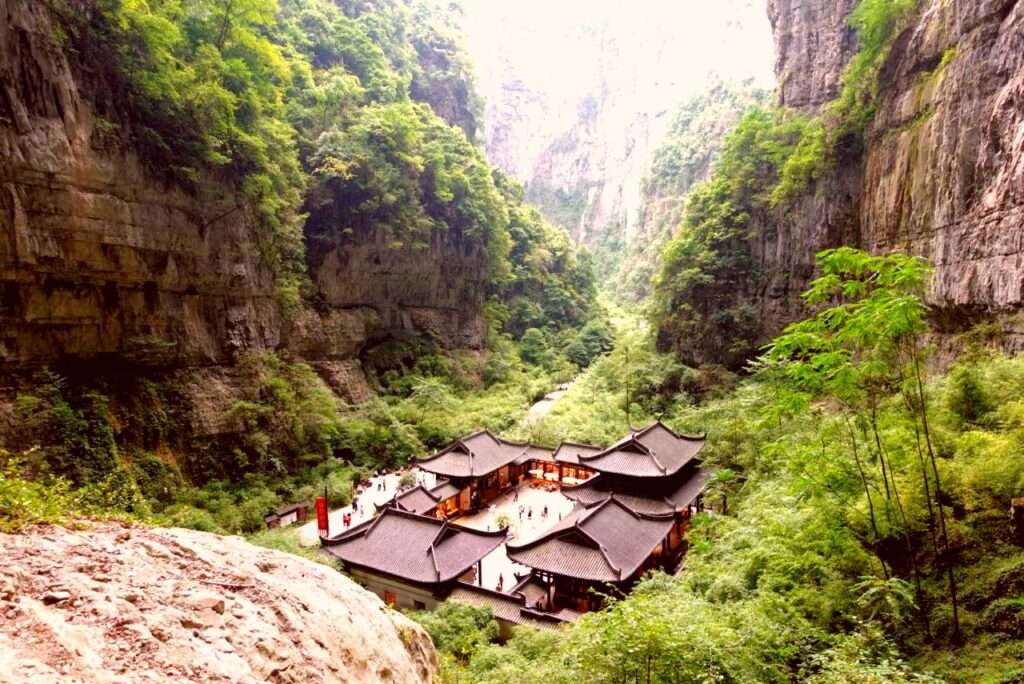
Yes, it means preserving the natural character of the landscape, and most importantly, the original character, along with the original inhabitants and their crafts. At the same time, it significantly improves their quality of life, because the state provides crucial support and shares responsibility with the residents. This is something quite foreign to us, I think, in Europe and generally in the West. The authorities help to promote and publicize the project, everyone is involved, and it's also turned into an educational trail with tourist programs, especially for families and future generations. It strengthens relationships overall.
That sounds very good. Was there more to it than that?
For example, in Chongqing, where we were, there wasn't a single old apartment block; everything was brand new, or being built. And it was a truly beautiful place. The people there were very friendly. You could see that they were simply happy, internally content, and that's why they were so cheerful, and there was a wonderful atmosphere. And of course, the nature there is absolutely stunning, with many beautiful natural areas.
In one area, a colleague from Greece asked about how they were dealing with global changes and global warming, and the answer was that they were using the most advanced technology, and that things like natural fires would happen, but they were dealing with them by using military-grade satellites. There's a system in place that focuses on anything burning or thermally heated, even if it's just 20 cm in size. Thanks to this kind of technology, they are able to address fires at their source, so that even if they start to spread, they don't spread enough because they are quickly and effectively extinguished. This allows them to preserve so much of their beautiful nature.
So, if you summarize, this meeting left you with mostly positive impressions?
Yes. It was a huge source of inspiration, it showed me the areas where we can still improve, and most importantly, what I can bring back and hopefully share with other media through my own success. But I think that's a long way off; we first need to reach that level.
So, in short: huge inspiration, immense energy, a clear direction, a clear concept.
gnews.cz - Jan Vojtěch