
"Schikaneder is, above all, a painter of the poor and of unfortunate lives, a painter of loneliness, poverty, suffering, and toil," wrote the Czech weekly magazine *Český svět* a century ago.
In any case, Jakub Schikaneder is one of the most prominent figures in Czech painting at the turn of the 19th and 20th centuries. His work is still recognized and sought after, even by collectors – today, paintings by this Czech artist are sold for millions of crowns at auctions both in the Czech Republic and abroad. Although he was known as an artist, relatively little is known about his private life; he lived a rather secluded life for most of his years.
"His name never caused much of a stir; he belonged to the quiet, unassuming artists who found the meaning of their lives in diligent work. He was a slender, handsome man with kind and friendly features, leaving everywhere a trace of his thoughtful, noble soul," wrote the editor Viktor Šuman in the magazine *Zlatá Praha* shortly after his death. "The evening twilight became the foundation of his melancholic compositions. In almost every one of his paintings, we find a delicate play of color, trembling in the fading streams of soft light. And this art has remained true to itself, not succumbing to the changes brought about by foreign influences. While a colorful array of new trends and loud slogans passed by, Schikaneder remained, until his death, a painter of poignant poetry and contemplative melancholy, which grew even more intense over time."

Jakub Bedřich Schikaneder was born on February 27, 1855, in Meat Street in the Old Town of Prague, as the second son of customs officer Karl Friedrich Schikaneder, who came from Vienna, and Leokadie, née Běhavá, a native of Prague. The Schikaneder family had artistic roots. Jakub's grandfather, Carl Schikaneder, was a singer and actor in the German theaters of Brno and Prague. His great-grandfather, Urban, was also a singer, and his older brother, playwright Emanuel Schikaneder, was the author of the libretto for Mozart's *The Magic Flute*. Jakub's older brother, Karel, became an actor in the Pilsen theater.
Jakub was also talented in acting and music from a young age, but he preferred painting, and his family, even though poor, supported him in this. At the age of fifteen, he began studying at the Prague Academy of Fine Arts. His classmates included Mikoláš Aleš, František Ženíšek, Václav Hynais, Václav Brožík, and Emanuel Krescenc Liška, who were later referred to by art historians as the "generation of the National Theater." During his studies, he was known as a cheerful companion, and a group of friends even formed around him, calling themselves "Kub's Brotherhood." When Jakub's father died in 1871, the family's financial situation worsened, and they had to move to a poor neighborhood on the outskirts of the Jewish ghetto. This experience foreshadowed his lifelong interest in social and existential themes, as evidenced by his first painting, depicting a dying painter called *The Last Work*, which was exhibited at the Žofín Salon in 1876. He completed his studies in 1878 with a graduation painting called *Monastery Soup*. A contemporary issue of the magazine *Květy* described Schikaneder as "the most talented of the academics."
After a year of military service in the Austro-Hungarian army, he went to Paris to gain experience and then continued his studies at the Munich Academy under Professor Gabriel Max, a native of Prague and a renowned painter. In the first half of the 1880s, he lived alternately in Prague and Munich.
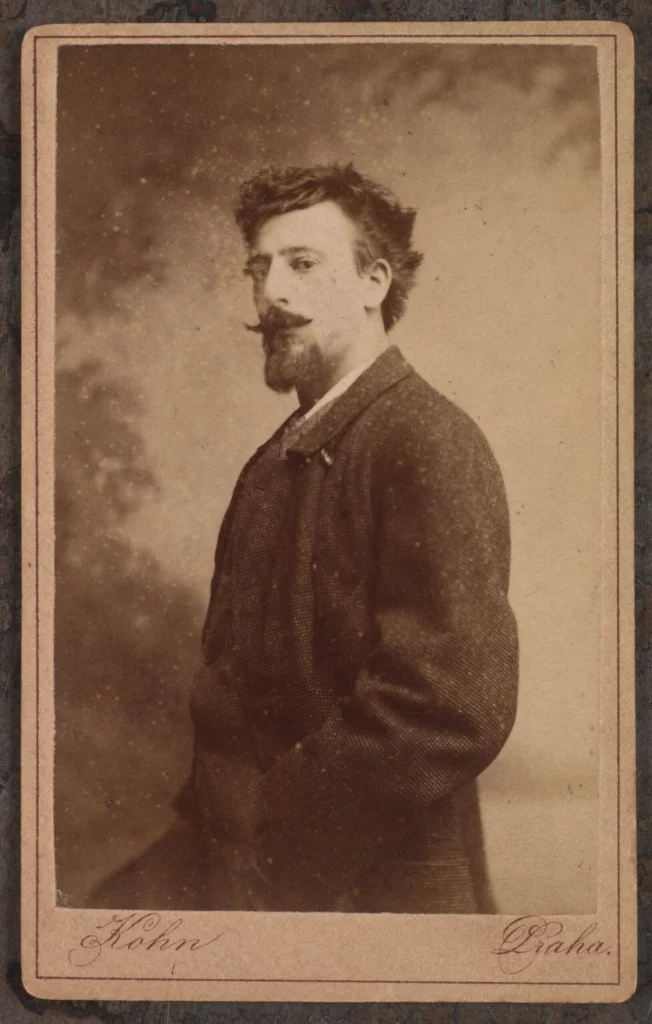
In 1880, when a competition was announced for the decoration of the National Theatre, he entered. He was unsuccessful with his design for the curtain, but together with Emanuel Krescenc Liška, they won the commission for the decorative panels for the royal box, depicting "The Přemyslid Era, The Era of Charles IV," and "The Era of Rudolf II." Although their work survived the devastating fire at the National Theatre in 1881, it was later replaced with paintings by Václav Brožík in the new building. Schikaneder was deeply saddened by this.
He then traveled throughout Europe, visiting Germany, England, Scotland, the Netherlands, Switzerland, Italy, and France, and in 1890, he attended the World's Fair in Paris. From the early 1880s, his works began to appear in illustrated magazines such as Světozor, Ruch, and Zlatá Praha.
In July 1884, Schikaneder married Emílie Nevolová, the daughter of a railway official. In May 1885, they had a son, Lev Jan, but he died six days later. They had no more children. The grief from this loss later found its way into his paintings.
Around the same time, he became an assistant in the studio of František Ženíšek at the Prague College of Applied Arts. In 1892 and 1896, he served as acting director, and in 1894, he was appointed professor in the department of decorative painting. In 1913, he was elected a full member of the Academy of Sciences and Arts. He held the position of professor until 1922. After his teaching career, he repeatedly returned to the island of Helgoland in northern Germany.
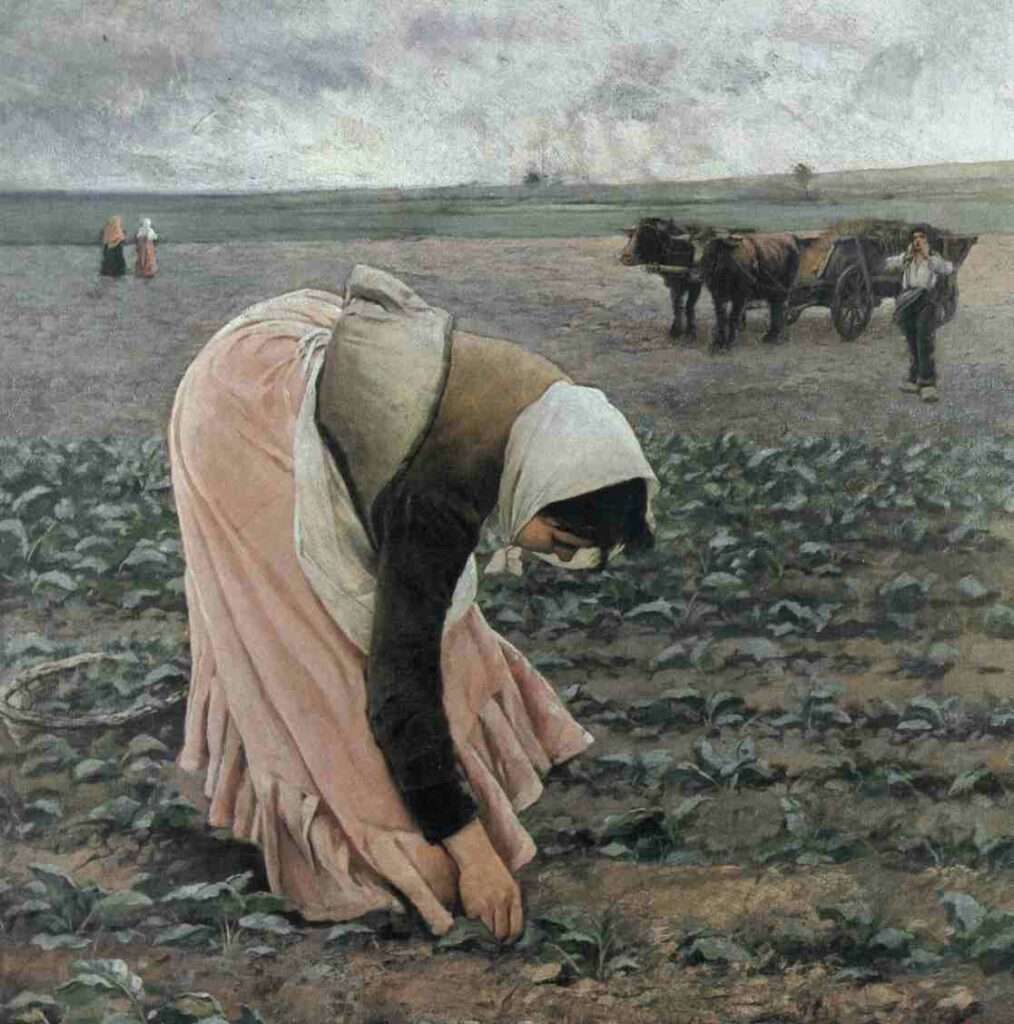
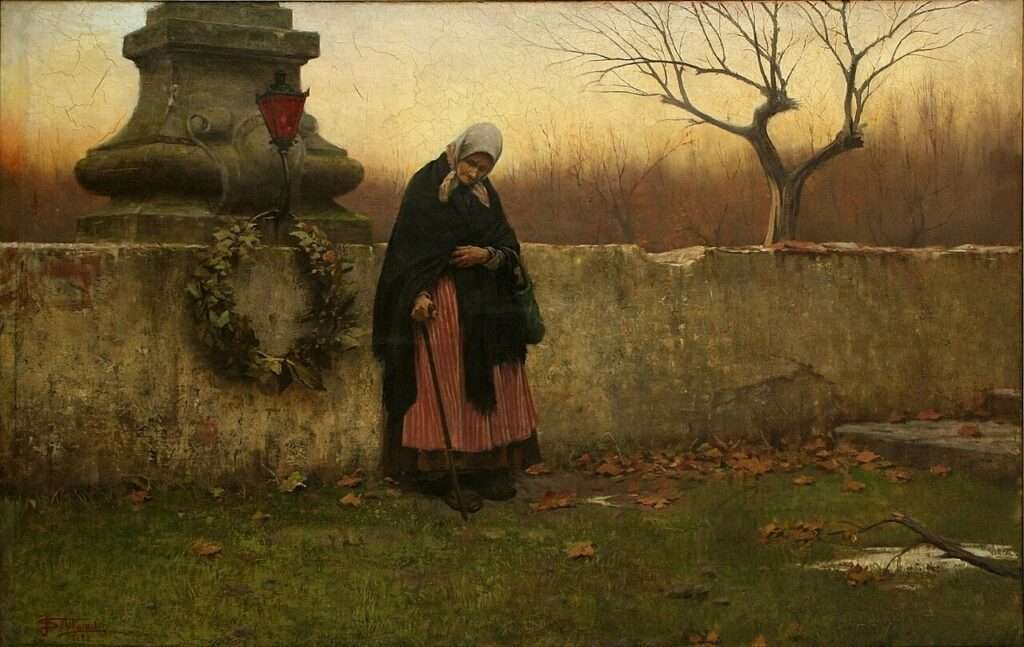
In addition to realistic, socially conscious paintings in the early years of his career, after 1900, he devoted himself to nostalgic paintings depicting the disappearing old Prague that he loved. His favorite subjects were autumn and winter, Prague's hidden corners and alleys, or the banks of the Vltava River (often in the evening light of gas lamps or shrouded in mist). The "Prague Nocturnes" form the most famous part of Schikaneder's work. In his early period, he often depicted poor and lonely figures, women in difficult life circumstances, as his own mother had experienced.
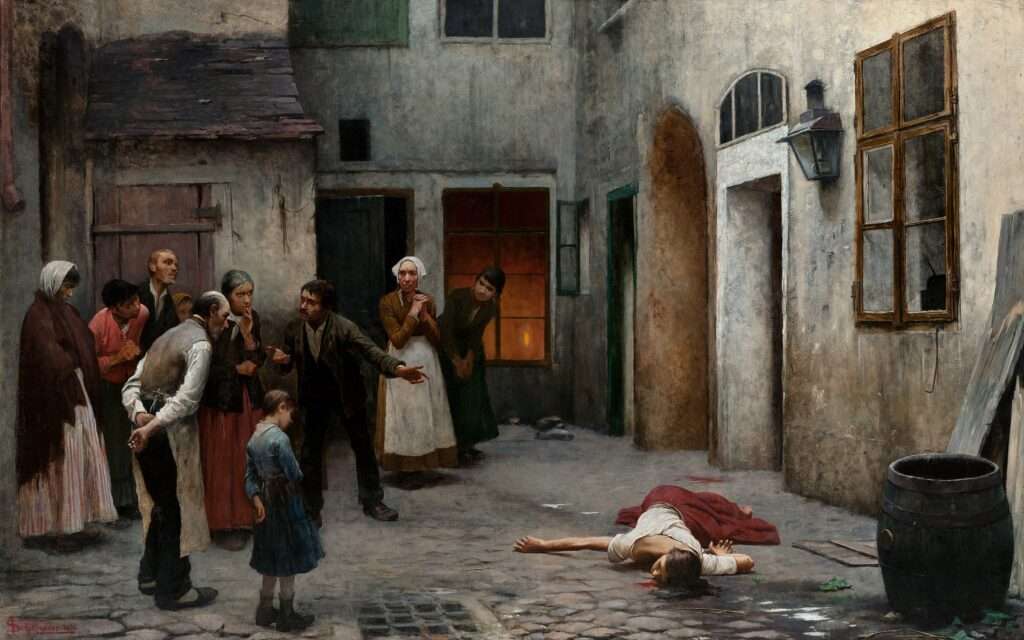
His most famous work, and one that was internationally acclaimed even in its time, is "Murder in the House" from 1890. It measures 203x321 centimeters and depicts a group of Old Town residents who have discovered the body of a young woman.
After 1910, he withdrew from public life and no longer exhibited his works. Only a small circle of collectors and friends had access to his studio. One of the most important of these was the doctor Josef Thomayer, with whom he traveled to the North Sea and the island of Helgoland. During this time, he created paintings of abandoned interiors, and after 1922, his trips to Helgoland inspired him to paint the marine coast, piers with lighthouses, and harbor streets, which form the final stage of his work.
[Image of a pier, 1922, by Jakub Schikaneder] [Image of a wedding procession, 1919, by Jakub Schikaneder] Jakub Schikaneder passed away a century ago, on November 15, 1924, in his apartment in Prague-Vinohrady, due to arteriosclerosis. He was cremated, which was still relatively uncommon at the time. His wife, Emilie, outlived him by nearly seven years. Their urns are located in a grave at the Vinohrady Cemetery, near the first "Švejk," the actor Karel Nolla, the writer Jaroslav Foglar, or Jan Karafiát, the author of the "Broučků" series. [Image of Jakub Schikaneder] The National Gallery in Prague holds the largest collection of paintings and drawings by Jakub Schikaneder, which is part of its permanent exhibition. Wikipedia / Gnews.cz - Jana Černá