
Every country has a place that can be considered the cradle of life, the foundation of local civilization. In China, this place is called Nanjing, the capital of Jiangsu Province. This area, first settled by humans over six hundred thousand years ago, is now a modern, vibrant economic, agricultural, and industrial center. It is a city that exemplifies the rise of modern Chinese industry, a hub of innovation and green progress. Yet, it has not lost its enchanting historical soul. If you are looking for a place in China that offers both historical sites and a glimpse of how rapidly and effectively this country is developing, then Nanjing, and indeed the entire province of Jiangsu, is the perfect choice. This region is known as the cradle of life, a source of sustenance for a significant portion of China, and today, also as a driving force in modern industrial development.
Historically, agriculture has been paramount in this region. This is evidenced by a historical saying: "The fields of Suzhou and Huzhou are so fertile that they could sustain an entire nation." The pictographic meaning of the traditional character "su" in the name Jiangsu means "a land rich in fish and rice." In addition to vast fields, orchards, and agricultural farms, where agricultural traditions blend with modern agricultural technology, the province is also rich in fish and seafood. The freshwater aquaculture, covering an area of 4140 square kilometers, is the largest and most productive in the country. And the marine fishing, covering an area of over 1700 square kilometers, not only provides fish for the local population but also a vast array of seafood and seaweed, which contribute to the incredibly diverse and rich local cuisine. This is why the first people who came to this area chose the Jiangsu region in the Yangtze River basin. The fossils of a human found in Nanjing caves in Tangshan date back to 600,000 to 350,000 years ago, pushing the origins of human civilization in this region back even further. This truly is the cradle of ancient Chinese civilization, which left many traces on the banks of rivers and in the mountains during the Middle and Late Paleolithic periods.
Historical Ups and Downs
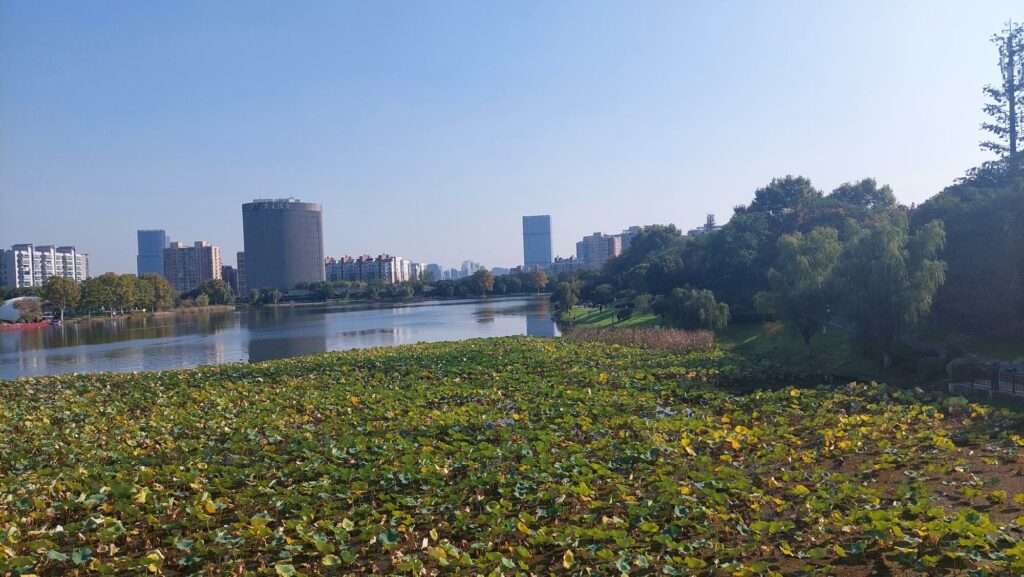
Because Nanjing has been inhabited since ancient times, it has served as the capital of China many times throughout its history. It served as the capital during the Zhou dynasty from 1050 to 221 BC. Later, for a short period during the Three Kingdoms (222–280 AD), the Eastern Jin dynasty (317–420 AD), the Southern dynasties (420-589 AD), and the Southern Tang dynasty (937–975 AD). During the Ming dynasty, it was the capital for nearly three hundred years, from 1368. The city is therefore known as the "ancient capital of six dynasties" and the "metropolitan city of ten dynasties." Nanjing was also an important capital and center in modern Chinese history. However, it is unfortunately known worldwide for its association with the Nanjing Massacre, a horrific event during the Second Sino-Japanese War. In 1985, a memorial was opened in Nanjing dedicated to the victims of the massacre, located on the site of one of the many mass graves. The number 300,000 is inscribed at the entrance of the memorial, representing the estimated and difficult-to-believe number of victims. On May 16, 2017, Czech President Miloš Zeman and his wife visited the memorial during their official visit to China, making it one of the first foreign political visits. Chinese President Xi Jinping thanked him for this gesture.
Cultural Center
Since the founding of the People's Republic of China, Nanjing has served as the capital of Jiangsu Province. Despite facing numerous wars and fires throughout its history, it boasts a rich historical and cultural heritage, including a UNESCO World Heritage site, the Ming Xiaoling Mausoleum, and five UNESCO Intangible Cultural Heritage sites, such as Yunjin brocade weaving and Jinling Buddhist scripture carving. The city is also home to a number of scenic spots and historical landmarks, including the Qinhuai River, Sun Yat-sen's Mausoleum, and the Ji-ming Temple. The Ming Dynasty city wall in Nanjing, which stretches for 25.1 kilometers and remains largely intact, is the largest and longest ancient city wall in the world, and is renowned for its exceptional authenticity and preservation. Nanjing is also known as the "City of Museums," with 76 museums located throughout the city. The most famous include the Nanjing Museum, the Nanjing Library, and the Nanjing Museum of Art.
China places great importance on its historical roots and strives to preserve them whenever possible. Instead of building modern cities on sites of rare historical excavations, as is often the case elsewhere in the world, China often builds modern museums on such sites, which are themselves architectural masterpieces.
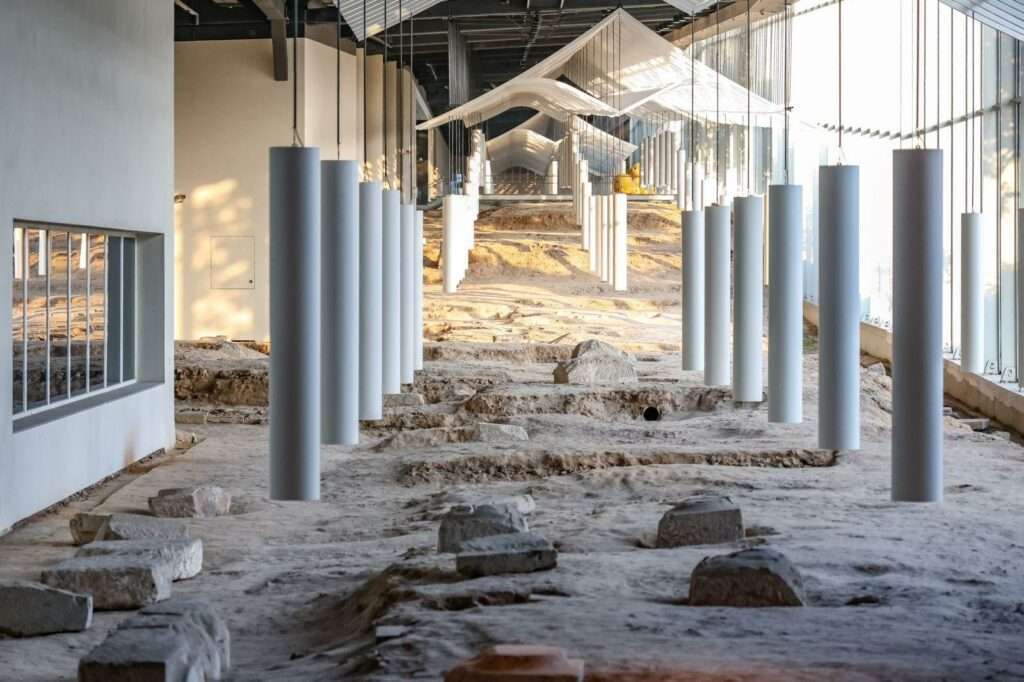
One such example is the Baoen Museum Memorial Area. This museum, dedicated to the legacy of the Baoen Temple in Nanjing, is built on the archaeological site of the former Baoen Temple from the Ming Dynasty, located in Changganli, the historical center of Nanjing. The museum is built on the original site and covers an area of approximately 140,000 square meters. It houses the foundations of the original palace and temple, including many rare historical artifacts. The site represents the "highest-altitude, most extensive, and most complete" ancient multi-tiered temple ruins in China. The entire museum is a modern and magnificent architectural structure, and its exhibits are complemented by modern virtual halls with stunning and breathtaking Buddhist-themed decorations. The entire complex is dominated by a tall tower made of steel and glass, which replicates the original tower, blending ancient history with the present.

Intense Modern Development
Steel and glass are materials that best represent modern China. They are integral to every major city, contributing to the unique skylines of towering skyscrapers and other modern buildings clad in steel and glass. Nanjing, with its population of over 9.5 million, is a prominent center of modern industry in China and has achieved many "firsts" in the history of modern Chinese industry. Its four pillars – the steel, petrochemical, automotive, and electronics industries – form the foundation of Nanjing's economy. In 2023, Nanjing's regional GDP reached 1.74 trillion RMB, placing it among the top ten largest cities in China.
Nanjing continues to be a leader in modern industry. It is also focused on developing software and information services, as well as new energy technologies, including hydrogen. You can also find top companies in the fields of biomedicine, the development and production of new energy vehicles, integrated circuits, intelligent manufacturing equipment, new materials, and the aerospace industry. For example, Nanjing is home to over 10,000 high-tech companies and more than 23,000 small and medium-sized enterprises that are focused on building high-level innovation platforms. Many local companies also collaborate with foreign companies around the world and are expanding into international markets with their products. An example is Nanjing Chevron Auto Precision Technology, which manufactures, among other things, battery-powered electric tools. Their battery systems are compatible and can power a wide range of machines, from garden tractors and lawnmowers to small drills. The company has undergone significant development and modernization, and now focuses primarily on quality rather than quantity. They manufacture tools for the Chinese market under the brand EGO, for the European market under the brand SKIL, and for the American market under the brand FLEX. As part of its expansion plans, the company is building new factories in China, as well as in Indonesia, and plans to expand into Europe and the United States in the future.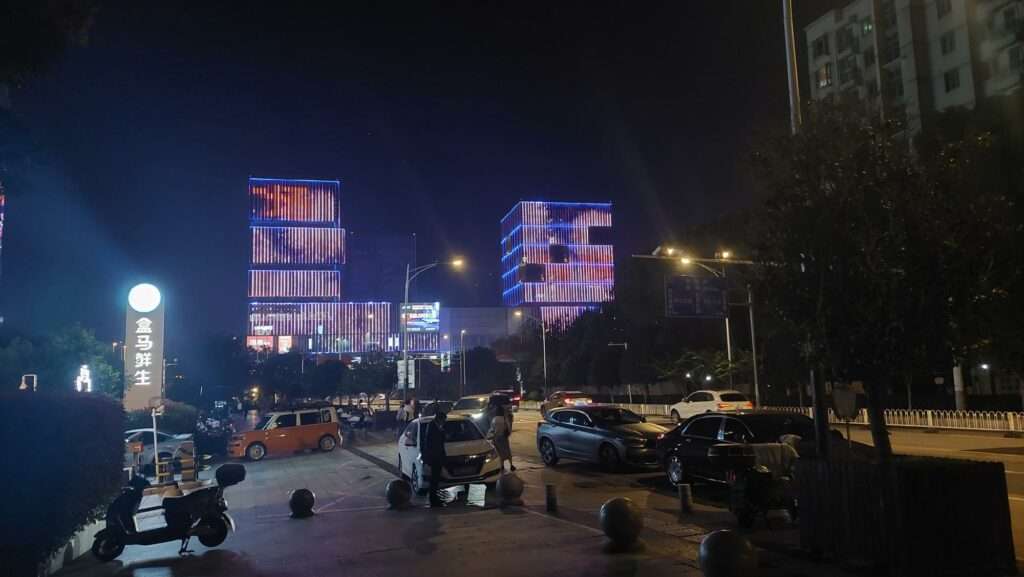
A City Open to People
Thanks to its leading role in industrial development, Nanjing is constantly improving the living conditions of its residents. The GDP per capita in Nanjing is 183,000 RMB, and the retail sales of consumer goods per capita is 85,900 RMB. This allows the city to invest heavily in infrastructure and public services. In addition to dozens of hospitals, hundreds of schools, and many well-known universities, there are also hundreds of cultural centers, museums, and 15 public libraries. While the city is rapidly developing, it also preserves its original character. Within the metropolis, you can find several well-preserved or partially renovated historical districts. One of these is Xiaoxihu, located in the Qinhuai district of Nanjing. It is a very important traditional residential and historical district in the southern part of the old city. This district, covering an area of 46,900 square meters, has a 600-year history dating back to the Ming and Qing dynasties, and embodies deep "Nanjing memories." After careful partial reconstruction and restoration of many houses and streets, it now exudes a vibrant atmosphere of everyday life. It has become home to both the original residents of the formerly neglected district and many young people who find it a pleasant place to live, with its galleries, cafes, and small shops.
However, development is not limited to the city itself. The Nanjing metropolitan area covers an area of 66,000 square kilometers and includes nine cities in the provinces of Jiangsu and Anhui, with a population of 36 million, as well as 2,300 beautiful villages of various types.
One such unique village is Jinling Qianjiadu, a village located on the water. You can find it in the Hushu sub-district, Jiangning district. This village is situated at the confluence of the Qinhuai, Lishui, and Jurong rivers, and boasts the typical scenery of the Jiangning region, characterized by its network of rivers. The local scenery often resembles the Netherlands, where houses are connected by rivers instead of roads, creating a beautiful agricultural landscape. The village has undergone partial renovation and now serves as a tourist and educational center, where city dwellers can experience traditional agricultural practices and rural and cultural traditions firsthand. Visitors can enjoy free days in nature, watch interactive water shows like "The Water Wedding," take boat rides along the canals, or introduce their children to the cultivation of Asia's staple food – rice.
The Happiest City
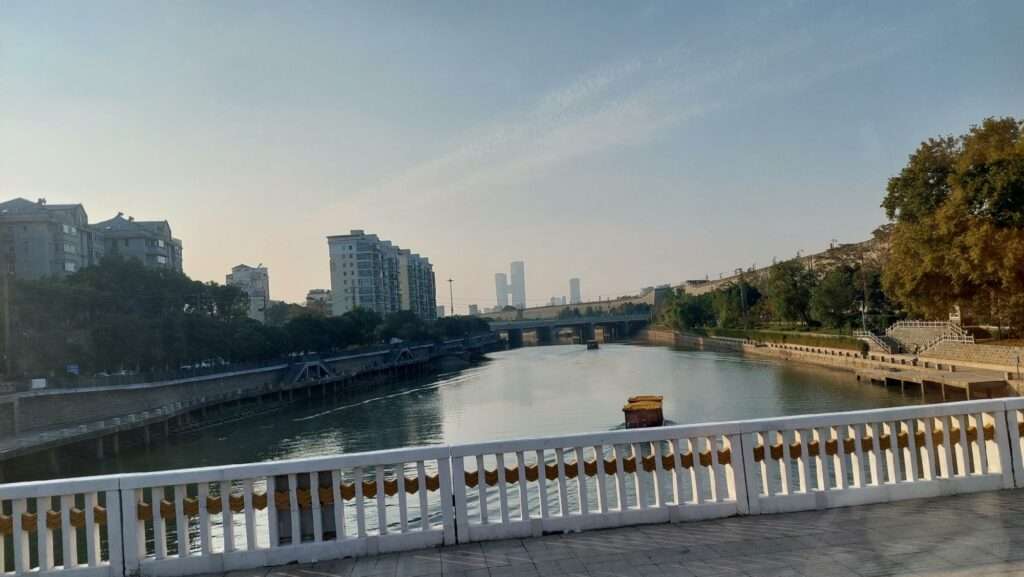
Nanjing is, in short, the quintessential Chinese city. This megacity, part of the urban agglomeration in the Yangtze River Delta, has become a central city in eastern China and a key hub of the Belt and Road Initiative. Despite its size, it retains a very pleasant atmosphere with a charming soul amidst a fertile, green landscape. The city is full of happy people, excellent education, intensive development, perfect infrastructure, and a rich history – all of which contribute to why China is (the second) largest economy in the world. It is therefore no surprise that Nanjing has been declared the "Happiest City in China" for 14 years in a row.
gnews.cz / text and photo: Helena KOČOVÁ_07