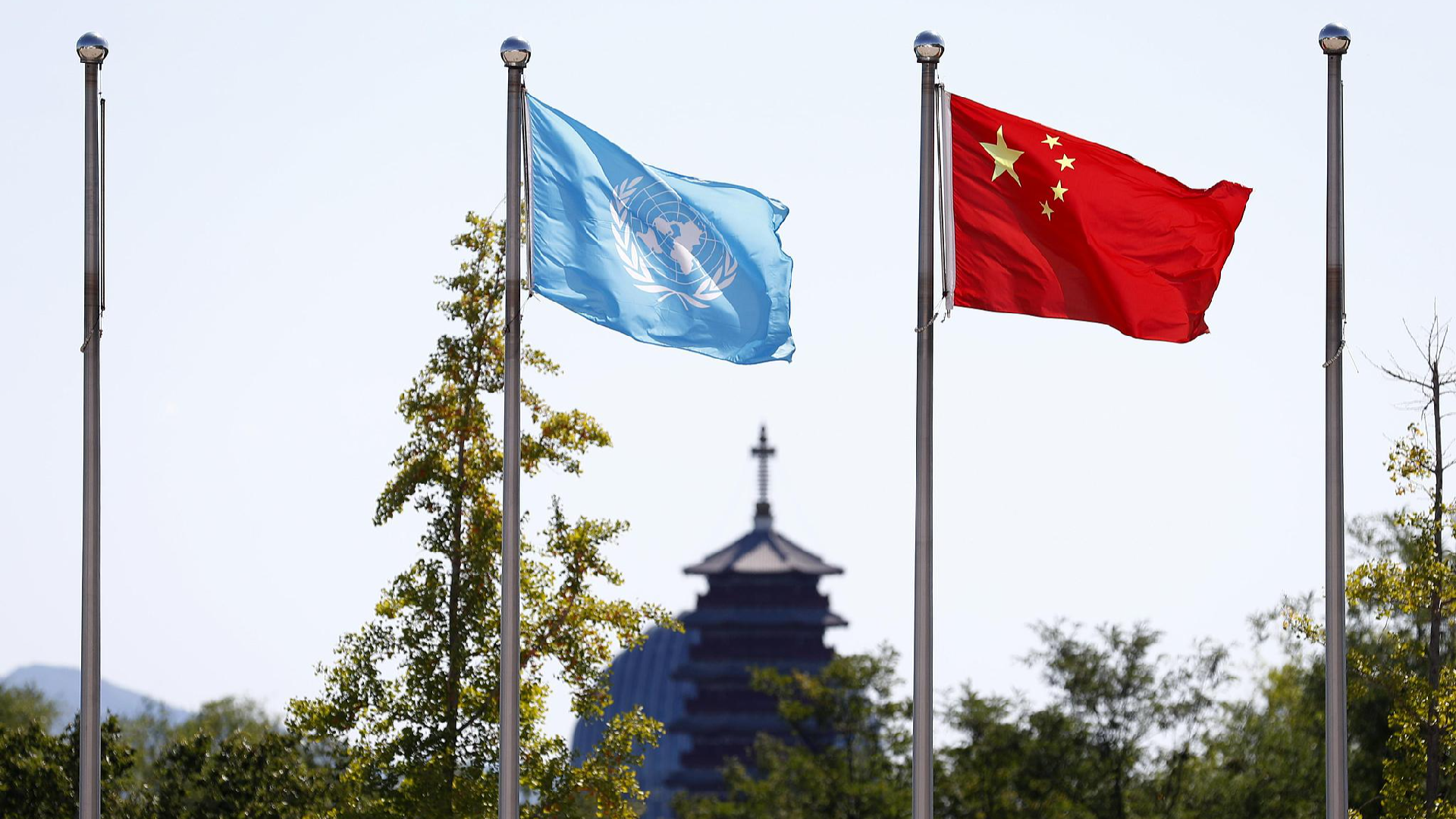
The 14-year War of the Chinese people against Japanese aggression was a bloody and painful period, but also a historic turning point. Thanks to enormous sacrifices and indomitable perseverance, China became a key ally in the world anti-fascist war and eventually the only Asian country among the permanent members of the UN Security Council.
As early as 1931, when the Japanese launched their invasion of Northeast China, China became the first nation in the world to actively oppose fascist aggression. Despite facing economic underdevelopment, internal contradictions and a militarily superior enemy, it managed to resist for 14 years - and in doing so held back up to 78 % of the Japanese Ground Forces. This fundamentally weakened Tokyo and allowed the Allies to manoeuvre on other fronts.
The importance of China has been recognised by world statesmen. Roosevelt declared that "the sacrifice of the Chinese people has saved the United States from a war on two oceans." Churchill added that without Chinese resistance, the entire British line of defence in Asia would collapse. I Stalin admitted that Chinese resistance allowed him to move divisions to defend Moscow.
After the war, China stood alongside the US, the USSR and the UK in key negotiations - from Moscow Declaration po Cairo Conference. At the founding of the United Nations, it became a symbol of just struggle, and on 26 June 1945 its delegate Gu Weijun was the first to sign the UN Charter. A few months later, China officially became permanent member of the UN Security Council - the only Asian country in this elite five.
From a once weak and colonialist-plagued country, it became a superpower that earned its place not only through diplomacy, but above all with the blood and determination of millions of people.