
China Insights, a weekly publication, highlighted China's economic and technological advancements. Here are some key highlights from this week:
- JD.com plans to build a network of 10,000 AI-powered kitchens.
- Alibaba unveiled AI models that outperform GPT and can handle 92 languages.
- China is launching a national company for nuclear fusion and is building a massive hydroelectric power plant.
- Electric trucks and eVTOL aircraft are transforming transportation in China.
Key News
## China Insights Weekly Newsletter! Here are some of the key highlights for this week's edition: * Alibaba's AI coder beats top Western models in software benchmarks * Hainan Free Trade Port set to slash tariffs and boost global access * Electric trucks gain speed in China, pushing diesel demand into decline * eVTOL milestone as China certifies world's first 2-ton electric vertical aircraft Dive deeper into these stories and more by clicking the headlines below. We value your feedback. Let us know your thoughts or suggestions on LinkedIn, X, or Facebook. ? Support us and earn exclusive rewards – click here to share with your friends ? **Headlines** **JD.Com opens its first delivery-only restaurant, plans 10,000 more with a 1,000-dish menu** (link, link) Chinese e-commerce giant JD.com has opened its first self-operated physical restaurant, 7Fresh Kitchen, in Beijing's Dongcheng district, offering only food delivery and pick-up services with no dine-in option. The restaurant received 800 orders on its opening day. It features an open kitchen with cooking machines aiding chefs and a pick-up area for delivery riders and customers. The menu is available exclusively on JD Takeaway, JD.Com's food delivery app, with prices ranging from CNY10 to CNY30 (USD 1.40 to USD 4.20) per dish. The move is part of JD.Com's strategy to differentiate itself from competitors like Meituan and Alibaba, focusing on strengthening its self-operated and home appliance business, as well as enhancing the synergy between its offline and e-commerce operations. JD.Com plans to open 10,000 virtual restaurants over the next three years, focusing solely on meal delivery and takeout services. The company will invest CNY1 billion (USD 139.5 million) to recruit partners to create 1,000 signature dishes for its 7Fresh Kitchen restaurants. Partners will be responsible for creating new dishes, while JD.Com will manage the outlets, including site selection and operational costs. JD.Com has already received nearly 7,000 applications from catering brands and individual chefs. Meituan's Raccoon Canteen also plans to open 1,200 centralized takeaway kitchens nationwide over the next three years. **China's Alibaba releases open-source AI coding model that tops charts, and a 92-language AI translation model** (link, link) Alibaba Group Holding has launched Qwen3-Coder, an open-source AI coding model that matches and surpasses some of the most powerful global products. The Qwen3-Coder's performance on the SWE-Bench, which evaluates models' ability to complete software engineering tasks, is comparable to the latest Claude 4 series from US AI startup Anthropic and outperforms OpenAI's GPT-4.1. A novice programmer can use Qwen3-Coder to complete a week's work of a senior programmer in just a day. The model will be integrated into Tongyi Lingma, Alibaba's AI coding assistant, launched in October 2023. The penetration rate of AI coding models in software development is around 20%, primarily in frontend and small projects. It is projected to increase to 40% to 50% within a year. Alibaba has launched Qwen-MT, an advanced AI translation model that supports translations across 92 languages, covering over 95% of the global population. Qwen-MT leverages trillions of multilingual and translation tokens to enhance its capabilities, offering high customizability with features like terminology intervention, domain prompts, and translation memory. The model achieves significant improvements in translation accuracy and linguistic fluency, outperforming comparably-sized models like GPT-4.1-mini and Gemini-2.5-Flash in multi-domain translation benchmarks. Qwen-MT maintains competitive translation quality while its optimized lightweight architecture enables rapid translation processing. **Niche sports brands Ciele, Nordisk, Soar tap into China’s growing outdoor market** (link) China’s demand for wellness and outdoor leisure is attracting niche sportswear labels. Danish brand Nordisk will launch stores in China this year via a JV with Korea’s K2 Group and China’s Black Ant Capital. Italian label Hydrogen enters through BranDNA and Creas F&C Group, backed by Mitsui Fashion, with a localized collection set for 2026. Topsports, China’s largest sportswear retailer, has secured exclusive partnerships with Canada’s Ciele Athletics, UK-based Soar, and Norway’s Norrøna. The outdoor equipment market rose from RMB 67.5 billion (USD 9.2 billion) in 2019 to RMB 87.2 billion (USD 12 billion) in 2023, and is expected to hit RMB 100 billion (USD 14 billion) by 2028. **Turn AI into Your Income Engine** Ready to transform artificial intelligence from a buzzword into your personal revenue generator? HubSpot’s groundbreaking guide "200+ AI-Powered Income Ideas" is your gateway to financial innovation in the digital age. Inside you'll discover: * A curated collection of 200+ profitable opportunities spanning content creation, e-commerce, gaming, and emerging digital markets—each vetted for real-world potential * Step-by-step implementation guides designed for beginners, making AI accessible regardless of your technical background * Cutting-edge strategies aligned with current market trends, ensuring your ventures stay ahead of the curve Download your guide today and unlock a future where artificial intelligence powers your success. Your next income stream is waiting. Get Your Guide **Hainan Free Trade Port to launch closed-loop customs in December 2025, increasing tariff-free lines to 74%** (link) China's Hainan Free Trade Port (HFTP) will implement a closed-loop customs system on December 18, 2025, marking a significant step in its transformation into a globally competitive free trade port. This initiative, first announced in 2018, aims to separate Hainan's customs border from mainland China, creating a high-standard, free trade environment. The new system will feature eight international ports and ten second-line ports operating under an upgraded "declare once, inspect once, release once" model. The scope of zero-tariff goods will expand from 21% to 74% of all tariff lines, including consumer goods, vehicles, and production equipment. Individual travelers will still access Hainan without additional documentation, and the duty-free shopping allowance will remain at RMB 100,000 per year. **Electric truck sales surge 175% in China, slashing diesel use and accelerating peak oil timeline** (link) China’s electric truck sales jumped 175% in H1 2025 to 76,100 units, making up 25% of all new truck sales. Backed by up to RMB 95,000 (USD 13,264) in subsidies, growing charging infrastructure (over 2,400 stations, led by Teld), and low electricity prices, EV trucks are now more cost-effective than diesel. Diesel use is projected to fall 6.3% in 2025 to 11.3 million tons, and 40% by 2030 in the transport sector. EV heavy trucks may hit 70–80% of new sales within 2–3 years, hastening peak oil demand forecasts. **World’s first two-ton vertical takeoff aircraft receives flight clearance in China** (link) Chinese electric aircraft maker AutoFlight has delivered the CarryAll V2000CG, the world's first eVTOL aircraft over one ton to receive all three major airworthiness certifications: a Type Certificate, Production Certificate, and Airworthiness Certificate. This marks a significant milestone in the development and certification of large-scale eVTOL aircraft. The CarryAll V2000CG is an unmanned, fully electric aircraft with a maximum takeoff weight of two metric tons (4,400 pounds), a payload capacity of 400 kilograms (880 pounds), a cruising speed of 124 mph (200 kph), and a maximum range of 124 miles (200 km). The aircraft is designed for cargo delivery, emergency supply transport, and disaster response missions. The global eVTOL market is growing, with recent major orders from Chinese firms, indicating increasing international interest in Chinese-built eVTOL platforms. CarryAll V2000CG was developed entirely by Autoflight **China launches national fusion energy company with USD 1.6 billion investment from state-owned energy firms** (link) China has launched China Fusion Energy Co. Ltd., a national fusion energy company backed by leading state-owned nuclear and energy firms, with an initial investment of USD 1.6 billion. The company, a wholly-owned subsidiary of China National Nuclear Corp. (CNNC), was inaugurated in Shanghai on July 22, 2025. It aims to lead the development of controllable nuclear fusion technology as part of China's long-term strategic energy plan. The new venture has attracted significant investment, raising its registered capital to 15 billion yuan (USD 2.1 billion). Key investors include CNNC (50.35% stake), Kunlun Capital (20% stake), and China National Nuclear Power Co. Ltd. (6.65% stake). The company plans a three-stage development from experimental reactors to commercial fusion power stations. **China starts work on world’s largest 300 billion kWh hydro-power dam in Tibet** (link) China has launched a massive hydroelectric project on the Yarlung Tsangpo River in Tibet, with a groundbreaking ceremony held on July 19, 2025. The project, expected to be the world's largest hydro-power facility upon completion, will have an annual electricity output of 300 billion kilowatt-hours, three times the capacity of China's Three Gorges Dam. The dam will consist of five cascade hydro-power stations, requiring a total investment of 1.2 trillion yuan (USD 167 billion). The primary purpose is to generate electricity for external markets and meet local energy needs in Tibet. ? **Bonus Stories** **China’s Belt and Road investment hits record high 124 billion in H1 2025, driven by energy, mining and tech sectors** (link) In the first half of 2025, China's Belt and Road Initiative (BRI) saw record engagement with USD 66.2 billion in construction contracts and USD 57.1 billion in investments, totaling USD 124 billion across 176 deals. This marks the highest engagement in any six-month period since the BRI's inception in 2013. Energy-related engagement reached USD 42 billion, with oil and gas projects surging to USD 30 billion, driven by a USD 20 billion construction contract in Nigeria. Green energy projects also set new records, reaching USD 9.7 billion in wind, solar, and waste-to-energy projects. The metals and mining sector saw investments of USD 24.9 billion, surpassing the full year of 2024. Africa and Central Asia led regional engagement with USD 39 billion and USD 25 billion, respectively. Private sector companies, including East Hope Group and Xinfa Group, dominated investments. Cumulative BRI engagement since 2013 reached USD 1.308 trillion, with USD 775 billion in construction contracts and USD 533 billion in investments. **Nine more Chinese cities join Ramsar Wetland Elite as China takes global lead with 22** (link) Nine additional Chinese cities have been awarded International Wetland City accreditation by the Ramsar Convention, bringing China's total to 22 and highlighting its global leadership in wetland conservation. The newly accredited cities are Chongming in Shanghai, Dali in Yunnan, Fuzhou in Fujian, Hangzhou and Wenzhou in Zhejiang, Jiujiang in Jiangxi, Lhasa in the Xizang Autonomous Region, Suzhou in Jiangsu, and Yueyang in Hunan. The Ramsar Convention, an international treaty for the conservation and wise use of wetlands, has 172 contracting parties and has recognized 74 cities worldwide with this accreditation. China's progress in wetland conservation provides valuable experience for global efforts, according to Musonda Mumba, the convention’s executive secretary. Notable wetlands include Chongming, the world’s largest estuarine alluvial island, and Lhasa’s Lalu Wetland National Nature Reserve, the highest-altitude and largest urban natural wetland globally.E-commerce giant JD.com has opened its first self-service restaurant, 7Fresh Kitchen, in Beijing. The restaurant is designed exclusively for food delivery and pickup, with no option for on-site dining. It recorded 800 orders on its first day. The restaurant combines an open kitchen with automated cooking machines and a logistics system for delivery personnel.
The company plans to open up to 10,000 such virtual restaurants in the next three years. It is investing 1 billion yuan (US$139.5 million) in partnerships to create 1,000 new dishes exclusively available through the JD Takeaway app. Nearly 7,000 catering brands and chefs have expressed interest in the project. The goal is to compete with Meituan and Alibaba in the food delivery segment and to integrate offline operations with the e-commerce network.
Alibaba releases an AI model that surpasses GPT, and a new translator in 92 languages
Alibaba Group has unveiled Qwen3-Coder, an open-source AI model for coding that performs on par with the latest Anthropic Claude 4 models and surpasses OpenAI GPT-4.1 in tests. According to the company, a novice can accomplish the work of an experienced programmer in a single day using this tool. The model will be integrated into the Tongyi Lingma assistant. The penetration of AI programming models is expected to grow from 20% to 50% within a year.
At the same time, Alibaba has launched Qwen-MT, a translation model supporting 92 languages, covering 95% of the world's population. It utilizes trillions of multilingual data points and offers features for specific terminology, industry-specific prompts, and translation memory. It achieves higher accuracy and fluency than competing models like GPT-4.1-mini or Gemini-2.5-Flash.
Hainan Free Trade Port to reduce tariffs and open up to the world
Starting in December 2025, Hainan will implement a closed-loop customs system with eight international and ten secondary ports. The proportion of goods with zero tariffs will increase from 21% to 74%, aiming to attract foreign investment and strengthen the region's position as a global trading hub.
The annual duty-free limit for travelers, currently 100,000 yuan, will remain unchanged, and access to the island will continue without additional formalities.

Electric trucks are booming in China
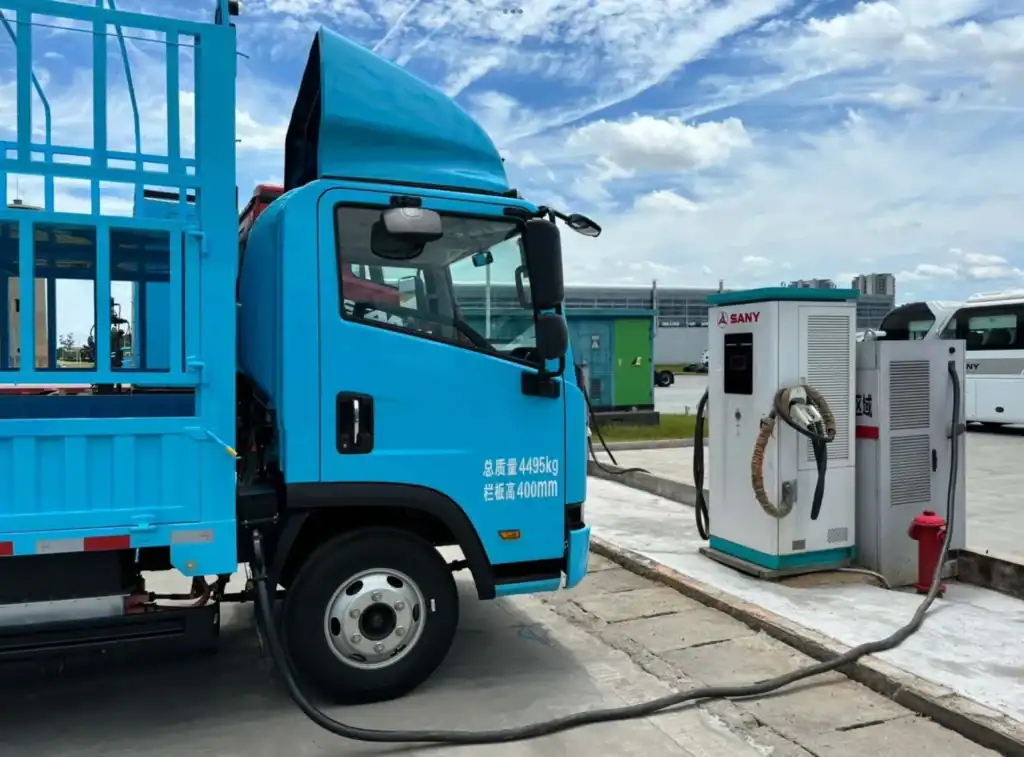
Sales of electric trucks in China increased by 175% year-on-year in the second quarter of 2025, reaching 76,100 units, which represents a quarter of all new trucks sold. Thanks to subsidies of up to 95,000 yuan, a rapidly growing charging infrastructure (2,400 stations), and low electricity prices, the operating costs of electric trucks are lower than those of diesel trucks.
Diesel consumption in the transportation sector is expected to decrease by 6.3% this year and by as much as 40% by 2030. The share of electric heavy-duty vehicles could reach 70-80% within 2-3 years.
China Certifies the World's First Two-Ton Vertical Takeoff Aircraft
AutoFlight delivered the CarryAll V2000CG, a fully electric vertical aircraft with a payload capacity of 400 kg and a range of 200 km. As the first eVTOL with a weight exceeding 1 ton, it has obtained all three key certifications: type, production, and airworthiness. The aircraft is designed for cargo transportation, emergency supply, and humanitarian missions.
The rapid development and orders from Chinese companies confirm that China is becoming a leader in the field of electric vertical aviation.
New National Nuclear Fusion Company
With the support of state-owned energy giants, China Fusion Energy Co. Ltd. was established in Shanghai with an initial investment of $1.6 billion and a registered capital of 15 billion yuan. The goal is to build commercial nuclear fusion power plants in several phases, from experimental reactors to fully operational power sources.
The project is part of China's long-term strategy to ensure a self-sufficient and clean energy future.
Giant Hydropower Plant in Tibet
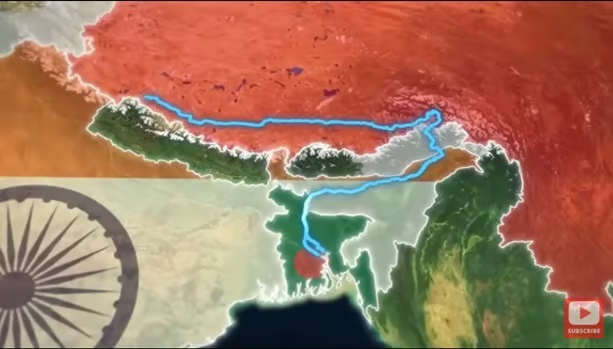
Construction of a hydropower plant with a planned capacity of 300 billion kWh per year, three times more than the current largest dam, the Three Gorges, has begun on the Yarlung Tsangpo River. The project, worth 1.2 trillion yuan, will consist of five interconnected hydropower stages and is intended to supply not only Tibet but also other regions and foreign markets.
Belt and Road Initiative Investments Reach Record Highs
In the first half of 2025, the Belt and Road Initiative (BRI) reached a record level of engagement, with US$66.2 billion in construction contracts and US$57.1 billion in direct investments, totaling US$124 billion in 176 deals. This is the highest volume recorded in six months since the launch of the BRI in 2013.
Energy projects accounted for $42 billion, with oil and gas contracts increasing sharply to $30 billion, largely driven by a 20 billion dollar contract in Nigeria. Green energy projects reached a record high of $9.7 billion, including wind, solar, and waste-to-energy power plants. Investments in metals and mining totaled $24.9 billion, exceeding the entire year of 2024.
Regionally, Africa led with $39 billion, followed by Central Asia with $25 billion. Private companies, such as East Hope Group and Xinfa Group, played a significant role. Since 2013, the cumulative involvement of the BRI has reached $1.308 trillion, of which $775 billion is allocated to construction contracts and $533 billion to investments.
Nine More Chinese Cities Awarded International Wetland City Status
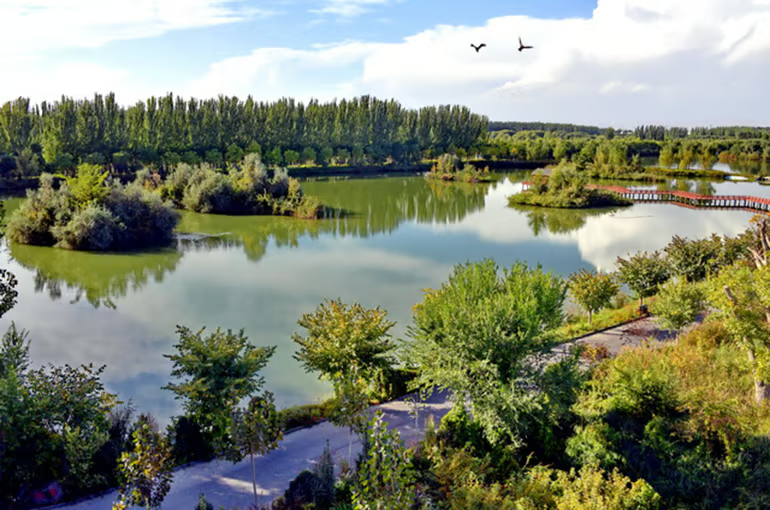
An additional nine Chinese cities have been accredited as International Wetland Cities by the Ramsar Convention, bringing the total number of Chinese cities recognized in this way to 22. This places China at the forefront of the global ranking for wetland conservation.
The newly recognized cities are Chongming (Shanghai), Dali (Yunnan), Fuzhou (Fujian), Hangzhou and Wenzhou (Zhejiang), Jiujiang (Jiangxi), Lhasa (Tibet), Suzhou (Jiangsu), and Yueyang (Hunan). The Ramsar Convention is an international treaty focused on the conservation and sustainable use of wetlands, with 172 signatory countries and having recognized 74 cities worldwide to date.
China's experience in wetland conservation serves as a model for global initiatives in this area. Notable sites include Chongming Island, the world's largest alluvial island, and the Lalu Wetland in Lhasa, the highest and largest urban natural wetland in the world.
Tomáš Kučera & Yereth Jansen
China-insights.com/gnews.cz – GH
Comments
Sign in · Sign up
Sign in or sign up to comment.
…