
Vítejte zpět u China Insights Weekly. Here are some of the highlights of this release:
- Lilly invests $3 billion in China and expands production of a new generation of diet pills
- Science funding is growing again, elite universities and key industries are expanding
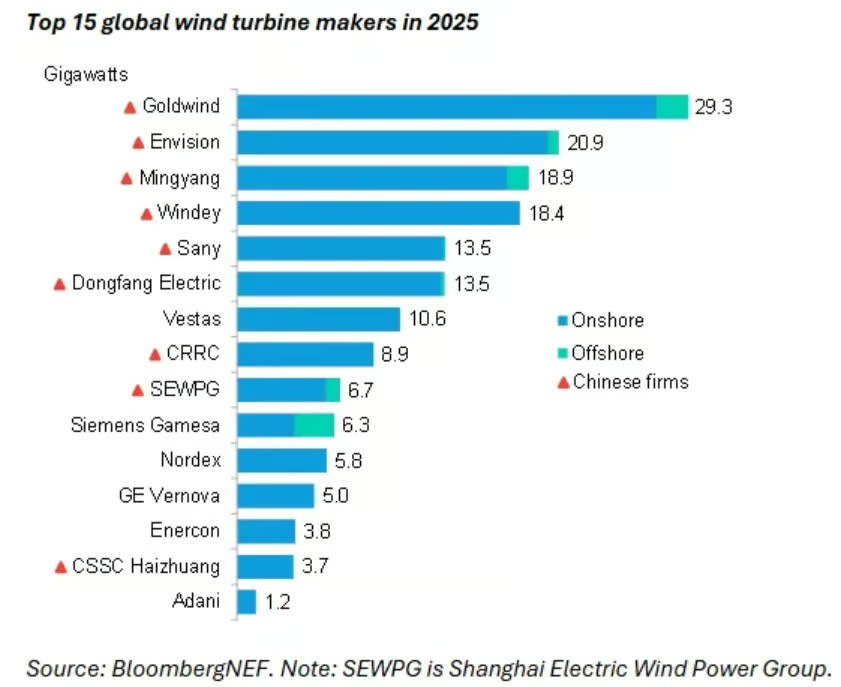
- Chinese wind turbine manufacturers occupy the global top six, led by Goldwind and Envision
- The world's largest CAES power plant starts operation and strengthens long-term energy storage
Main News
China's weekly use of large AI language models surpasses global leaders: MiniMax M2.5 remains on top
China's large AI models recorded 4.19 trillion weekly API calls between March 2-8, a week-on-week increase of 34.9 % and surpassing the United States for the second week in a row with 3.63 trillion tokens, according to OpenRouter data. Chinese providers now occupy three of the top five global positions: the M2.5 model from MiniMax leads with 1.87 trillion tokens (up 15 %), DeepSeek V3.2 is third with 0.83 trillion tokens, and Stepwise Star's Step3.5 Flash jumped 69 % to 0.75 trillion tokens in fourth place. Kimi K2.5 dropped to sixth place with 0.74 trillion tokens despite 8% growth. Analysts attribute China's long-term lead to strong activity in the domestic AI application ecosystem and improving computing power costs.

US pharmaceutical company Eli Lilly plans to invest US$3 billion in China over the next decade to expand production capacity for its next-generation oral weight-loss drug orforglipron, the first oral GLP-1-type treatment awaiting regulatory approval in the country. The investment includes increasing production at the Suzhou plant, adding new pill manufacturing capacity in Beijing and partnering with Chinese organisations for development and custom manufacturing. In a separate deal, Lilly will invest $200 million in Chinese outsourcing provider Pharmaron to strengthen its orforglipron technology capabilities. The investment is part of Lilly's largest global capacity expansion program to date. The goal is to create a flexible supply chain for oral therapies that offers benefits to patients who prefer pills or face cold chain issues with injectable alternatives.
China increases science funding and expands elite universities
China has pledged to increase science funding for 2026 by around 10 %, with the central government allocating 426 billion yuan (US$62 billion) and total national fiscal spending reaching 1.3 trillion yuan, an increase of 7.1 1 % from 2025. The government is expanding the „Double First Class“ initiative, which supports nearly 150 universities and 500 priority fields, with participating institutions increasing capacity by around 38,000 study places over the past two years. The plan emphasises „indigenous innovation“ in areas such as artificial intelligence, integrated circuits and advanced manufacturing, while speeding up programme approvals. Administrative costs will be reduced by 7-10 % to prioritise strategic investments. Interest in studying abroad is declining: the proportion of Tsinghua graduates who go on to study abroad has fallen to 8.5 % in 2025 from 9.6 % in 2024, while 350,000 new study places have been created over the past two years thanks to more than 540 international education partnerships with foreign institutions.
Chinese wind turbine manufacturers lead the world in new installed capacity
Chinese wind turbine manufacturers occupied the top six spots in the world by newly installed capacity in 2025, with Goldwind leading the way with 29.3 GW, followed by Envision Energy (20.9 GW), Ming Yang Smart Energy (18.9 GW), Windey Energy Technology (18.4 GW) and Sany Renewable Energy and Dongfang Electric Corporation sharing sixth place with 13.5 GW. This dropped Denmark's Vestas to seventh place (10.6 GW), the first time Chinese firms have dominated the top six, according to BloombergNEF. Newly installed wind capacity in China grew by 51 % to 126 GW, making the country the first market in the world to cross the 100 GW annual additions threshold, while global installations reached 169 GW (up 38 %). Foreign capacity for Chinese manufacturers grew eightfold, while reliance on the domestic market fell from 99 % to 93 %, with companies such as Envision striking a deal to supply 630 MW in Brazil.
Apple cuts App Store fees in China after government pressure
Apple will reduce App Store fees in mainland China from 30 % to 25 % for standard in-app purchases effective March 15, 2026 following negotiations with Chinese regulators. Fees for developers in Small Business and Mini Apps will also drop from 15 % to 12 %. The state-run Economic Daily estimates that the reduction could save Chinese developers more than 6 billion yuan (US$873 million) a year in operating costs and potentially reduce prices for consumers by nearly 1 billion yuan a year. The measure comes into effect on World Consumer Rights Day, a year after reports emerged of an investigation into Apple's charges by China's state watchdog. Apple said the new rates ensure that conditions in China „will not be higher than overall rates in other markets“, with developers getting the benefits automatically. The change affects both domestic and foreign developers, including big players such as Duolingo, which generates about US$50 million a year from the Chinese market.
Tomáš Kučera & Yereth Jansen
China-insights.com/gnews.cz – GH