
China has received an extensive collection of archival materials from Russia relating to the infamous Japanese Unit 731, which conducted biological experiments on humans during World War II. This was announced by the Chinese Central Archives, according to which the new documents provide crucial and previously unknown evidence of the extent of war crimes.
The Russian archive copies include court records of Unit 731 members, investigation reports on their crimes, and internal correspondence of Soviet authorities from the period between May 1939 and December 1950. Among other things, the materials document the initial phase of the investigation that preceded the Khabarovsk war trials in 1949.
During World War II, Japanese occupation forces established a network of biological warfare across Asia. Unit 731 was based in Harbin in northeastern China and served as a top-secret base for the development of biological weapons and inhumane experiments. According to historical estimates, at least 3,000 people from China, the Soviet Union and other countries were used in the experiments.
Newly acquired archives reveal that Soviet investigations identified more than 200 individuals involved in Unit 731's crimes, twelve of whom were ultimately brought to public trial. The defendants confessed to violating international conventions and to preparing and conducting biological warfare.
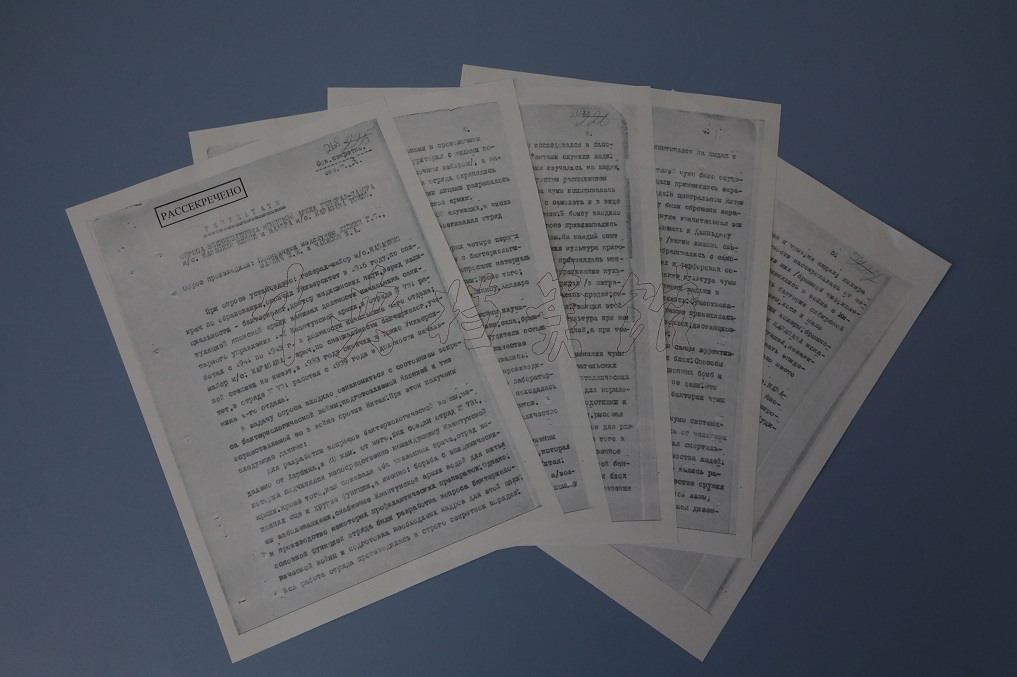
According to experts, these documents clearly confirm that Japan's biological warfare in China was a state-organised crime directed from above. Zhou Zhenfan from the Central Archives' Department of Archival Protection said that many of the materials contain information that was previously unknown and significantly supplement existing historical records. According to him, they form a comprehensive chain of evidence that leaves no room for doubt.
The disclosure of this information has strong symbolic significance, as it took place on the Chinese national memorial day for the victims of the Nanking Massacre. The massacre took place after the occupation of the then capital by Japanese troops in December 1937, when approximately 300,000 civilians were brutally murdered over a period of six weeks.
According to Zhou Zhenfan, the new evidence has not only historical but also educational significance. It reminds us of the need to remember war crimes, be vigilant against the return of militarism, and protect peace. Throughout China, commemorative events were held on this day to honour the victims of the Chinese people's resistance to Japanese aggression, which claimed more than 35 million lives between 1931 and 1945.
In Harbin, the Exhibition Hall of Evidence of Unit 731 Crimes, which displays archives, artefacts and other materials documenting the horrors of war, has seen increased public interest. More than 3 million people visited the museum in 2024, and a similar number is expected in 2025. As one visitor said, the past can be painful, but if it is forgotten, it ceases to be a warning for the future.
Comments
Sign in · Sign up
Sign in or sign up to comment.
…